



A tabby cat sleeps on a dark quilted bed in a moody, minimalist bedroom with a black wall-mounted air conditioning unit.

Mini Split Installation in Kenosha, WI

Tell us about the job

Takes about a minute. No obligation.

New system or replacementMini-splitKenosha County, WI
Step 1 of 2

What ZIP code is the job in?

Gas furnaces heat 75.3% of homes in Kenosha County. A mini split works differently. It runs on electricity, and it both heats and cools, so it isn't a straight swap for a furnace tied into ductwork. Most people adding one are covering a room that never gets comfortable off the main system, a finished basement, a sunroom, an addition. Some use one to replace window units entirely. Either way, the gas furnace keeps doing the rest of the house, and the mini split handles the space it's mounted in.

8 months
October through May, your system heats
3 months
June through August, it cools
18°F
the average winter night it heats against
80°F
the average summer afternoon it cools against
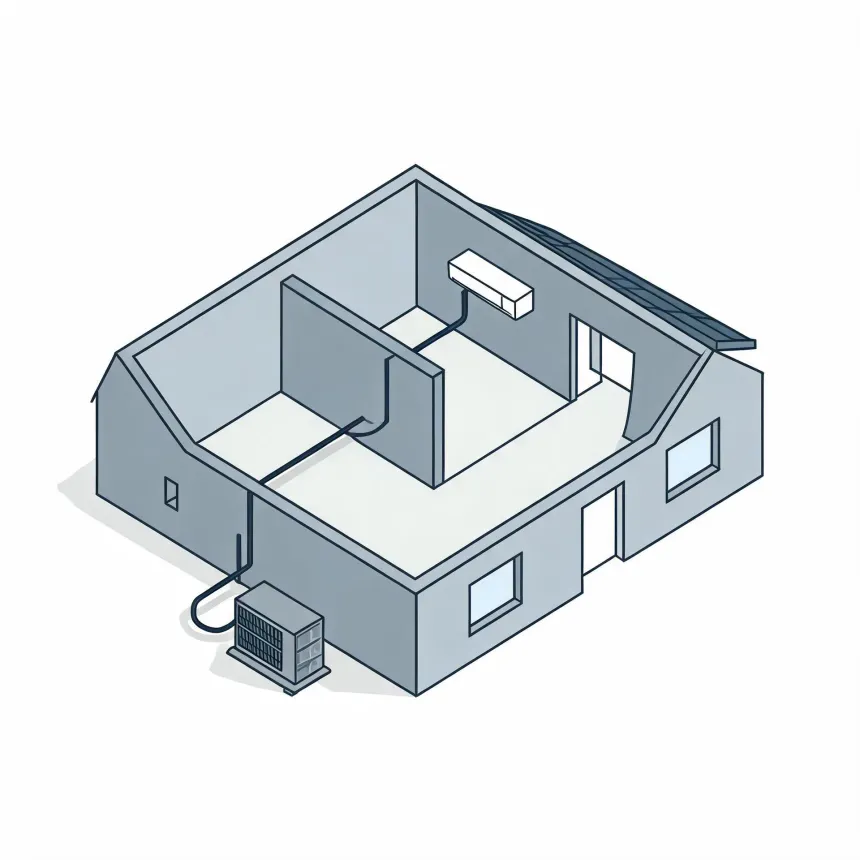
Isometric line illustration of a cutaway house showing an interior wall-mounted air conditioning unit connected by a line to an outdoor condenser beside the exterior wall.
Your system heats October through May and cools June through August.

NOAA nClimDiv, 1991–2020 normals

Cooling here runs June through August.

Get the mini split in before June and it's cooling that first hot day, not catching up after it.

A standard mini split handles this county fine

Half the homes here were built by 1975
Cooling runs June through August
Summer afternoons average 80°F

A room needs a certain size unit to heat and cool it, and most rooms people add a mini split to don't need anything special. A one-to-one system, one outdoor unit paired with one indoor head, covers a bedroom, a bonus room, a sunroom without trouble. Sizing it bigger than the room calls for doesn't make it work better. It cycles on and off more instead of running steady, and that's harder on the unit, not easier. Electricity here runs 17.18 cents per kilowatt-hour, and a mini split sized to the room is what keeps that bill reasonable. There's nothing about Kenosha County that pushes a system past what the room actually needs.

This room won't ask much of it

Three months of cooling, and summer afternoons here average 80 degrees. That's not a hard pull for a mini split. The room it's heating and cooling isn't working against a brutal stretch of weather, so a standard system installed well has an easy time holding up.

Find a contractor
A beige split-system air conditioner outdoor condenser unit mounted on metal wall brackets atop a stucco wall.

Light duty, most of the year

Three months of real work a year, and the rest of the time it's barely loafing. A mini split that gets a fair installation isn't the piece to upgrade for. Spend on a correct size and a tight line set connection instead, the part that actually determines whether it holds up.

The room decides the size, not the brand

A contractor works out the size by looking at the room itself. How big it is, how many windows, which way it faces, what's on the other side of the walls. That math has a right answer for every room. Installers doing it correctly land on the same size. Nobody should be picking a unit off a brochure before that work gets done.
Oversized is its own problem

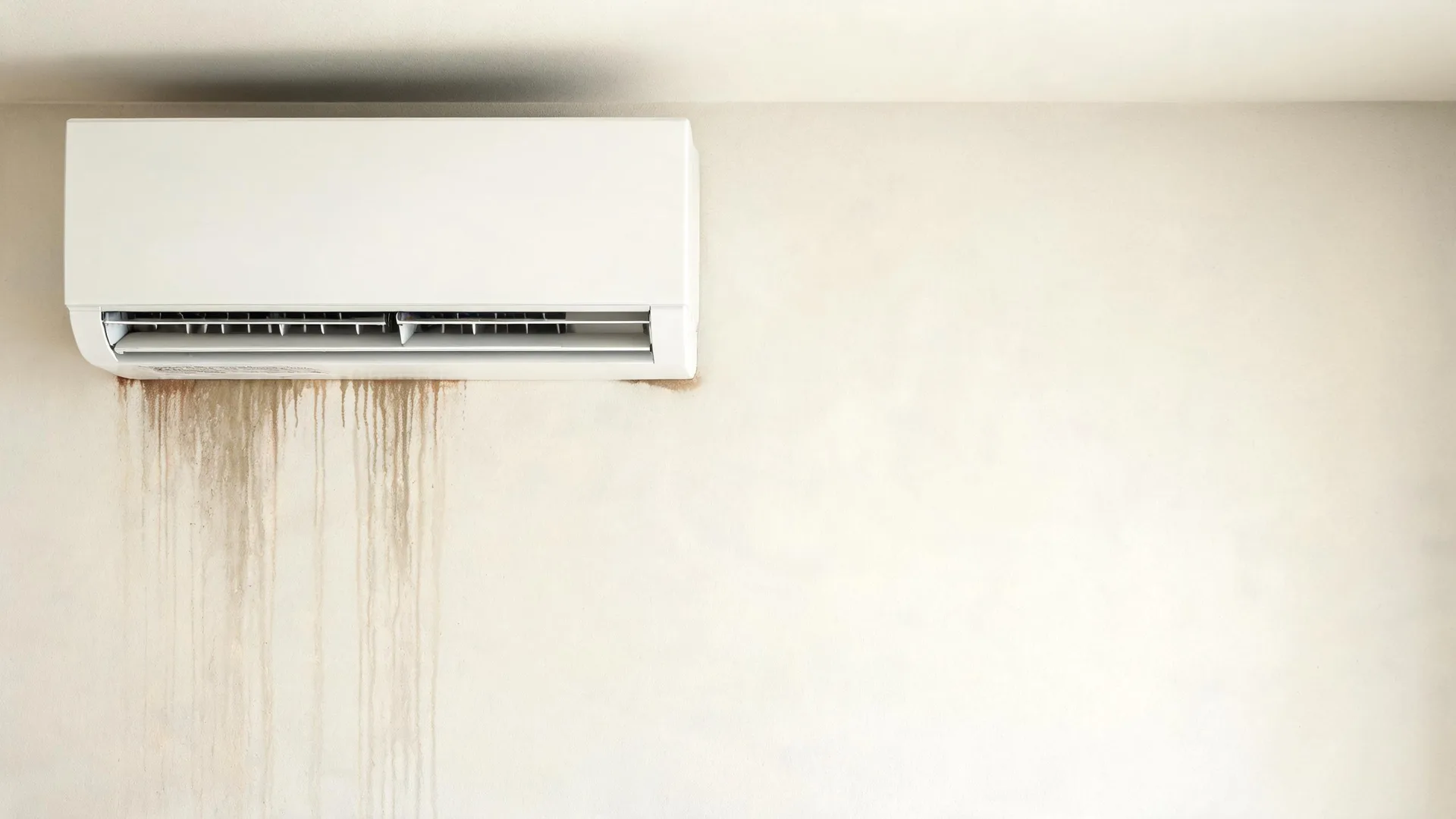
A mini split that's too big for the room cools it fast and shuts off, then starts again soon after. It never runs long enough to pull moisture out of the air, so the room feels cool but damp. The compressor takes more wear from that constant starting and stopping than it would running steady on a properly sized system. Bigger isn't a safety margin. It's a different way to fail.

Ask what the SEER2 and HSPF2 numbers mean for this specific room, not just the headline efficiency figure on the brochure. Ask how many indoor heads the outdoor unit can run, because a multi-zone system splits its capacity across every head running at once, and that changes how it performs compared to a one-to-one system. Ask what sound rating the indoor head carries, since some are built quieter than others and that matters in a bedroom or a den. Ask what the warranty covers if the line set connections aren't done by the installer who's handling the equipment, because some manufacturers tie coverage to that. Ask how the contractor arrived at the size they're recommending, and expect an answer about the room, not the brand.

The outdoor unit mounts on a pad or brackets against the wall, and the indoor head goes up high, usually near the ceiling since that's where it can pull air across the whole room. Between them runs a line set, a pair of copper lines, and that line set has to pass through the wall in one spot, a hole just big enough for it. That's the whole connection between inside and outside. Once the lines are run, the system gets evacuated to pull all moisture and air out of them before refrigerant goes in. Skip that step or rush it and the compressor is working against moisture that shouldn't be there from day one. After it's charged, the installer checks the line set connections for leaks, tests that the head is heating and cooling, and confirms the condensate line is draining the way it should. A clean installation shows almost nothing on the wall, just the head, a small line hiding the copper and wiring, and a pad outside.