






A row of dark gray gabled houses behind a trimmed hedge and mowed lawn, framed by large leafy trees under an overcast sky.

Mini Split Installation in Harrison, WI

Tell us about the job

Takes about a minute. No obligation.

New system or replacementMini-splitCalumet County, WI
Step 1 of 2

What ZIP code is the job in?

Most homes in Calumet County heat with utility gas, close to seven in ten. A mini split works differently from the furnace already in your house, since it heats and cools instead of just one or the other. That makes it a common add-on here rather than a full switch, covering a room a gas furnace does not reach well, like a bonus room or a finished basement. Some homeowners use one to take over cooling entirely and skip running a separate AC. Either way, it runs on its own circuit and does not tie into the ductwork or the gas line already in the house.

9 months
September through May, your system heats
2 months
July through August, it cools
14°F
the average winter night it heats against
79°F
the average summer afternoon it cools against
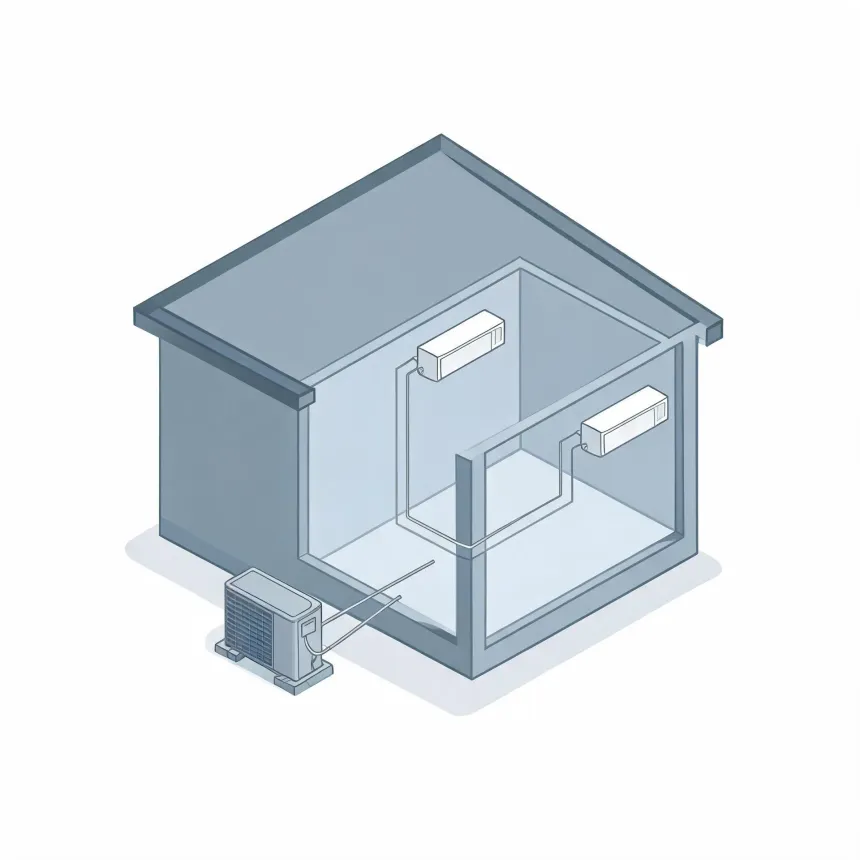
Isometric line illustration of a cutaway building interior with two wall-mounted indoor air conditioning units connected by piping to an outdoor condenser unit on the ground outside.
Your system heats September through May and cools July through August.

NOAA nClimDiv, 1991–2020 normals

Cooling runs about two months here, July and August, with afternoon highs averaging 79°F.

A mini split sized for that short, mild stretch doesn't need to be the top efficiency model on the shelf.

Two months of cooling, but June is when to get it installed

Cooling runs July through August
Climate zone 5A
Power costs 17.18 cents a kWh statewide
A standard mini split fits Harrison fineWisconsin electricity runs 17.18 cents per kilowatt-hour, so a standard-efficiency mini split is the right call here

Calumet County sits in climate zone 5A, a cool zone where heating is the bigger job over the course of a year. Any mini split installed here, ductless or not, falls under the same federal rule as other split-system heat pumps. For units made from 2023 onward, that means at least 14.3 SEER2 for cooling and 7.5 HSPF2 for heating. There's no separate, lower bar for ductless systems. A unit meeting those minimums qualifies for the federal tax credit available on qualifying heat pumps.

Pick the right fit, not the top shelf

Right size and a licensed installer get you a system that holds up through two months of summer and years of winters most of the gas furnace handles anyway. That's what to look for now.

Find a contractor
A man in a cap, dark long-sleeved shirt and worn brown work pants walks up porch steps toward a green front door, carrying a canvas tool bag in his right hand, with a potted plant beside the door.
A white outdoor air conditioner condenser unit mounted on metal wall brackets against gray horizontal siding, with a blue sky and white clouds behind it.

What the rating is actually telling you

The rating on the label comes from lab testing, done at a set condition rather than the hottest or coldest day you'll actually use the thing. SEER2 measures cooling efficiency, HSPF2 measures heating efficiency, and both are an average over a season of typical use, not a guarantee for any single afternoon. What the number is good for is comparing one unit against another before you buy. A higher rating means the compressor uses less electricity to move the same amount of heat, in or out, each time it cycles. Where that shows up most is in whichever job the unit does the most of. If it's covering a room the furnace doesn't reach well, that's mostly a cooling role here, so the SEER2 number is the one doing the real work. The heating side still matters since the unit can run on mild days when the furnace would otherwise kick on, but it isn't carrying the coldest months alone. A unit that runs light duty most of the year doesn't get much chance to earn back a big jump in rating, which is why matching the unit to the actual job is worth more than chasing the highest number on the shelf.

The old equipment it's replacing keeps running

If this mini split is going in alongside the furnace, nothing about the furnace changes. It still heats the house, still runs on its own gas line and ductwork, same as before. The mini split is a separate system from day one, not a patch on the old one.
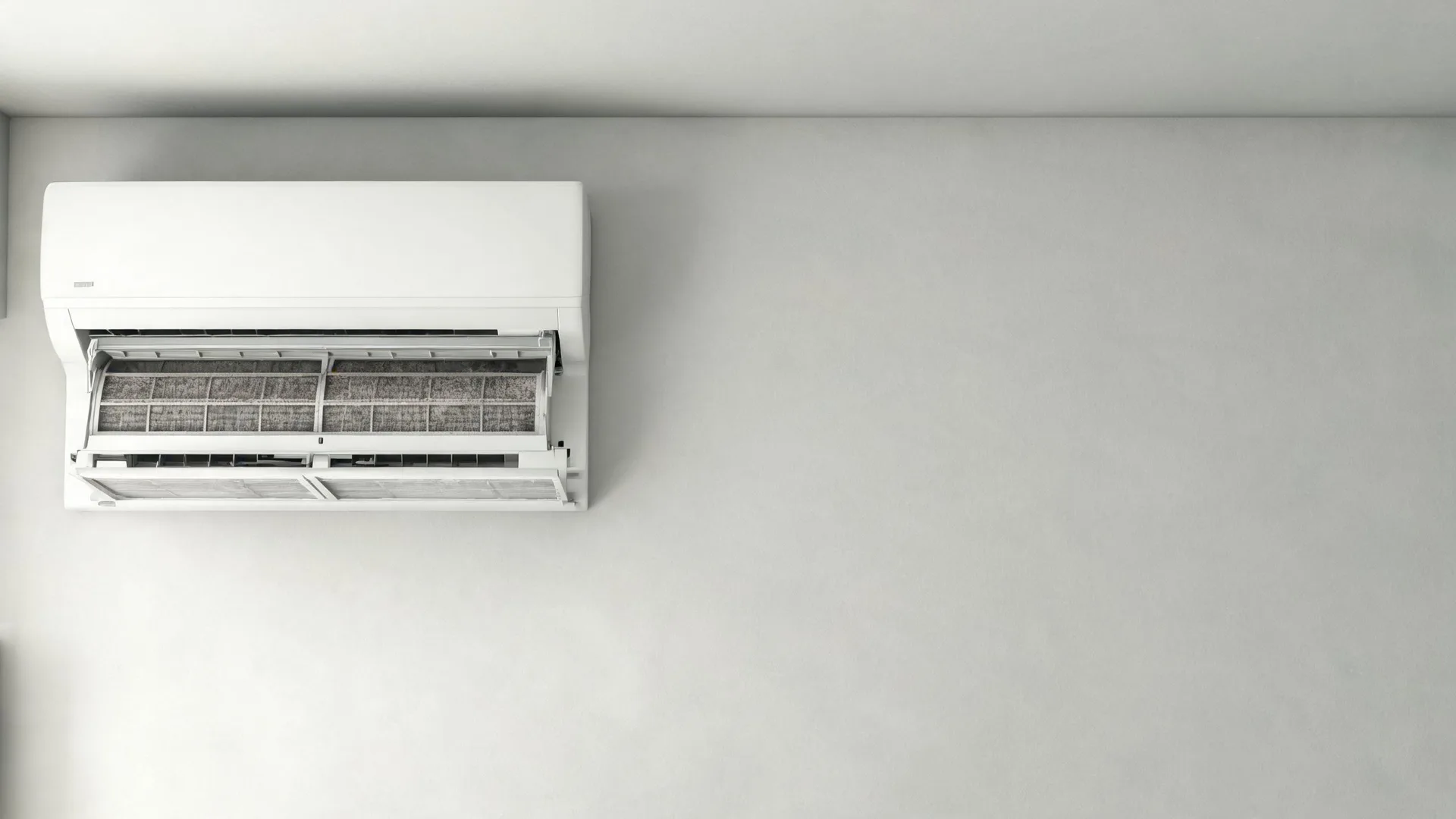
A full swap means the furnace and old AC go dark, not disappear

If the mini split is taking over cooling for the whole house, the old central AC gets disconnected but the equipment itself, the outdoor unit, the indoor coil, usually stays in place unless someone pulls it out. A licensed installer can tell you whether removal makes sense or whether it's fine left alone, unused, in the duct system.

A few questions sort the good bids from the rest. Ask how many indoor heads the system supports and whether this is single-zone or multi-zone, since a multi-zone unit lets one outdoor compressor run heads in separate rooms off separate thermostats. Ask where the installer plans to put the outdoor unit and why, since airflow around it and the length of the line set between indoor and outdoor units both affect how well it runs. Ask what happens to the line set and the wiring, whether they run through an exterior wall or along it, since that affects how it looks and how it's protected from weather. Ask about the warranty on the compressor versus the labor warranty, because those often run different lengths and come from different places, the manufacturer and the installer. And ask who handles the permit and the inspection, since a mini split installed without one can cause problems later if the house is ever sold.

Installation day starts with the outdoor unit and the indoor head going up, usually in that order. The outdoor unit needs a solid, level pad and enough clearance around it to pull air through the coil, so the installer picks that spot before anything else happens. Running the line set comes next, the refrigerant lines and wiring that connect indoor to outdoor, usually through a single hole drilled for that purpose rather than widened from anything already there. Once both ends are connected, the line gets pressure tested to check for leaks before any refrigerant goes in, then pulled down to a vacuum to clear out moisture and air. Only after it holds vacuum does the system get charged and switched on, and the installer checks temperatures at the head to confirm it is actually heating and cooling before calling the job done. A mount, a hole, a tested line, then power on, in that order, every time.