Gas heats most homes here
Utility gas heats 65.6% of occupied homes in Fond du Lac County. Furnaces and gas boilers are what most contractors here work on day to day.
Takes about a minute. No obligation.
Utility gas heats 65.6% of occupied homes in Fond du Lac County. Furnaces and gas boilers are what most contractors here work on day to day.
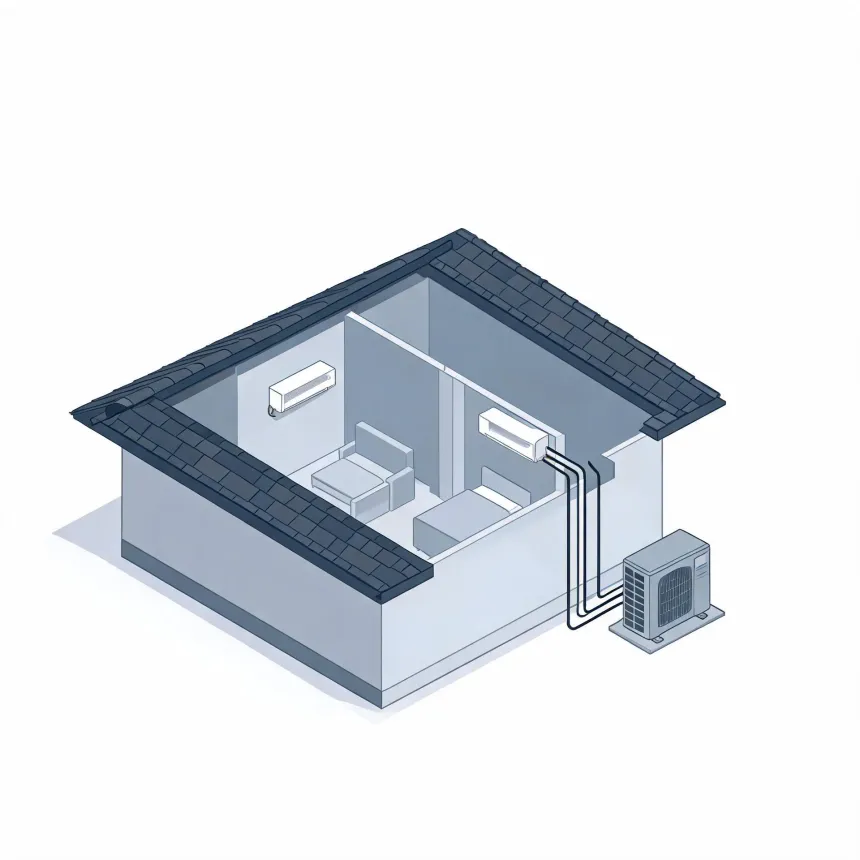
A mini split works well for a room an existing furnace doesn't reach well, or for cooling a home that has no central air. Most homes here keep the furnace for the coldest months and use the mini split for shoulder season heat and summer cooling.
NOAA nClimDiv, 1991–2020 normals
Fond du Lac County logged 59 damaging wind events and 15 winter storms in the last ten years.
A mini split's outdoor unit mounts to handle wind and snow load like anywhere else. Nothing extra is needed for this county.




Fond du Lac County sits in climate zone 5A, a cool zone where winter heating is the bigger job for any system. The federal rule treats a ductless mini-split the same as any other split-system heat pump. One made from 2023 onward has to hit at least 14.3 SEER2 for cooling and 7.5 HSPF2 for heating, whether it's ductless or not. There's no separate, looser standard for mini splits. A system installed here that meets these minimums may also qualify for the federal energy efficiency tax credit.
Cooling here runs June through August. May is the month before that starts, and it's the better time to put in a mini split. Installing before June means the system is set and tested before the first hot stretch, not during one.
Find a contractorCooling runs three months here, June through August, with afternoon highs averaging 79. That's a mild load. Heating in this zone is the bigger job, and that's what runs most of the year. A mini split used for summer cooling and shoulder season heat isn't working hard enough to wear out fast. When something does go wrong, it's more likely age or a skipped filter change than the system worn down from years of heavy running.
SEER2 covers cooling and HSPF2 covers heating. A mini split doing both jobs should be judged on both numbers, not just the cooling one. A unit can look strong on one side of the label and ordinary on the other.
A good rating holds up only if the indoor head is sized for the room and the outdoor unit has clear airflow and a reasonable line set run. The same equipment can perform differently depending on how it's set up, so the number on the box isn't the whole story.
Sizing a mini split isn't about matching the room's square footage to a number on a chart. A unit too big for the room cools or heats it fast, then shuts off, runs again a few minutes later, and keeps cycling that way all day. It never runs long enough to pull moisture out of the air, so the room feels clammy even at the right temperature. A unit too small runs constantly and still can't keep up on the coldest or hottest days. Getting it right means working out the heat loss and heat gain for that specific room, which depends on how many windows it has, which way it faces, how well it's insulated, and what's on the other side of its walls. A contractor who sizes it properly is measuring the room, not guessing from a rule of thumb.
If this is a replacement, the old equipment doesn't just get unplugged and left. A window unit or old ductless system gets disconnected, and any refrigerant left in the lines has to be recovered, not vented, that's a legal requirement, not a courtesy. If what's being replaced is a furnace or boiler handling the whole house, that stays in place since the mini split is adding capacity, not taking over heating. Haul-away of the old unit is worth asking about up front, since not every installer includes it in the quote. A mini split being removed also means patching whatever hole was left in the wall for the old line set, so that's one more thing to settle before work starts, not after.