





A dark two-story house with a wraparound covered porch sits behind a trimmed hedge and a mown lawn, framed by two large leafy trees.

Mini Split Installation in Eau Claire, WI

Tell us about the job

Takes about a minute. No obligation.

New system or replacementMini-splitEau Claire County, WI
Step 1 of 2

What ZIP code is the job in?

Gas heats 57.2% of homes in Eau Claire County, and electricity is a distant second at 26.8%. A mini split doesn't compete with either one directly. It runs on electricity, but most installs here work alongside the furnace rather than replacing it, covering a room or zone the ductwork doesn't reach well, or taking over the shoulder-season months so the furnace runs less. If your home is one of the smaller share on propane or oil, a mini split can take on more of the year's heating since it isn't tied to that fuel. Worth checking what your current system runs on before deciding how much of the job you want the mini split to carry.

9 months
September through May, your system heats
3 months
June through August, it cools
9°F
the average winter night it heats against
79°F
the average summer afternoon it cools against
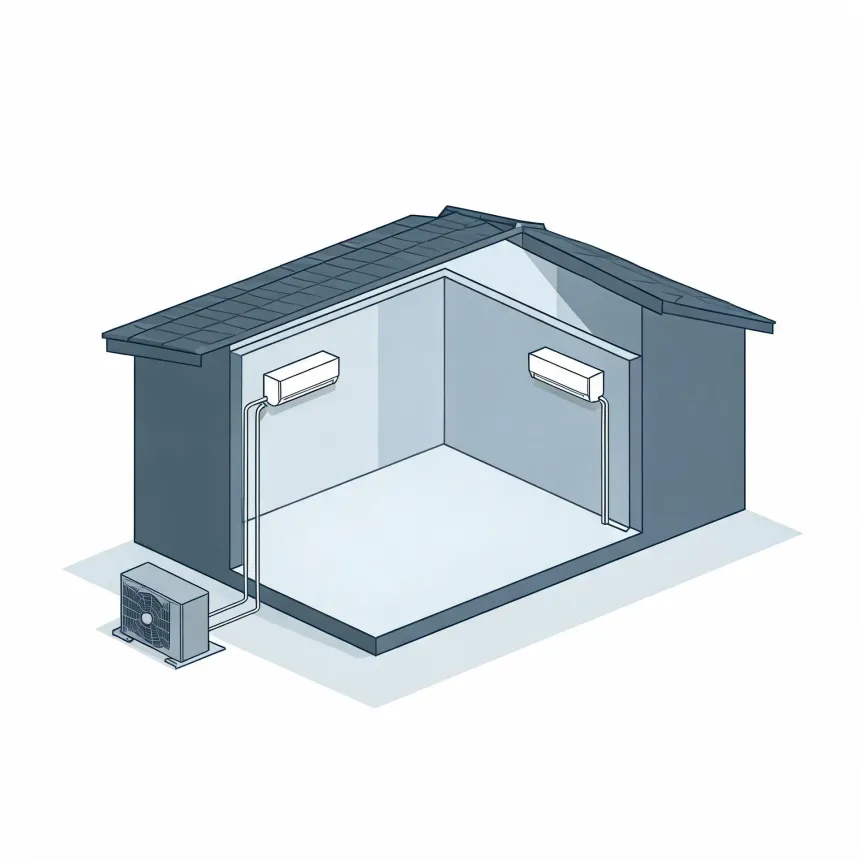
Cutaway isometric illustration of a small building interior showing two wall-mounted indoor air conditioning units connected by line sets running down to a single outdoor condenser unit on the ground outside.
Your system heats September through May and cools June through August.

NOAA nClimDiv, 1991–2020 normals

Cooling in Eau Claire County runs June through August.

May is the month to get a mini split installed, before the first warm stretch hits.

A normal-size mini split handles this climate

Half the homes here were built by 1978
Cooling runs June through August
Summer afternoons average 79°F
A normal-size mini split handles this climateElectricity here runs 17.18 cents per kilowatt-hour, so sizing it right is what keeps the bill in check.

Summer here is short. Cooling runs three months, June through August, with afternoon highs averaging 79°F. That's mild work for a mini split compared to what the same unit would do in a hotter state. The bigger job is winter, and that's the furnace's role, not the mini split's. So the outdoor unit isn't under much strain either way. You don't need to size up or chase the highest efficiency rating to get good years out of it here. A properly sized unit, matched to the room or zone it's covering, will do the job without being pushed.

Any mini split installed here has to meet 14.3 SEER2 and 7.5 HSPF2

Eau Claire County is zone 6A, and any mini split installed here now has to meet 14.3 SEER2 and 7.5 HSPF2, the same federal minimum as anywhere else in the split-system class. There's no lower bar for ductless. A unit that meets it qualifies for the federal energy efficiency tax credit, worth looking into before you settle on equipment.

Find a contractor
A white outdoor air conditioner condenser unit mounted on metal wall brackets against gray horizontal siding, with a blue sky and white clouds behind it.

What actually drives the cost

The price difference between one mini split job and another mostly comes down to what it takes to get the lines from the outdoor unit to the indoor head. A short, straight line set through an exterior wall near where the breaker panel has room is a simple job. A long run because the best spot for the outdoor unit sits far from the indoor head, or a wall that isn't easy to drill through, adds labor before anything about the equipment changes. Multiple indoor heads off one outdoor unit cost more than a single zone, since each head needs its own line set and its own mounting work. The outdoor unit's capacity matters less than people expect. It has to match the room or zone, not exceed it. An oversized unit costs more up front and does a worse job holding steady temperature than one that's sized right. Electrical work can add to the job too, if the panel needs a new breaker or isn't ready to take one on. None of it comes down to chasing the highest efficiency number on the shelf. It comes down to how far the lines run, how many rooms get covered, and whether the electrical is ready for another circuit.

The furnace keeps doing what it's always done

Adding a mini split doesn't mean anything changes for the furnace already in the house. Same vents, same thermostat, same job heating the house through the cold months. The mini split just takes over the room or zone it's assigned to cover. No disconnecting a working heat source, no rerouting ductwork to make room for it.
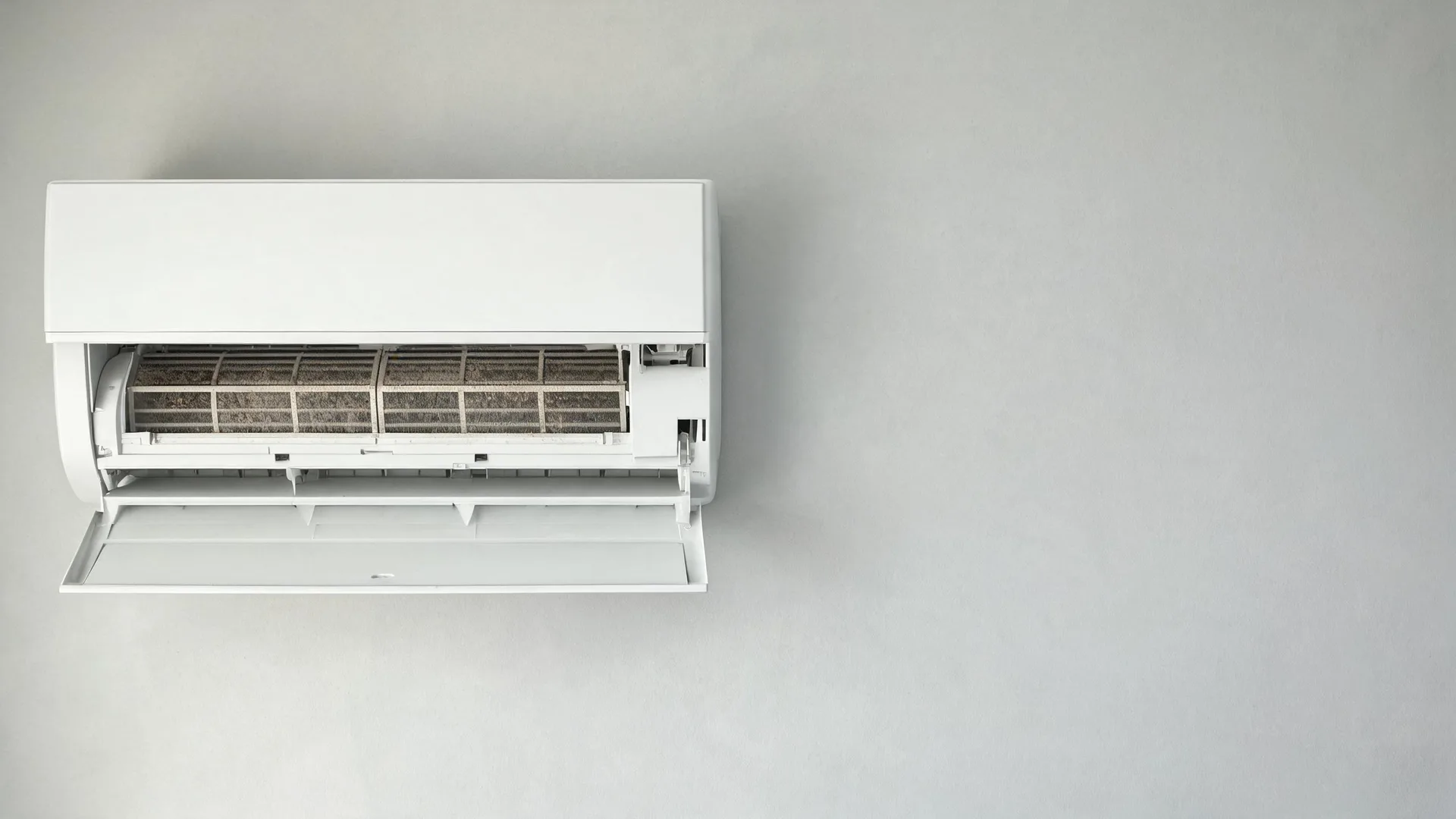
Sometimes it's a window unit or space heater going away

A mini split often goes in to cover a room the ductwork never reached well, and that room may have been getting by on a window air conditioner or a space heater. That equipment just comes out. A window unit lifts out of the frame, a space heater gets unplugged and put away. Nothing about the home's gas line or electrical panel needs attention because of it.

The efficiency rating on a mini split, SEER2 for cooling and HSPF2 for heating, tells you how much output you get for the electricity it draws. A higher number means less power used to move the same amount of heat in or out of a room. That gap on the label matters most when a unit runs long hours under real load, pushing hard against heat or cold for a long stretch. It matters less when the job is light. Units with different ratings sitting side by side on a shelf will show that gap on paper, but a unit only earns it back by actually running enough hard hours to use it. Size and installation quality decide more of what you'll notice day to day than the number on the label does.

Installation day starts outside, with the contractor picking a spot for the outdoor unit that has clearance on all sides and a clean path for the line set to reach indoors. Inside, the indoor head gets mounted high on a wall or ceiling, over the spot where a small hole gets drilled through to the outside. The line set, a pair of copper refrigerant lines, runs through that hole along with a condensate drain line and an electrical cable, all bundled and routed down to the outdoor unit. Once everything's connected, the lines get purged of air and moisture before the system is charged and sealed. The last step is powering it on and running it through both heating and cooling to check that it responds right and the drain line is clearing condensate the way it should. None of it touches the furnace, the ductwork, or the electrical panel unless the circuit for the mini split needs its own breaker added.