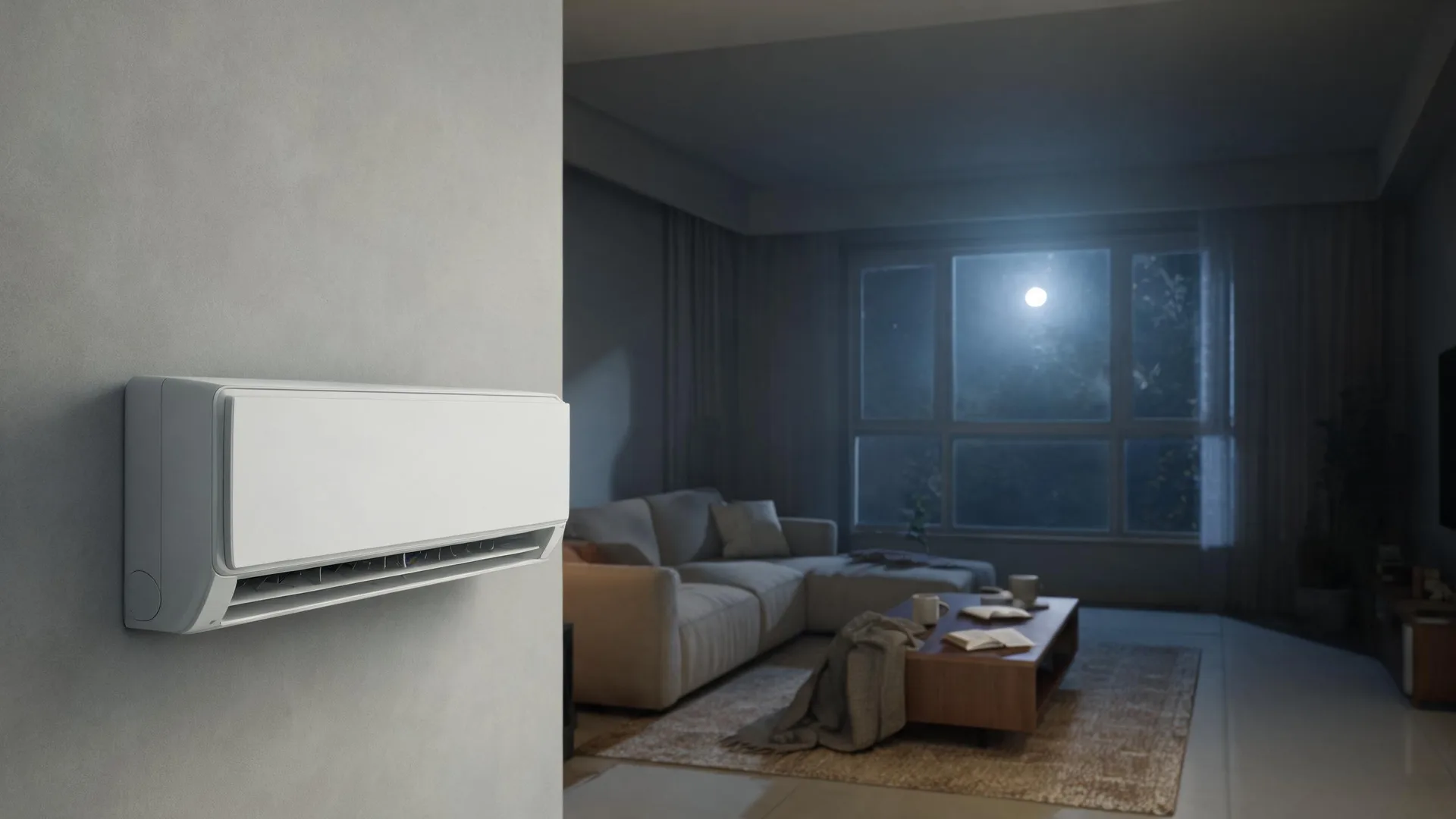
Most homes here run on gas
Utility gas heats 59% of homes in Dodge County, with another 16.5% on LP gas. A furnace or boiler is already doing the heavy lifting in most houses here, and a mini split usually joins that system rather than replacing it.
Takes about a minute. No obligation.
Utility gas heats 59% of homes in Dodge County, with another 16.5% on LP gas. A furnace or boiler is already doing the heavy lifting in most houses here, and a mini split usually joins that system rather than replacing it.
Since gas heat is already in place, a mini split here is most often sized for cooling and for rooms the main system doesn't reach well, like a bonus room or a finished attic. The install is about adding comfort where it's thin, not swapping out what already works.
NOAA nClimDiv, 1991–2020 normals
Half the homes in Dodge County were built in 1970 or earlier.
An install here has to work with the walls and layout already there, not the other way around.



Cooling in Dodge County runs June through August, about three months a year. May is the month to get a mini split installed, before that three-month stretch starts. A contractor's schedule fills up once the heat arrives, and a house that's already warm takes longer to pull down to a comfortable temperature than one that's still cool when the unit first runs. Get it installed in May and it's ready the day you actually need it.
Any mini split going in here has to hit 14.3 SEER2 and 7.5 HSPF2. That's the federal minimum for split-system heat pumps, and the standard doesn't carve out an exception for ductless units. It's also what qualifies for the federal tax credit. Dodge County falls in zone 5A, where heating is the bigger load, which is part of why that minimum is set where it is.
Find a contractor
The SEER2 number on the label is a ratio, cooling output over the power it takes to produce it. A higher number means the compressor gets more cooling out of the same electricity, nothing about how big a space it can handle. Mini splits with the same rating can still behave differently once installed, because the number comes from a lab test, not from the room it ends up in. It's a tool for comparing units against each other before anything goes in the wall. Once the unit is in and sized to the room, that number has done its job. What matters after that is whether the sizing and the install were done right, not what's stamped on the side of the unit.
A contractor measures the room, checks the windows, the insulation, and what's on the other side of each wall, then works out how much heat that space gains in summer and loses in winter. That number, not the square footage alone, decides which unit goes in. Rooms that look alike on paper can need different capacity if one has a wall of west-facing glass and the other doesn't.
A unit that's too big drops the room to temperature fast, shuts off, then starts again soon after. It never runs long enough to pull moisture out of the air, so the room feels cool and damp instead of just comfortable. The right size runs longer at a lower output, which is what actually dries the air while it cools it.
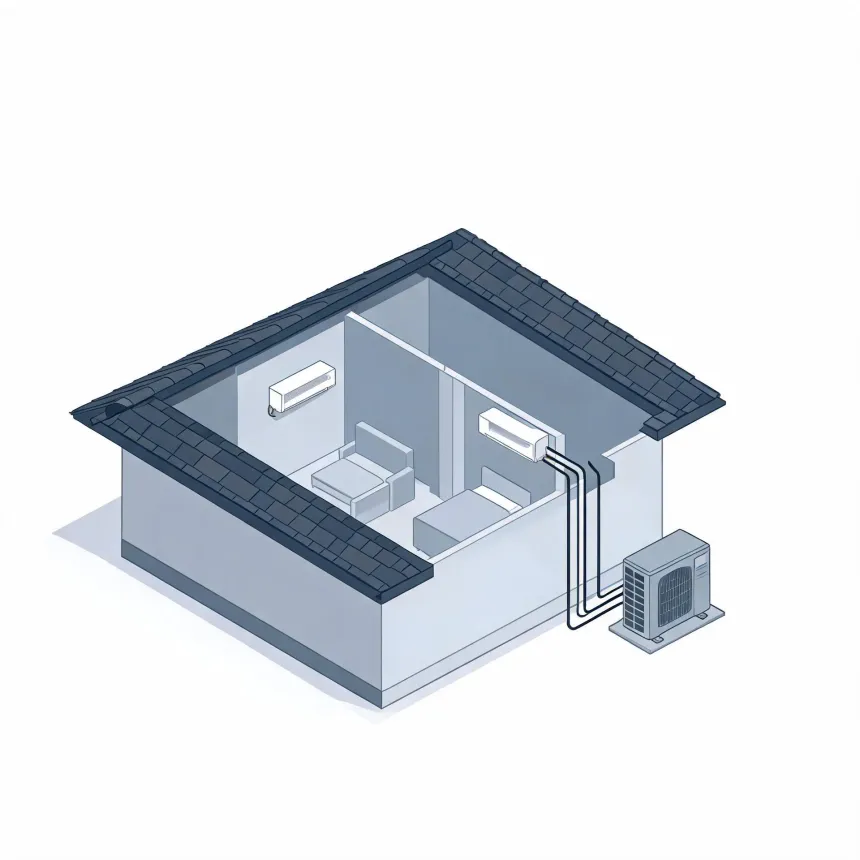
The unit and the compressor are only part of what you're paying for. Where the indoor head goes, how far it sits from the outdoor compressor, and what's between them matters just as much. A line set that has to run through a finished wall or across a long stretch of siding takes more time and more material than one with a clear, short path. Electrical matters too. A mini split needs its own dedicated circuit, and if the panel doesn't have room for one, that's its own job before the unit ever goes in. Mounting the outdoor compressor on a bracket instead of a pad, or routing the condensate drain somewhere it can actually drain, are the kind of details that don't show up until a contractor has walked the site. Homes that look the same from the street can price out differently once someone's traced the actual path the lines have to take.
Install day starts outside and in, at the same time. One person mounts the indoor head and runs the line set through the wall while another sets the outdoor compressor on its pad or bracket and runs the electrical. The wall gets a hole drilled for the refrigerant lines, the power wire, and the condensate drain, all bundled through a single sleeve. Once the indoor and outdoor units are connected, the lines get pressure tested to make sure there are no leaks, then the system gets evacuated with a vacuum pump to pull out any air and moisture before the refrigerant is released into the lines. That vacuum step matters more than people expect. Moisture left in the line set turns to acid over time and eats at the compressor from the inside. After that it's a matter of powering it on, checking that the head is actually cooling and that condensate is draining where it should, not pooling behind a wall.