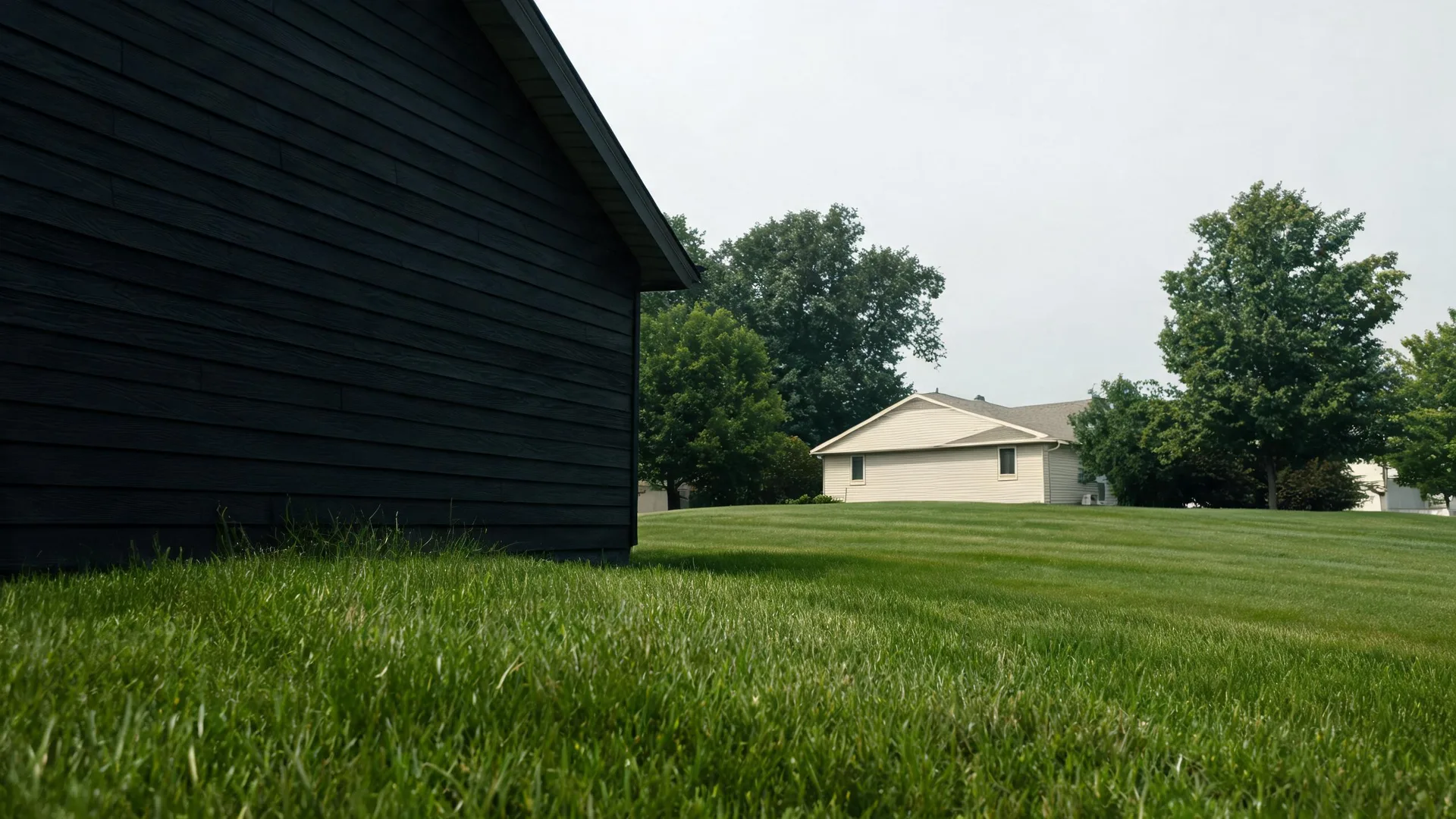





Low-angle view across a mown green lawn toward a dark-sided building at left and a cream-colored single-story house with trees in the background under an overcast sky.

Mini Split Installation in Appleton, WI

Tell us about the job

Takes about a minute. No obligation.

New system or replacementMini-splitOutagamie County, WI
Step 1 of 2

What ZIP code is the job in?

Outagamie County saw 176 severe weather events between 2015 and 2024. That includes 79 damaging wind events, 60 hail events, and 13 tornadoes. An outdoor mini-split unit sits outside year round, taking whatever comes through. Hail dents the housing and bends the fins on the coil. Wind-blown debris does the same, or worse. Statewide, 18% of households went at least a day without power in 2024, and a mini-split with no backup plan means no heat or cooling until the power comes back.

9 months
September through May, your system heats
3 months
June through August, it cools
13°F
the average winter night it heats against
79°F
the average summer afternoon it cools against
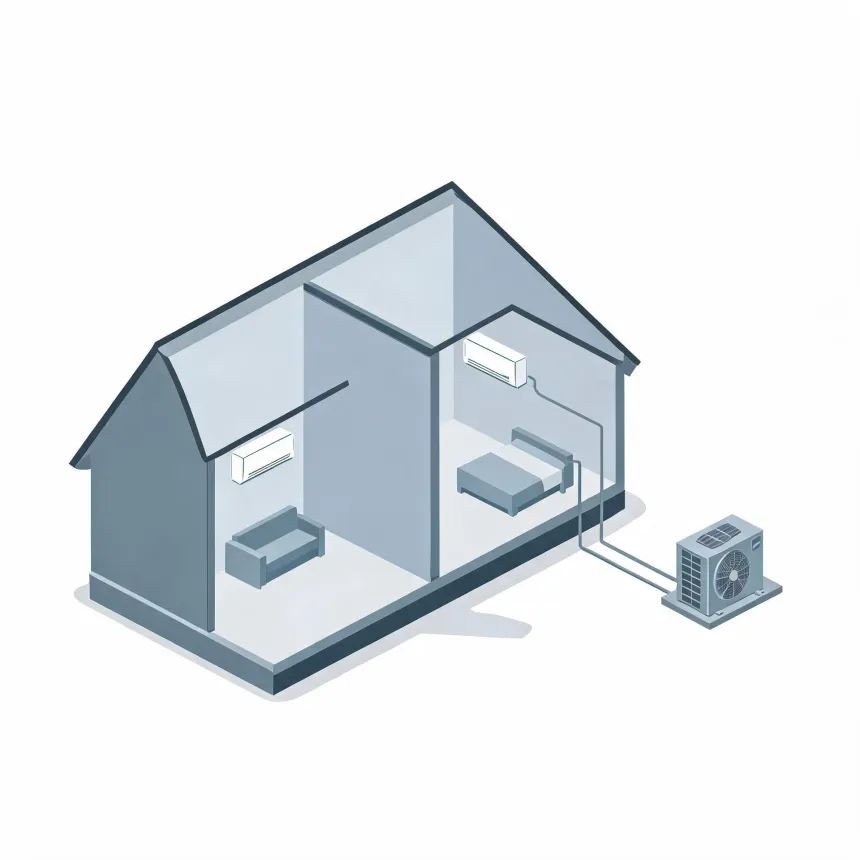
Isometric grey illustration of a cutaway house showing two rooms with wall-mounted indoor air conditioning units connected by lines to an outdoor condenser unit beside the building.
Your system heats September through May and cools June through August.

NOAA nClimDiv, 1991–2020 normals

Cooling runs June through August here.

Get the mini-split installed in May and it's ready before the first hot day, not during one.

Most of this county heats with gas, and that changes what a mini-split is for

70.7% of homes heat with gas
Climate zone 5A
Power here costs 18.55 cents per kilowatt-hour
Light duty, most of the yearCooling runs three months here, afternoon highs near 79°F, and the air stays light. This system has an easy summer.

Outagamie County falls in climate zone 5A, a cool zone where the heating load matters more than the cooling load. Any mini-split heat pump installed here has to meet the federal minimum for split systems: at least 14.3 Btu of cooling for every watt-hour it draws over the summer, and at least 7.5 Btu of heating for every watt-hour over the winter. That standard applies to units built from January 2023 on, and it narrows the field before a homeowner even starts comparing models. A system that clears those numbers is built to carry a Wisconsin winter, not just take the edge off a mild one. The federal tax credit for qualifying heat pumps is available on top of that, for the models that meet the efficiency bar.

Plan for the outdoor unit and the outage before either one happens

Talk to the installer about where the outdoor unit will sit before it goes in. A spot with some cover from wind and hail beats one with none. Ask what happens to heat and hot water if the power goes out, and whether a backup plan makes sense for this house.

Find a contractor
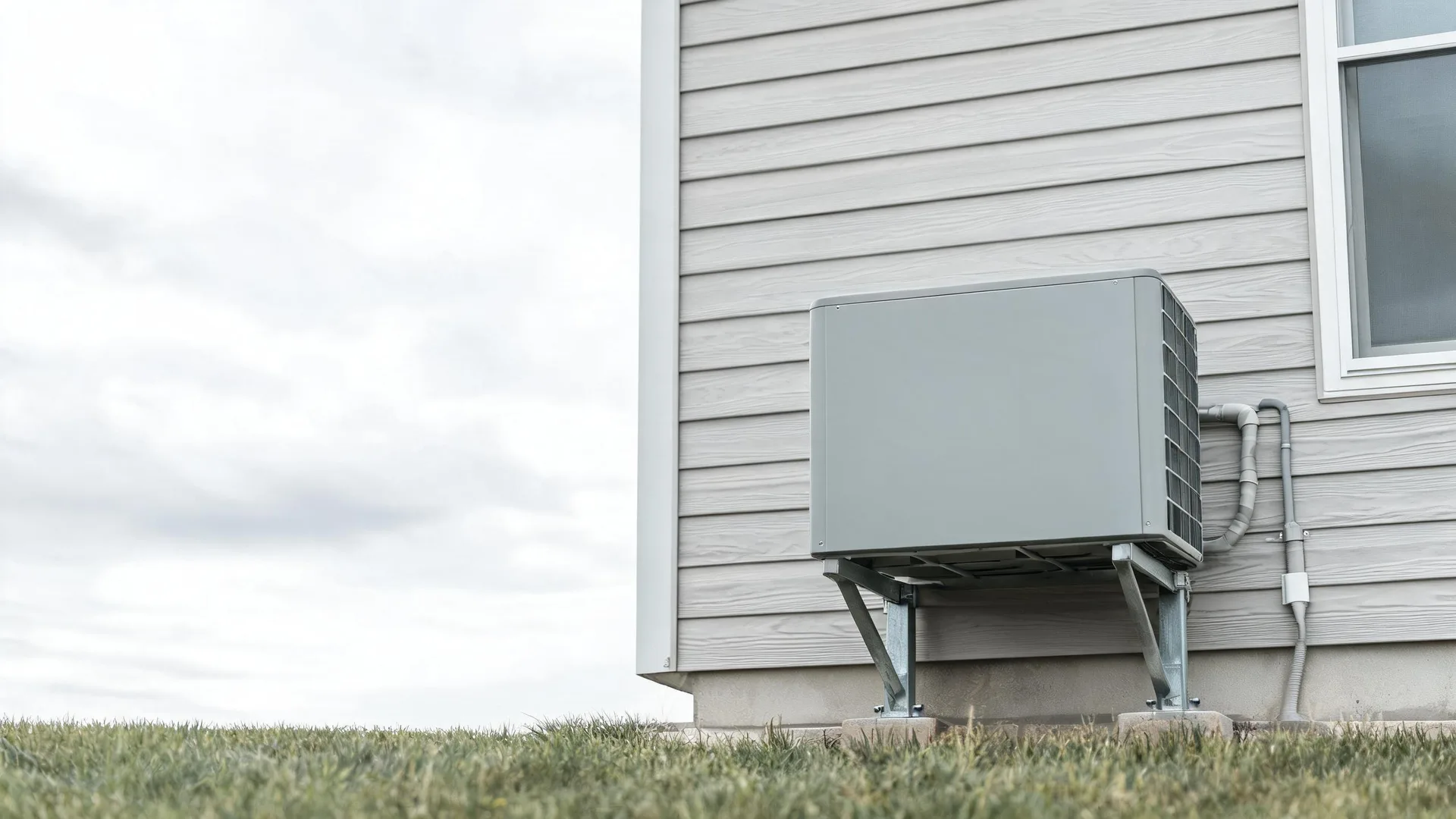
A white mini-split air conditioner outdoor condenser unit mounted on metal brackets against a beige stucco exterior wall, with a blue sky and scattered clouds in the background.

Sized for the room, not the shelf

A mini-split that's sized right for the rooms it serves runs long, steady cycles. Oversize it and the compressor short cycles instead, kicking on, satisfying the thermostat fast, then shutting off again before it's dehumidified the air or settled into an efficient run. That start-stop pattern puts more wear on the compressor than steady operation does, cycle after cycle, year after year. Undersize it and the opposite problem shows up: the compressor runs flat out and still can't keep up on the coldest or hottest days, so it never gets the rest a correctly sized system gets most of the time. Either mistake shortens the life of the equipment. A proper load calculation looks at the square footage, but also the windows, the insulation, the ceiling height, and how the room is used, because two rooms the same size can need different capacity. Getting that number right before the unit is chosen is what lets it idle through the easy months and still have the capacity in reserve when it's actually needed.

The old equipment has to come out first

A furnace or baseboard system being replaced doesn't just get switched off. Gas lines get capped properly, and any ductwork that isn't being reused gets disconnected the right way. If the old system had its own thermostat or wiring, that gets pulled too, not just left behind the wall.
A mini-split doesn't need what the old system needed

No ducts to extend, no chimney flue to tie into. Just a line set running from the outdoor unit to each indoor head, through a small hole in the wall. That's part of why a mini-split can go into a house that never had central air to begin with.

A few questions sort out which system actually fits the job. First, what does the manufacturer rate the unit down to in heating mode, not just at freezing but well below it, since a heat pump's capacity drops as the outdoor air gets colder. Second, is the system single-zone or multi-zone, because a multi-zone setup lets one outdoor unit run several indoor heads, but it also means one compressor doing all the work instead of several independent systems backing each other up. Third, ask about the line set length and how many turns it needs between the outdoor unit and each indoor head. A longer run or extra bends can cost the system some efficiency and capacity, so where the outdoor unit sits relative to the indoor heads matters. Finally, ask how the installer sizes the system for the space. Oversizing sounds safer but leads to short cycling, where the compressor turns on and off too often instead of running a long, steady cycle, and that wears on it over time.

Installation starts with a load calculation, not a box pulled off a shelf. The installer measures the rooms being served and checks the walls, windows, and ceiling height before recommending a size. Mounting comes next: the indoor head goes on an interior wall with clear airflow, and the outdoor unit sits on a pad or bracket with room around it to breathe. The crew drills one hole through the wall for the line set, the refrigerant lines, power wire, and condensate drain bundled together, then runs it between the two units. Once everything's connected, the line set gets evacuated with a vacuum pump to pull out moisture and air before refrigerant ever enters it. Skip that step and the system can develop problems that show up months later, not on day one.