Profile view of a bearded man wearing a dark baseball cap and a dark gray T-shirt against a plain off-white background.

How long a central air conditioner lasts in Wisconsin

New system or replacementCentral ACWisconsin
Step 1 of 2

What ZIP code is the job in?

A central air conditioner in Wisconsin usually lasts 12 to 15 years. The summers here are humid, and the system runs hard through those stretches, which wears on the compressor and the coils faster than in a dry climate. Winters off are a break for the unit, but the up and down between hard summer use and months sitting idle takes its own toll on the parts over the years. Once a system passes the 12 to 15 year mark, breakdowns tend to come more often, and repairs start costing more against what a new system would cost. If yours is in that range and you're noticing it running longer to cool the house or short cycling on muggy days, that's the wear showing. Replacing it before a midsummer breakdown means you're not stuck without cooling on the stickiest week of the year while you scramble to find someone who can get to it.

An older man with gray hair and a beard leans back on a beige sofa with his eyes closed, in a sunlit room with potted plants, a wicker chair and large windows behind him.
A woman in a cream knit sweater sits in an armchair with her eyes closed and a slight smile, beside an open window showing orange autumn foliage, with a mug, books and a lit candle on a small side table.

What shortens the compressor's life

A central air conditioner spends most of its working hours in July and August, when it has to run longest to keep up. The compressor is the part that takes the hit. Every time it cycles on, it draws a surge of current, and on a 90 degree day it may cycle on and off for hours without a real break. That repeated strain is what ends up costing the unit years off its life. A system that got oversized for the house, or one that's been low on refrigerant for a season without anyone noticing, will show wear on the compressor well before the rest of the unit gives out.

Why the coils foul faster here

Humidity does more than make the air feel heavier. Moisture in the air condenses on the outdoor coil as the unit runs, and that damp coil collects pollen, grass clippings and dust more than a dry one would. A coil caked with debris can't shed heat the way it's supposed to, so the compressor works harder to do the same job, which feeds back into the wear described above. Rinsing the outdoor unit off a few times a season keeps the coil doing its job. A system that came with the house is worth a look to see how clean that coil still is.

A man in a blue sweatshirt reclines with closed eyes in a brown leather armchair in a living room with a bookshelf, houseplant, sofa, window, and a side table holding newspapers and a dark mug.
A bearded man in a gray pullover reclines with closed eyes on a brown leather sofa in a sunlit room with a window, framed picture, potted plant, and a wooden cabinet holding papers and a dark mug.
A man in a gray sweater leans back with closed eyes in a brown leather armchair beside a wooden side table holding a dark mug and a folded newspaper, with bookshelves and a window seat behind him.
A man in a green sweater reclines in an armchair with his eyes closed and a slight smile, beside a window with plants, a small table holding a mug and folded newspaper, and bookshelves behind him.

The outdoor unit sits outside all summer, and the coil on it catches grass clippings, cottonwood fluff, whatever blows through the yard. A dirty coil can't shed heat as fast, so the compressor runs longer to do the same job. Inside, the evaporator coil needs steady airflow across it. Block that airflow and the coil frosts over, and a system running with ice on the coil is straining the compressor rather than cooling the house. Refrigerant matters too. A slow leak doesn't shut the system down. It just means the compressor is working to cool the house with less refrigerant than it needs, and that heat builds up in the compressor itself over time. The capacitor is what gets the compressor started, and starting is the hardest moment in the whole cycle. A weak capacitor makes that moment harder every single time. Some of this comes down to sizing. A unit that's too big for the house turns on, satisfies the thermostat fast, and shuts off again, over and over. Each of those starts costs the compressor more than one long, steady run would.

What's Actually Happening Inside the Unit

  • The outdoor fan and coil sit exposed to yard debris, and a dirty coil makes the compressor work harder to move the same heat.
  • A refrigerant leak drops the charge slowly, so the system keeps running but the compressor overheats trying to cool the house.
  • The indoor evaporator coil can freeze over if airflow is restricted, and running it iced up strains the compressor further.
  • A capacitor that's starting to fail makes the compressor struggle on startup, which is the hardest moment in its whole cycle.
  • Dust and pollen on the outdoor condenser fins slow down how fast the unit sheds heat, adding hours of extra runtime each summer.
  • A unit that's been oversized for the house short cycles, switching on and off more often, and each start wears the compressor a little more than a full run would.
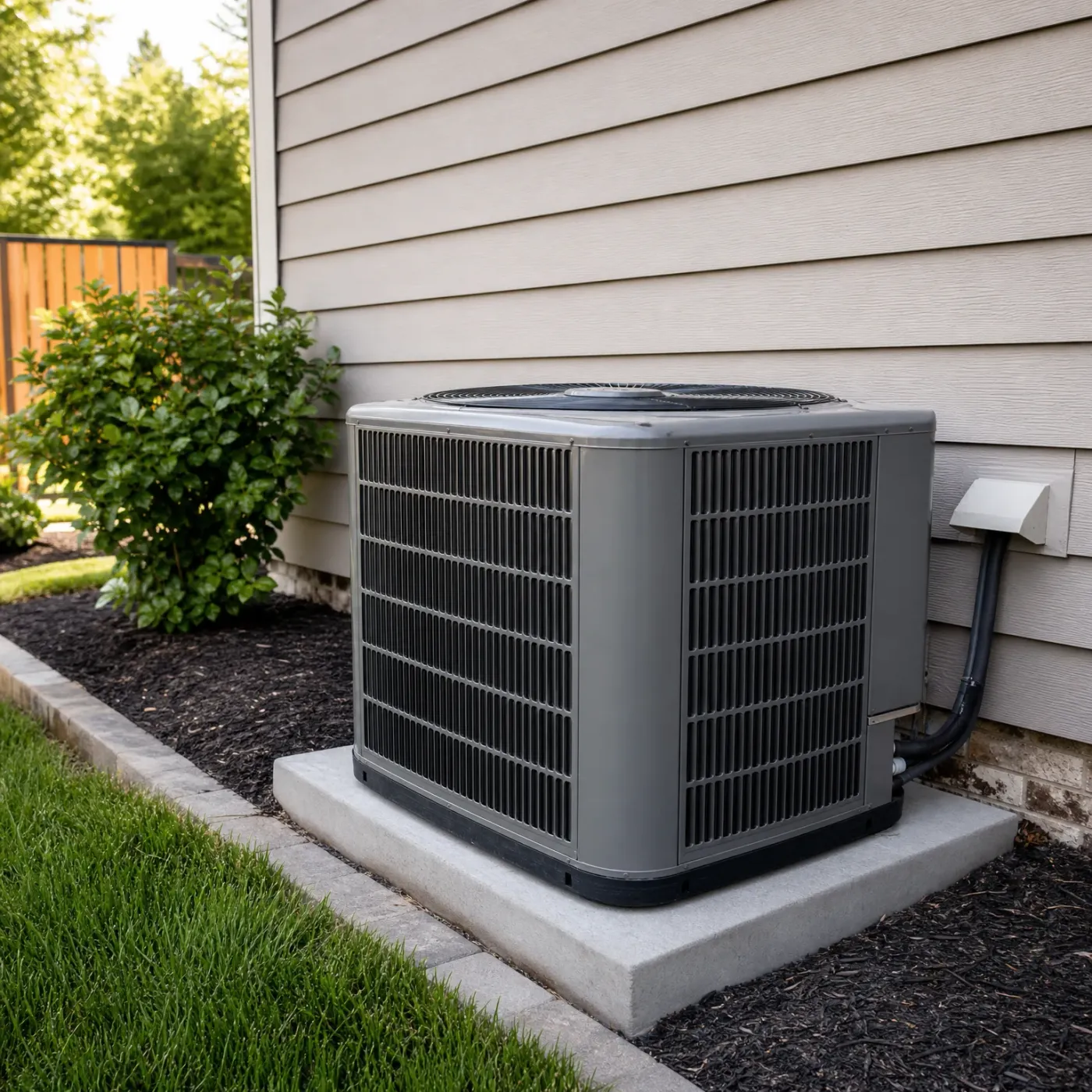
A gray outdoor air conditioner condenser unit on a concrete pad beside a house with white horizontal siding and a brick foundation, with a wall-mounted disconnect box and conduit, and a green shrub with mulch at left.
A clean coil and clear airflow let this unit cool the house without the compressor straining through August.
An outdoor air conditioning condenser unit on a concrete pad beside a house with white horizontal vinyl siding, with a gray electrical disconnect box and refrigerant lines on the wall behind it.
Grime packed into the grille traps heat around the coil, so the compressor overheats and wears down years sooner.
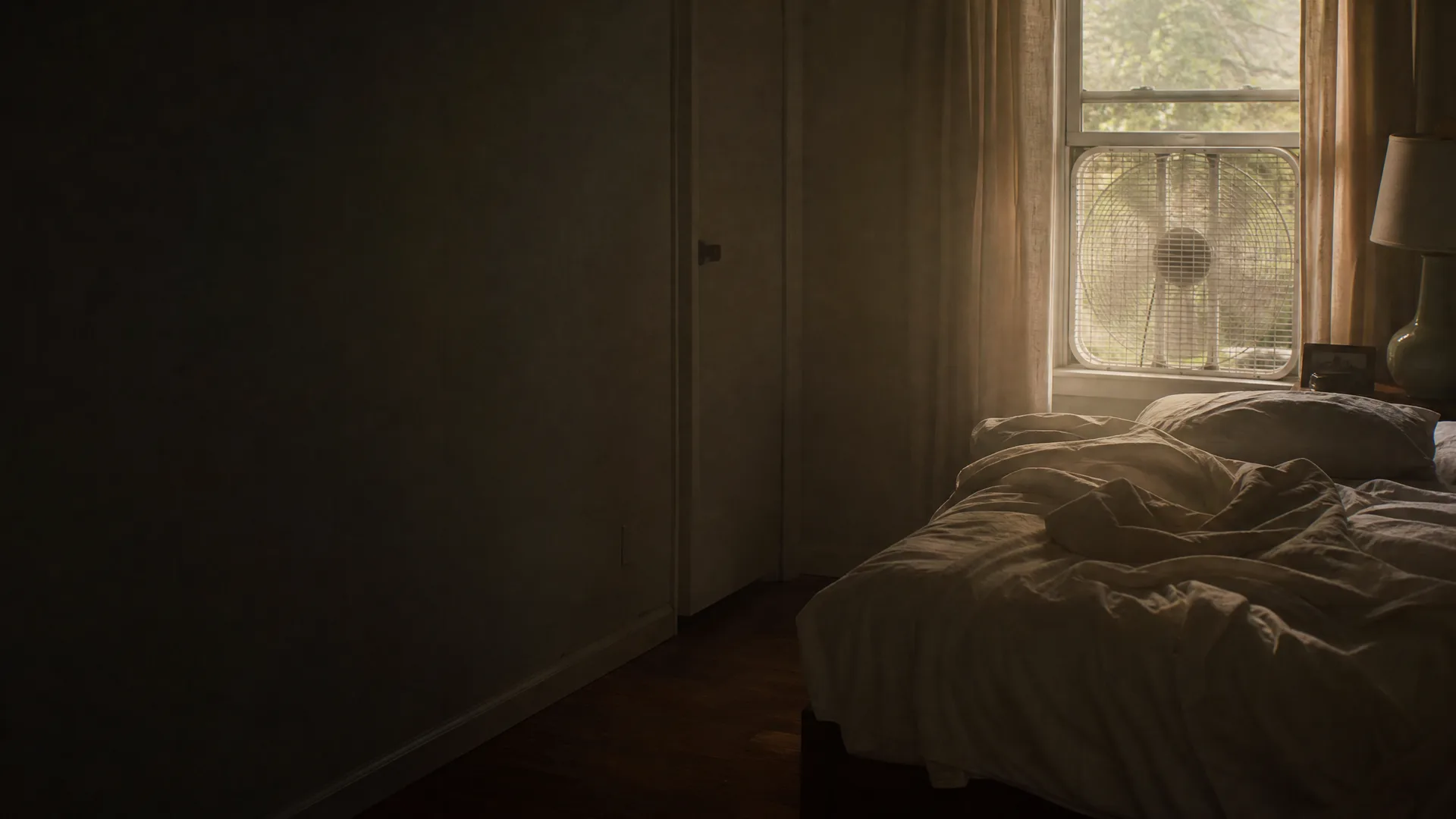
A dim bedroom with an unmade bed beside a window holding a box fan, with sheer curtains, a lamp at right and a large blank wall at left.

It's past eight and still bright outside, that long June light Wisconsin gets. Upstairs, the bedroom hasn't cooled off since afternoon. The box fan is going in the window, pulling in air that isn't much cooler than what's already in the room. You can hear it from the hallway, that steady rattle, pushing the heat around more than moving it out. The sheets feel warm before anyone's even gotten into bed. Downstairs, the thermostat says the system is still running, has been for a while now, and the house isn't catching up. You stand in the doorway a minute, feeling how thick the air is up here compared to the rest of the house, and wonder how long the unit's been working this hard just to lose ground.


Repair the Unit or Replace It

Repair

  • If the unit is under 10 years old and the repair is a single part, like a capacitor or a contactor, fixing it usually makes sense.
  • A repair buys time without the cost of a full install, which matters if you're not ready to replace the whole system yet.
  • Parts for an older unit can be harder to find, since manufacturers stop stocking them once a model's been out of production a while.
  • If the compressor itself has failed, a repair often costs close to what a new unit would, since the compressor is the most expensive part in the system.
  • Repeated repairs on the same unit in back-to-back summers usually mean the system is past the point where fixing it keeps making sense.

Replace

  • A unit that's 12 to 15 years old and losing refrigerant or struggling to keep up through August is a candidate for replacement rather than another repair.
  • A new system comes with a warranty on the compressor and other major parts, so you're not paying out of pocket again right away.
  • Replacing before a total breakdown means you're not without air conditioning during a stretch of ninety-degree days while you wait on a decision.
  • A new unit is sized and installed for the house as it is now, not for whatever assumptions were made when the old one went in.
  • If the old system uses a refrigerant that's being phased out, replacement avoids the cost and hassle of sourcing that refrigerant for a repair.
An outdoor air conditioning condenser unit on a concrete pad beside a house with horizontal lap siding, with an electrical disconnect box and conduit on the wall, mulch and a green shrub to the right, and a concrete walkway in the foreground.
Before you get your air conditioner installation
A gray outdoor air conditioner condenser unit on a concrete pad beside a house with horizontal siding and a stucco foundation, with a disconnect box and conduit on the wall, decorative gravel, mulch, and a shrub nearby.
After you get your air conditioner installation
A gray outdoor air conditioning condenser unit on a concrete pad beside a house with horizontal vinyl siding, with mulch, a shrub, and lawn nearby.

Send one request and you're done looking

Skip the round of in-home estimates for a new air conditioner.

Send the form and stop researching installers for the new air conditioner.

Answer a few questions

Asking costs nothing, and the choice to hire stays yours.

Why does your upstairs never quite cool down?

You notice it most in the rooms farthest from the thermostat. The air coming out of the vents feels lukewarm instead of cold, and the unit outside runs longer than it used to just to get the house partway there. Maybe it cycles on and off more than it should, or you hear a hum or a click before it starts, when it used to just turn on. Your electric bill in July or August is higher than last year, even though you haven't changed the thermostat setting. None of this means the air conditioner is finished, but it does mean it's working harder than it should to do the same job, and that extra strain is what wears out a compressor before its time.

  1. The thermostat calls, and the compressor kicks on outside.

  2. Refrigerant absorbs heat from air moving over the indoor coil.

  3. The blower pushes that cooled air through the ducts.

  4. Hot refrigerant travels outside to the condenser coil.

Power costs 18.08 cents per kilowatt-hour statewide

At 18.08 cents per kilowatt-hour, every extra year you squeeze out of a weak compressor shows up on your bill before it shows up as a breakdown. A unit straining through July and August pulls more power to do the same job, and you pay that rate for every hour it runs.

EIA-861 2025 statewide residential average

A gray outdoor air conditioner condenser unit on a concrete pad beside a house with horizontal lap siding, with a flowering shrub at left and a disconnect box with conduit on the wall at right.

Running clean

This is a system with clear airflow and a clean coil, the kind that holds up through a Wisconsin summer. The disconnect and conduit are intact, nothing is blocking the cabinet, and the compressor isn't fighting anything extra to move heat out of the house.

An outdoor air conditioner condenser unit on a concrete pad beside a house with light horizontal vinyl siding, surrounded by bare dirt, gravel and dry leaves, with refrigerant lines and conduit running along the wall.

Running on borrowed time

Leaves and dirt have built up around the base, and the coil underneath is likely caked with the same grime. Refrigerant lines run exposed along the wall, and a unit left to weather like this is pushing its compressor harder than it should, year over year.

Does it matter what brand I buy if I want it to last?

You've noticed the brand names at the hardware store or heard a neighbor swear by one over another, and you're wondering if paying more for a name gets you a unit that holds up better through a Wisconsin summer, or if that money is better spent somewhere else.

Installation matters more than the brand on the label

Every major brand sells a central air conditioner that can run 12 to 15 years here if it's sized right and put in correctly. The compressor, the coil, the refrigerant lines, these work the same way no matter whose name is on the cabinet. What actually shortens a unit's life is a system too big or too small for the house, refrigerant lines that weren't sealed right, or airflow that was never set up to match the ductwork. A premium brand installed poorly will fail before a basic one installed right. Where brand does matter is parts availability and the warranty terms attached to it, which varies by manufacturer and is worth asking about directly.

A two-story house with cream horizontal siding, a dark gabled roof, and a white front door, fronted by a lawn, shrubs, and a concrete walkway leading to a sidewalk and street, with large leafy trees on both sides.

Summer air in Wisconsin holds a dew point around 60°F on average across June, July and August, according to NOAA climate data. That's sticky enough that your air conditioner isn't just cooling the air, it's wringing moisture out of it too, and pulling humidity out takes more work than dropping temperature alone. You'll notice it as a system that runs longer cycles than the thermostat setting seems to call for, and a house that still feels damp even after the number on the wall looks right. That extra run time adds up over a summer, and it's part of why the compressor wears faster here than it would somewhere dry.

NASA POWER T2MDEW county cells weighted by homes

A closed dark laptop and a ceramic mug of coffee on a wooden dining table, with wooden chairs, a dark kitchen cabinet with cutting boards and a potted plant, and a leafy plant by a window in the background.

12 to 15 years, less if the system's been fighting dirt or low charge all along

A Wisconsin central air conditioner that's cared for will run 12 to 15 years. One that's been low on refrigerant or packed with grime around the coil for seasons at a time will come up short of that, and you'll feel it as a system that struggles through July before it ever quits for good. If yours is already past 15, or it's behaving the way the worn ones do, replacing it is the straightforward move, not the last resort.

When you're at that point, the harder part usually isn't deciding to replace the unit. It's finding someone who'll show up, give you a straight answer, and do the install right, without you calling around to three or four companies, explaining the same thing each time, and sorting through quotes that are hard to compare. Send the form and that search is off your plate. You'll still have a system to replace. You won't be the one tracking down who can do it.

Interior corner of a living room with a beige upholstered sofa and dark cushion in the foreground, a ceramic vase of leafy branches on a dark side table by a curtained window, a framed picture on the wall, and a wood-surround fireplace at right.
A curving paver walkway runs alongside a house with beige lap siding and a white-trimmed window, bordered by low shrubs, grassy plants, and trees in sunlight.
A dark-framed casement window with divided upper panes set in a stucco wall beside a stone-clad section, with hydrangeas, hostas and trimmed shrubs in a mulched bed above a lawn.
White horizontal lap siding wall with a single six-pane double-hung window, above a mulched bed of hydrangea shrubs with browning blooms, bordered by mown grass in low sunlight.
Interior corner with tan plaster walls, a potted olive tree in a large terracotta urn beside a floor-to-ceiling window, and a wooden bench with a beige cushion on a herringbone brick floor partly covered by a woven jute rug.
A wooden bench beneath a window holds a green linen cushion and a fringed cream throw, with a woven basket stored underneath on a wood plank floor.

Finding a pro stops being your job

Describe the project once instead of to every installer.

Describe it once

No fee to send it, and nothing to sign.