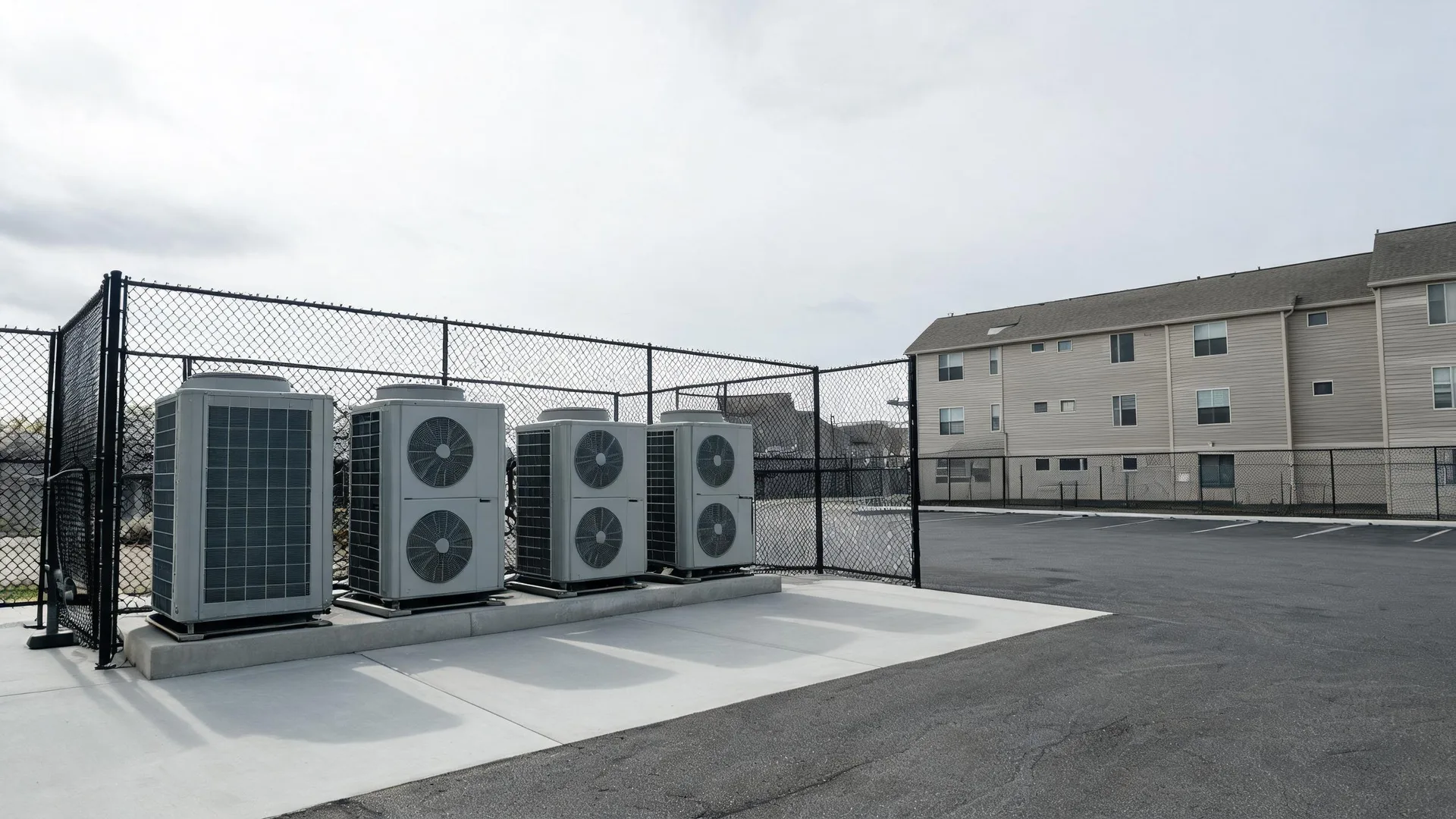
An outdoor HVAC condenser unit on a concrete pad in front of a two-story suburban house.

Heat Pump Repair in Wisconsin Rapids, WI

Tell us about the job

Takes about a minute. No obligation.

RepairHeat PumpWood County, WI
Step 1 of 2

What ZIP code is the job in?

Winters here just mean longer runtime

Wisconsin Rapids winters push the overnight low to around 10°F across December, January and February. That's cold climate territory, zone 6A. A heat pump here runs longer hours than one in a milder state. That's a normal workload, not a strain the system wasn't built for.

So the failure is usually a part, not the place

When a heat pump here stops heating or cooling right, the cause is almost always something that fails in any heat pump anywhere. A weak capacitor. A low refrigerant charge. A failing reversing valve. A frozen coil. Find that part and fix it, and the unit is back to doing what it was built to do.

9 months
September through May, your system heats
2 months
July through August, it cools
10°F
the average winter night it heats against
79°F
the average summer afternoon it cools against
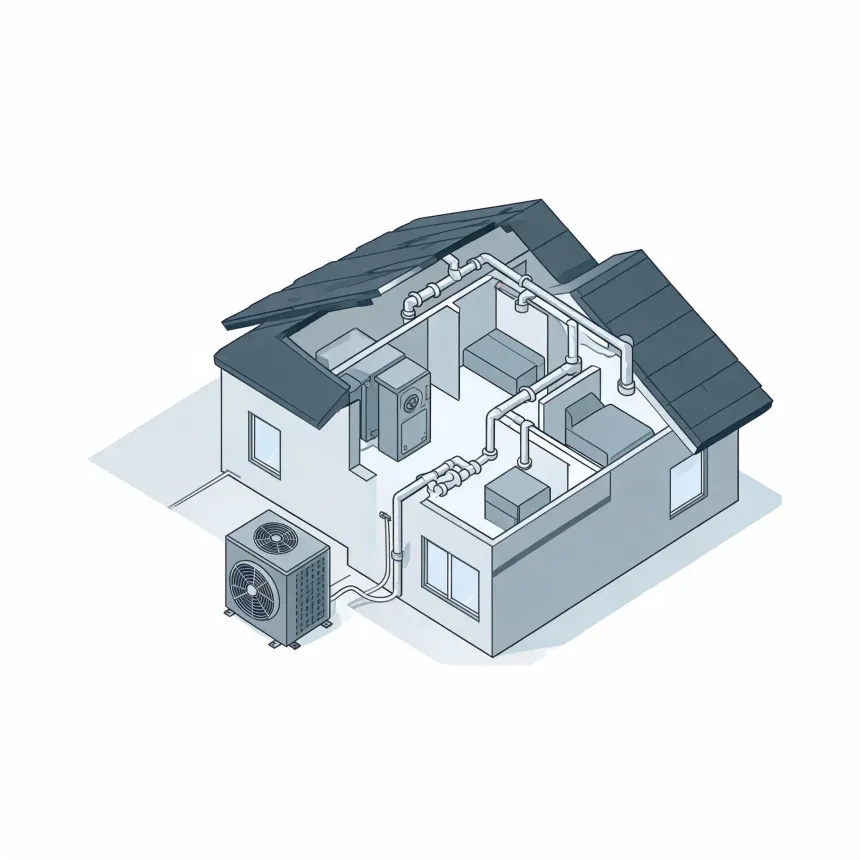
Isometric grayscale illustration of a cutaway two-story house showing interior ductwork, an indoor air handler unit, and an outdoor condenser unit on a pad beside the building.
Your system heats September through May and cools July through August.

NOAA nClimDiv, 1991–2020 normals

A heat pump that's actually broken rarely just stops. It struggles first, then quits.

Short cycling, weak airflow, ice that won't melt, a unit that runs constantly and never gets there. Those are the warnings before the no-heat call.

Nine months of heat a year gives a weak part plenty of chances to fail

Cooling runs July through August
Heat runs September through May
47 damaging wind events from 2015 to 2024
Wisconsin runs on some of the priciest power aroundWisconsin homes paid 17.18 cents per kilowatthour in 2024, so a heat pump working harder than it should costs you every month it stays that way.

Wood County gets its share of rough weather. 118 severe weather events over the years tracked, between damaging wind, hail and winter storms. None of that is aimed at your heat pump, and none of it explains a bad reversing valve or a weak capacitor any better than ordinary wear does. What it does explain is the power going out. Statewide, 18% of Wisconsin households lost power for at least a day last year. If your heat pump won't start at all, check that it's actually getting power before you assume the worst. Outdoor units sometimes don't restart on their own after an outage, and that breaker is worth checking first.

Get the bad part found before it runs up your bill

At 17.18 cents per kilowatthour, every extra hour a struggling heat pump runs shows up on the bill. Getting the actual part diagnosed and replaced stops that waste.

Find a contractor
A gray outdoor HVAC unit mounted on a concrete pad beside a house with gray lap siding and a stone foundation.

Know what you're repairing before you pay for it

If your heat pump came with the house and the house is one of the older ones here, ask the contractor straight what it's worth fixing and what it's not. A unit near the end of its life can still take a part and run, but that doesn't mean it should. Get the honest number on years left before you pay for parts on something that's already most of the way through its life.

Check the thermostat before the unit

Make sure it's set to heat, not auto or cool, and that the set point is actually above room temperature. Replace the batteries if it uses them. A thermostat that lost its schedule or its power can look exactly like a dead heat pump.

Look at the outdoor unit and the air filter

Walk outside and see if the outdoor unit is running, iced over, or buried under anything blocking airflow around it. Then pull the air filter and hold it to the light. A clogged filter starves the system of airflow and can cause the same symptoms as a failing part, and it takes only a minute to check.

A heat pump fails the same way whether it's heating or cooling, because it's the same refrigerant loop running in reverse. The reversing valve is the part unique to this machine, and it's a common failure point, usually getting stuck in one position so the unit blows the wrong temperature of air or won't switch modes at all. The capacitor that kicks the compressor and fan motors on wears down over years of starts and stops, and when it goes weak the outdoor unit hums but won't start, or shuts off on its own. Refrigerant charge matters more here than in a straight AC, since the system depends on it for both jobs, and a slow leak shows up as weak heat in winter and weak cooling in summer. The defrost board and sensor are worth knowing about too. They're what tell the unit to melt ice off the outdoor coil, and when that control fails the coil ices over and airflow drops until the system can't keep up.

A diagnostic visit starts outside, with the unit running if it can run at all. A tech will check the suction and liquid line pressures to see if the charge is right, since both low refrigerant and a bad reversing valve show up as wrong-temperature air. They'll check the capacitor with a meter rather than guess from a hum, because a weak one can still spin the fan while leaving the compressor unable to start. Inside, they'll pull the panel and check the contactor and wiring for scorch marks, since a connection that's run hot for months can look fine until it's touched. If the coil is iced over, they'll check whether the defrost board is actually cycling the unit into defrost on schedule, or whether the sensor reading coil temperature is feeding it bad information. None of this takes guesswork once the gauges are on. It takes knowing which reading points to which part.