






A row of dark-painted single-story houses with gray shingled roofs behind a tall trimmed hedge, with mown lawn, a walkway, and leafy trees under an overcast sky.

Heat Pump Repair in Whitewater, WI

Tell us about the job

Takes about a minute. No obligation.

RepairHeat PumpWalworth County, WI
Step 1 of 2

What ZIP code is the job in?

Winter here is the long stretch. Zone 5A means heating carries the bigger share of the year's work, with overnight lows averaging 16°F across December, January and February. That's the load your heat pump sits under, not some unusual strain from storms or hail. When it stops keeping up, the cause is usually one of a handful of things any heat pump tech checks first. A failing defrost board. A low refrigerant charge. A reversing valve stuck in one position. Nothing about Whitewater pushes this system into problems other homes don't see. It's a matter of finding which part quit and getting it fixed.

8 months
October through May, your system heats
3 months
June through August, it cools
16°F
the average winter night it heats against
81°F
the average summer afternoon it cools against
Isometric cutaway illustration of a two-room house showing an indoor air handler with ductwork connected by lines to an outdoor condenser unit on a pad.
Your system heats October through May and cools June through August.

NOAA nClimDiv, 1991–2020 normals

Heat here runs October through May, with September the one month it sits idle.

A heat pump that struggled last winter will show the same weak part again in October, right when it has to carry full load.

Walworth County weather doesn't explain a heat pump breaking down

151 severe weather events from 2015 to 2024
18% of homes statewide lost power a day or more in 2024
74 damaging wind events from 2015 to 2024
Walworth County, WIHalf the homes in Walworth County were built in 1977 or earlier, half later. Age isn't what breaks a heat pump.

Wisconsin homes paid 17.18 cents per kilowatthour in 2024, well above the national average. A heat pump running on a bad capacitor or a low charge draws more power to do the same job, and at that rate it shows up on the bill fast. Run that way through a Whitewater winter, with the system working hard for months, not weeks, and the extra cost keeps adding up long after the first sign something was off. A short in a defrost board or a struggling compressor doesn't fix itself with time.

Get the real cause fixed before it runs up another bill

A heat pump drawing extra power to fight a bad part doesn't wait for a convenient time to get worse. Get it looked at before it runs another month on Whitewater's electric rates.

Find a contractor
A gray air-source heat pump mounted on a concrete pad next to a house with gray vinyl siding, surrounded by gravel and flanked by green shrubs and white hydrangea flowers.

Left alone, the small failure becomes the big one

A reversing valve stuck halfway puts extra strain on the compressor every time it tries to switch. A low refrigerant charge makes the compressor run longer to move the same amount of heat, and a compressor that runs longer runs hotter. Heat is what wears a compressor out. A defrost board that won't cycle right lets frost build on the outdoor coil, and the system starts pulling in air it can't push past that ice, so it works harder for less heat. None of these fix themselves by running more. Each one asks a weak part to keep doing the job it was already struggling with, and the part that was weak at the start of winter is usually the part that quits before winter's done.

What you can check yourself

Look at the outdoor unit. If the coil is caked in ice or snow and no air is moving through it, clear it off by hand, not with a scraper. Check the thermostat is set to heat and the setpoint is actually above room temperature. Walk the house and check that supply vents are open and nothing is sitting in front of them. Check the breaker panel for a tripped switch on the heat pump or air handler circuit. If the outdoor fan isn't turning at all, that's worth telling whoever comes out.
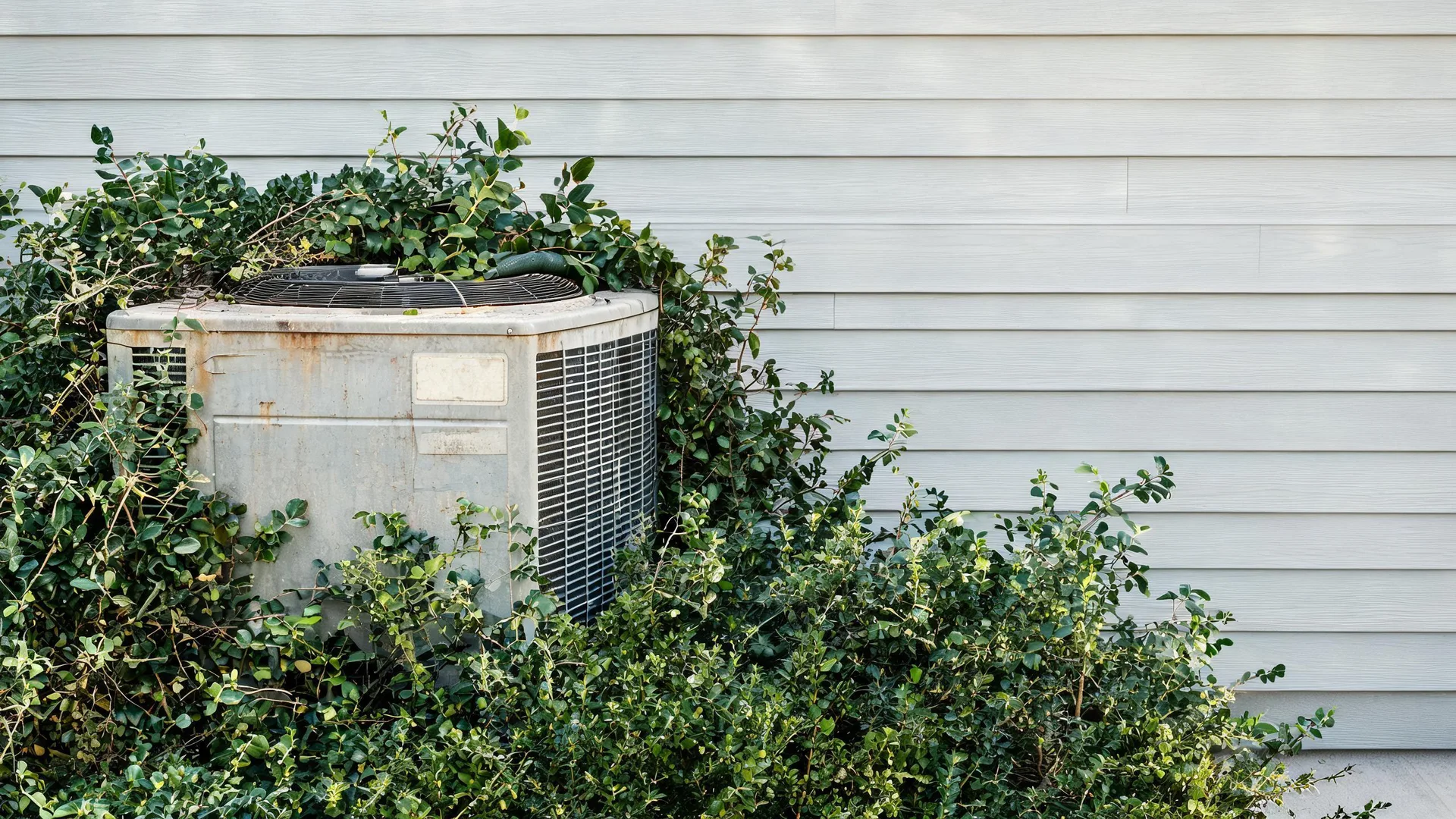
What those checks rule out

A frozen coil, a closed vent or a tripped breaker are things you can fix without a tech. If the ice comes back after you clear it, or the breaker trips again as soon as you reset it, that's not something you did wrong. That points to a part failing inside the system. A reversing valve stuck in position, a defrost board that won't cycle, or a refrigerant leak don't show themselves from outside the cabinet. Finding those takes a gauge set and a tech who knows where to look.

Short cycling is one of the clearest signs something's wrong. The system kicks on, runs a few minutes, shuts off, then starts again before the house has caught up. That's not the heat pump being efficient. That's usually a sign the compressor is overheating, the refrigerant charge is off, or a sensor is giving the control board bad information. Warm air coming out of the vents when the system's in heat mode is another one. A heat pump always moves some heat, even in cold weather, so air that feels cool or room-temperature at the register means it's not pulling heat the way it should. Listen for it too. A clanking, grinding or loud buzzing from the outdoor unit usually means a part inside has come loose, worn down or is about to fail outright.

A diagnostic starts outside, at the unit itself. A tech hooks up a gauge set and checks refrigerant pressure, because that number tells them things the thermostat never will. They'll check the temperature split between the air going in and the air coming out. A heat pump moving heat the way it should shows a specific difference there. The reversing valve gets tested under power, not just looked at. A valve can look fine sitting still and still fail to switch when it's told to. The capacitor that gets the compressor started, the contactor that feeds it power, the defrost board that tells the system when to cycle into defrost and back, all of those get checked too. Most of what's wrong with a heat pump doesn't show itself from across the yard. It shows up in these readings, one at a time, until the one that's off points to the part that's failing.