





A row of dark-sided single-story houses behind a tall trimmed hedge and a large tree, with a mown lawn and a paved path under an overcast sky.

Heat Pump Repair in Wausau, WI

Tell us about the job

Takes about a minute. No obligation.

RepairHeat PumpMarathon County, WI
Step 1 of 2

What ZIP code is the job in?

A heat pump here switches between heating and cooling and runs most of the year because of it. Zone 6A means a long cold stretch, and this is a county that also sees real weather: 82 damaging wind events and 33 winter storms between 2015 and 2024. Hail has hit 49 times in that same stretch, and that outdoor unit sits outside through all of it, coils and fan exposed. Add in defrost cycles working overtime through a hard winter, and the compressor and reversing valve see more stress than they would somewhere milder. That's a lot of starts and stops asked of the same set of parts. When something's off, it's worth having a contractor trace it back to the actual part rather than guessing, so the repair holds.

9 months
September through May, your system heats
2 months
July through August, it cools
9°F
the average winter night it heats against
78°F
the average summer afternoon it cools against
Isometric cutaway illustration of a house showing interior ductwork, an indoor air handler unit, and an outdoor condenser unit beside the building.
Your system heats September through May and cools July through August.

NOAA nClimDiv, 1991–2020 normals

Marathon County has had 10 tornadoes touch down between 2015 and 2024, on top of the wind, hail and winter storms already on record.

An outdoor unit exposed to that gets checked after a bad storm, even if it's still running.

Expensive power means a struggling heat pump hits your bill hard

Power here costs 16.66 cents per kilowatt-hour
Climate zone 6A
Cooling runs July through August
Trouble Starts Early in the SeasonHeat runs September through May here, and a weak part usually gives out in the first cold snap.

If the outdoor unit took a hit in a storm, don't wait for it to fail outright. A bent fin or a cracked fan blade can still let the unit limp along for weeks before it quits for good. Ice buildup after a winter storm can do the same thing to the coil without any dent to show for it. A contractor can check the coil, the fan blade and the refrigerant lines in a few minutes and tell you whether storm damage is behind what you're seeing. Worth asking for even if the unit still turns on.

A Hardworking System Still Needs the Right Diagnosis

A heat pump that's been asked to do more for longer is a heat pump where the small stuff shows up sooner. If yours is making noise, short cycling, or not holding temperature, that's worth tracing to the actual part now, while it's still a repair and not a replacement. A contractor can check the compressor, the reversing valve and the refrigerant charge and tell you what's actually worn versus what just needs a fix.

Find a contractor
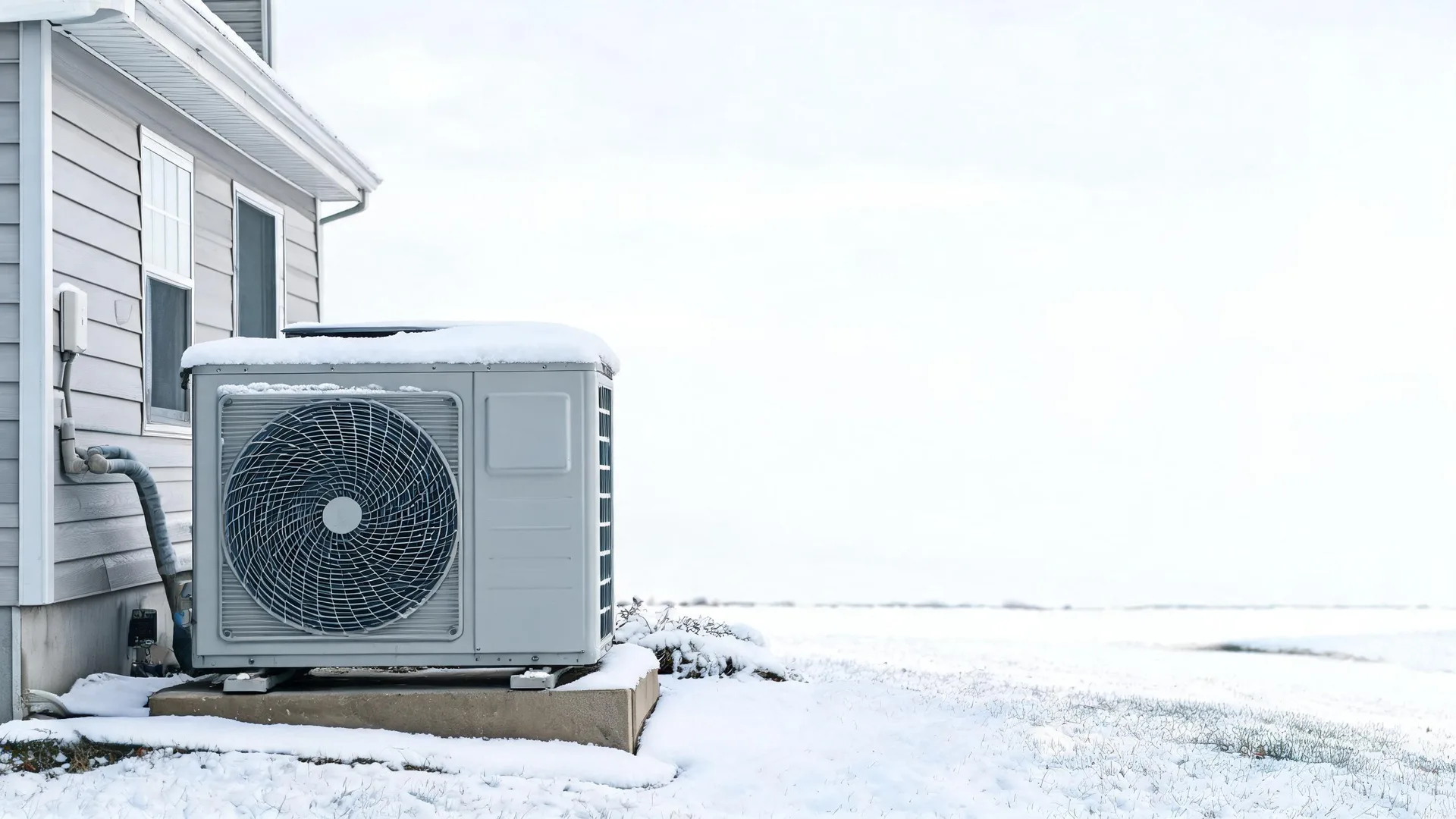
A residential heat pump outdoor unit mounted on a concrete pad next to a house with gray vinyl siding.

What Years of Running Does to the Parts

A heat pump run for years without a break shows its age in specific ways. The reversing valve can start sticking, so the system blows cold air when it should be heating, or it hangs onto one mode longer than it should. Short cycling is another sign, the unit kicking on and off in quick bursts instead of running a full cycle. That wears the compressor faster than steady runs do. Listen for a hard clunk when the system switches between heating and cooling, or a hum that doesn't resolve into the usual running sound. Ice that builds up on the outdoor coil and doesn't clear during the defrost cycle points to a failing defrost control or a low refrigerant charge, either one worth a contractor's look before the compressor takes the damage instead.

Most Failures Start With the Small Parts

The compressor rarely fails on its own. It usually fails because something smaller let it down first, a capacitor that weakened, a contactor with pitted contacts, a low refrigerant charge from a slow leak. Those parts are cheap to replace next to the compressor they protect. Left alone, they make the compressor work harder to cover for them until it overheats or seizes.
Moving Parts Wear, Sensors Drift

Anything that moves or switches is where to look first. The reversing valve can stick from built-up residue inside it. Fan motor bearings wear and start making noise before they seize. Sensors and defrost boards drift out of calibration over time, so the system misreads temperature and runs a cycle it doesn't need, or skips one it does. None of these show up on an inspection sticker. They show up as a system that runs but doesn't act right.

A heat pump that's cycling wrong or short cycling isn't just annoying, it's pulling power the whole time it does it. Power here isn't cheap, and a unit working through a stuck reversing valve or a weak capacitor draws more than one running the way it should. That cost shows up every month this goes unfixed, not just once. Getting a contractor out to trace the actual part now keeps it from compounding into a bigger repair, and stops the bill from carrying the weight of a problem that has a fix.

A diagnostic visit starts outside at the unit itself, not with a guess. A contractor checks the refrigerant charge, because low refrigerant shows up as weak heating or weak cooling long before anything else looks wrong. They'll run the system in both modes and watch how it switches, since a reversing valve that hesitates or sticks tells on itself right there. Electrical readings come next, the capacitor and contactor checked under load rather than just looked at, because a part can look fine sitting still and still be failing under power. They'll check the defrost cycle too, timing whether it clears the coil the way it should. All of that points to one part, not a vague sense that something's off, and that's what makes the repair that follows actually hold.