





A low-angle view across a mown lawn and trimmed hedge toward a dark two-story house with a covered porch, framed by large leafy trees under an overcast sky.

Heat Pump Repair in Waukesha, WI

Tell us about the job

Takes about a minute. No obligation.

RepairHeat PumpWaukesha County, WI
Step 1 of 2

What ZIP code is the job in?

Waukesha County saw 103 damaging wind events and 77 hail events between 2015 and 2024, along with 10 tornadoes. That outdoor unit sits outside year round, and hail dents the fins and bends the cabinet in ways that are easy to miss from a glance out the window. Wind throws branches and debris into the coil too. A heat pump can keep running after a hit like that and still be losing efficiency or heading toward a bigger failure. If a storm has come through, it's worth having the unit looked at even if the heat or air still comes on.

8 months
October through May, your system heats
3 months
June through August, it cools
16°F
the average winter night it heats against
80°F
the average summer afternoon it cools against
Isometric cutaway illustration of a small house showing ducted air distribution, an indoor air handler, and an outdoor condenser unit connected by lines, with a sofa and bed in the rooms.
Your system heats October through May and cools June through August.

NOAA nClimDiv, 1991–2020 normals

Electricity in Waukesha County averaged 20.20 cents per kilowatt-hour in 2025, higher than most US counties.

A heat pump struggling to heat or cool draws more power to do it, and at that rate it shows up on the bill fast.

Three storm counts, one outdoor unit that has to take all of it

103 damaging wind events from 2015 to 2024
77 hail events from 2015 to 2024
18 winter storms from 2015 to 2024

Half the homes in Waukesha County were built in 1981 or later. If yours is one of them, the heat pump probably isn't that old either, even if it's not the original unit. A repair on a system with years left in it is usually worth making rather than replacing the whole thing. The parts inside a heat pump, the compressor, the reversing valve, the board, don't wear out just because a storm knocked something loose or a capacitor gave out. Have it looked at before deciding the unit itself is done.

If a storm came through, have the unit checked

After wind or hail moves through, have the outdoor unit looked at even if the heat pump still runs. A dented cabinet or a coil packed with debris can cost efficiency now and lead to a bigger repair later, and that's easy to miss just glancing out the window.

Find a contractor
A man in a dark T-shirt and brown work pants carries a canvas tool bag up wooden porch steps toward a green front door, beside a potted shrub.
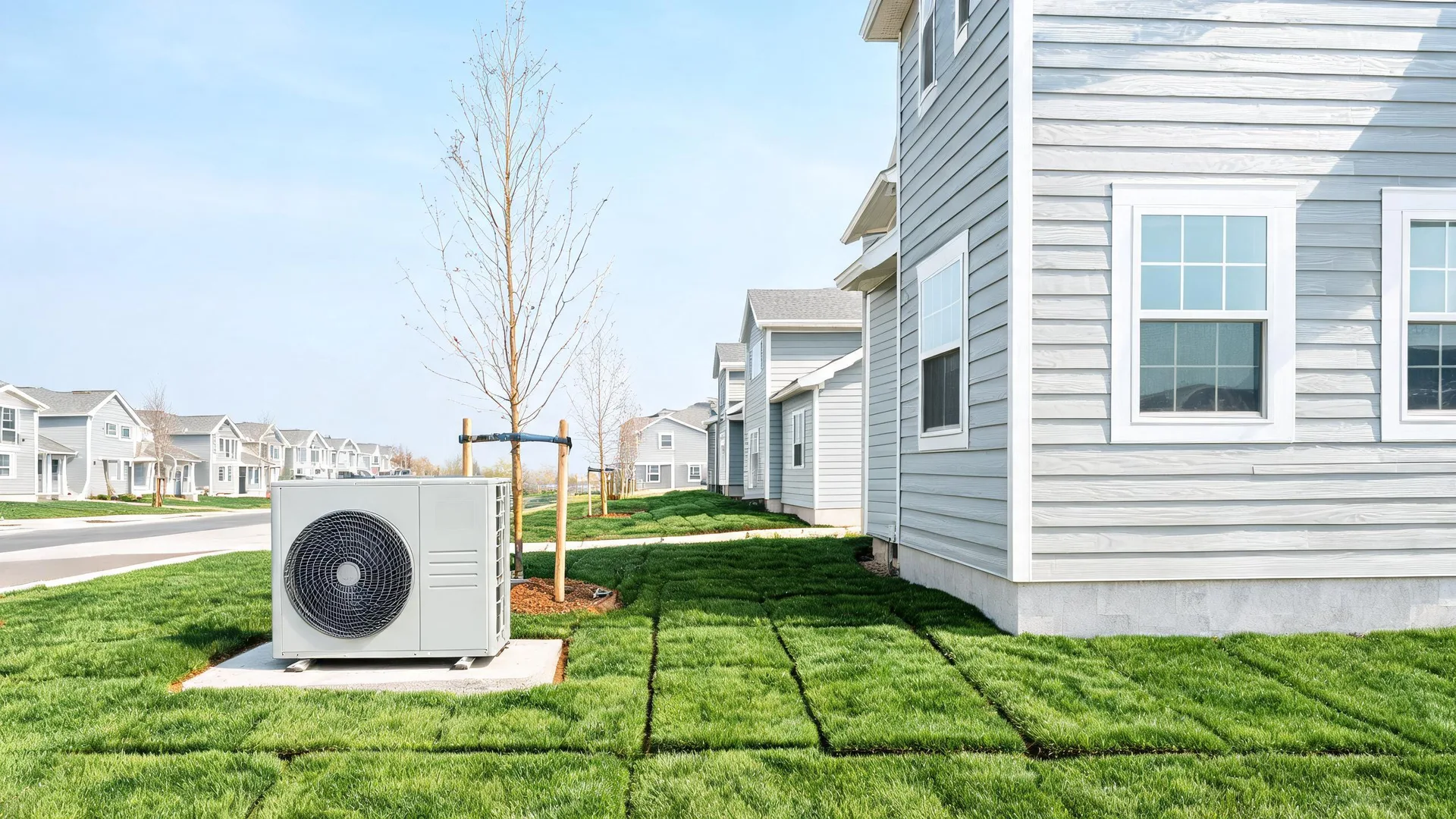
A residential heat pump outdoor unit mounted on a concrete pad next to a house with gray vinyl siding.

Eight months of heat, three of cooling, almost no rest in between

This heat pump runs eight months a year here, October through May, then switches to cooling for June through August. That barely leaves it idle. Most breakdowns show up right at the start of one of those runs, when the system that sat unused suddenly has to carry a full load. A heat pump that struggled at the end of last winter and got switched off for summer often shows the same problem the day it's asked to heat again in October. The same goes for the switch to cooling in June. Whatever was marginal in May doesn't fix itself over a month of sitting still. If the unit is acting up right as one of these shifts happens, that timing is a clue, not a coincidence.

What actually wears out

The compressor is the heart of the system, and most failures trace back to something that made it work harder than it should have. Low refrigerant charge from a slow leak forces it to run longer to hit the same temperature, and that extra runtime wears it down early. A failing capacitor can't give the compressor or fan motor the jolt they need to start, so the unit hums or clicks and never turns over. Contactors pit and stick from years of opening and closing, and when they stick the outdoor unit keeps running even after it should have shut off. The reversing valve, which is what lets the system switch between heating and cooling, can fail stuck in one position, and that shows up as a unit blowing cold air when it should be heating or the reverse.
What that means for a repair call

Most of these failures give a warning before they become a full breakdown. Ice building up on the outdoor coil when it shouldn't, a unit that short cycles on and off, a breaker that trips more than once, these are signs worth calling in rather than waiting out. Catching a weak capacitor or a slow refrigerant leak early is a small repair. Letting either one run the compressor into the ground turns it into a much bigger one. A unit that's making a new noise or running longer than it used to is already telling you something, even if it still heats or cools for now.

Before calling anyone, check the thermostat first. Make sure it's set to heat or cool as needed and the batteries aren't dead, since a blank or unresponsive display sometimes isn't the heat pump at all. Go look at the outdoor unit. If snow, leaves or debris are packed around it or ice is covering the coil, that alone can stop it from working right, and clearing it is safe to do yourself. Check the breaker panel for anything tripped, and reset it once, but if it trips again leave it alone rather than resetting it repeatedly. Look at the air filter too. A filter clogged with dust chokes airflow and can make the whole system struggle even when nothing else is wrong. None of this calls for opening the cabinet or touching refrigerant lines. That part is for someone trained to do it safely.

A heat pump that's low on charge or losing a fight with a stuck contactor doesn't just run worse, it runs longer to make up for it. Power here already costs more than in most places, so those extra hours show up on the bill fast. Waiting on a repair doesn't save you the cost of the repair. It just adds the running cost on top while you wait. If the unit is already acting up, having it looked at sooner keeps that cost from climbing on a system that's struggling anyway.