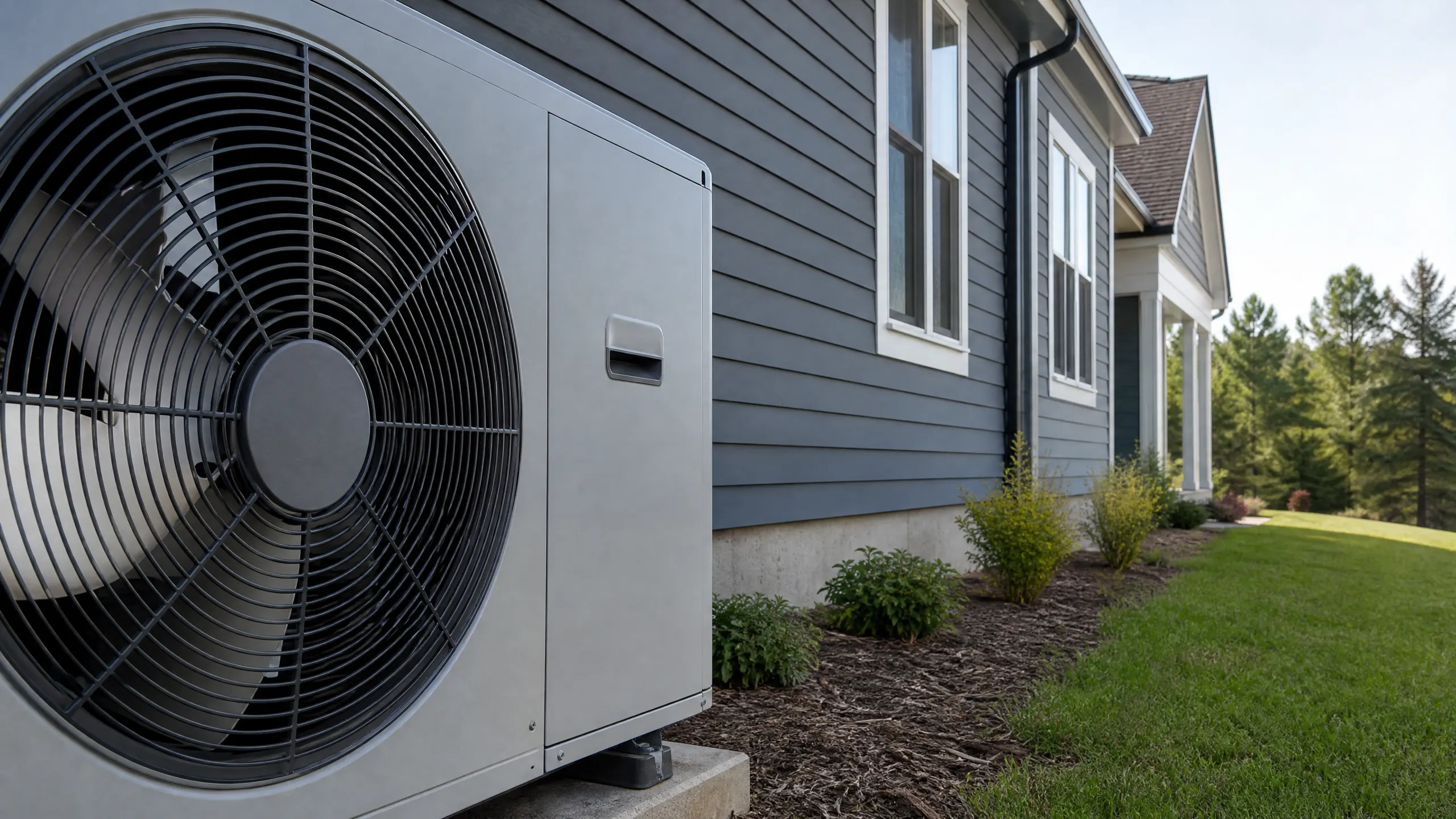





A heat pump outdoor unit mounted on a concrete pad next to the gray-sided exterior wall of a residential house.

Heat Pump Repair in Watertown, WI

Tell us about the job

Takes about a minute. No obligation.

RepairHeat PumpJefferson County, WI
Step 1 of 2

What ZIP code is the job in?

A heat pump in Jefferson County switches over to heating in October and keeps running through May. The first cold snap in September or October is when a weak part finally gets tested, since the system has to work harder than it has all year. If your heat pump is slow to warm the house or short cycling once the weather turns, that is usually a sign something was already wearing down. The same goes for June, when cooling starts back up after months of sitting idle. Getting it looked at as soon as you notice a problem is worth more than waiting to see if it clears up on its own.

8 months
October through May, your system heats
3 months
June through August, it cools
15°F
the average winter night it heats against
81°F
the average summer afternoon it cools against
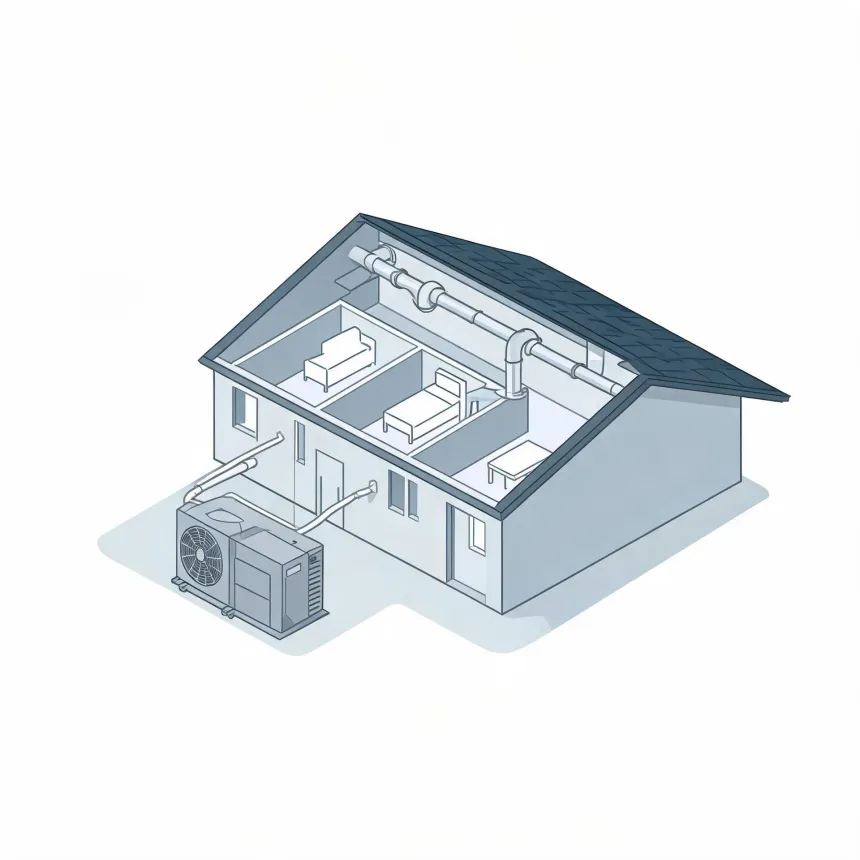
Isometric line illustration of a cutaway single-story house showing interior rooms with furniture and attic ductwork connected to an outdoor condenser unit beside the building.
Your system heats October through May and cools June through August.

NOAA nClimDiv, 1991–2020 normals

Jefferson County winters average 15°F overnight through December, January and February, a normal load for a heat pump built for zone 5A.

A heat pump that struggles here is most likely dealing with a worn part, not the cold.

At 17.18 cents a kWh, a heat pump running wrong is a cost you'll see on the bill

Power costs 17.18 cents a kWh statewide
60 damaging wind events from 2015 to 2024
30 hail events from 2015 to 2024

Jefferson County sees its share of rough weather, 126 severe events over 2015 to 2024, with wind and hail the most common. Most of that is a problem for the power grid and the outdoor unit's housing, not for how the heat pump itself runs day to day. A branch or hail dent on the cabinet doesn't mean the compressor or the reversing valve took any damage. Power is a separate question. A good share of Wisconsin households lost power for a full day at some point last year, and a heat pump that sits off for a stretch in the cold can come back slow to recover or stuck in a cycle that doesn't warm the house. If yours has been acting up since a storm or an outage, that's worth mentioning to whoever comes to look at it.

If your heat pump came with an older home, repair isn't the only question

Half the homes in Jefferson County were built in 1973 or earlier. A heat pump doesn't last as long as the house around it, so if yours came with an older home, it's likely on its second or third system already, or due for one. That changes the question. Before you pay for a big repair, it's worth finding out how much life is left in the unit you have.

Find a contractor
A man in a cap, olive shirt and dark pants walks up wooden porch steps toward a green door, carrying a waxed canvas tool bag.
A gray heat pump condenser unit mounted on a concrete pad against the gray lap-siding exterior wall of a house.

Ask about the unit's age before you fix it

Ask whoever comes out to look how old the outdoor unit actually is before they quote the repair. If it's original to the house or close to it, get a straight answer on what's left in it, not just what's wrong with it today. A part can be fixed and still leave you with a unit that's one failure away from the next one.

The reversing valve is the usual weak point

The reversing valve is what lets a heat pump switch between heating and cooling, and it fails more than almost anything else in the system. A stuck valve can leave the unit blowing cold air when it should be heating, or running nonstop without warming the house. Once it sticks or leaks refrigerant internally, it needs replacing, not adjusting.
A failing part rarely shows up all at once

A capacitor going weak, a contactor pitting, or refrigerant slowly leaking out all start as small drops in performance before the unit stops working outright. That's why a heat pump that seems to be working a little harder than it used to is already telling you something, well before it quits on a cold morning.

Ice on the outdoor unit is normal in small amounts, and the system clears it on its own during defrost. Ice that builds up thick, or stays after a defrost cycle finishes, means the defrost control or a sensor isn't doing its job. Listen for what the unit does when it switches between heating and cooling. A clunk or shudder at that moment can mean the reversing valve is starting to stick. Warm air that doesn't feel warm is another one worth paying attention to, since a heat pump's air naturally runs cooler than a furnace's, but it should still climb the house temperature steadily. If it's blowing and the house isn't warming up, or the unit runs long stretches without shutting off, that's the system struggling to keep up rather than just doing its job quietly.

A diagnostic visit starts outside, at the unit itself. Whoever comes out will check refrigerant pressures, look at the reversing valve, and watch what happens when the system switches between heating and cooling. They'll check the capacitor and contactor, since those wear out quietly long before they fail outright. Inside, they'll check the thermostat call against what the unit is actually doing, and look at airflow through the vents, since weak airflow can mimic a failing compressor without being one. Most of this is listening and watching the system run through a full cycle, not just reading a gauge. A tech who gives you an answer without running the unit through at least one heating or cooling cycle hasn't actually seen what yours is doing.