




Three lit brick homes on a tree-lined residential street photographed at dusk.

Heat Pump Repair in Stevens Point, WI

Tell us about the job

Takes about a minute. No obligation.

RepairHeat PumpPortage County, WI
Step 1 of 2

What ZIP code is the job in?

Winter here settles in for the long haul. Overnight lows average 10°F through December, January and February. That's normal demand for a heat pump, not abuse. The usual reason one struggles in weather like this is a refrigerant leak, a failing defrost control, or an outdoor coil caked in ice and unable to pull in heat. None of that is particular to Portage County. A contractor checking yours will look at the same things they'd check anywhere this cold. Charge level, the defrost cycle, airflow across the coil. Get it looked at before a cold snap turns a repair into a system that won't keep up at all.

9 months
September through May, your system heats
2 months
July through August, it cools
10°F
the average winter night it heats against
79°F
the average summer afternoon it cools against
Isometric cutaway illustration of a single-story house showing interior rooms, attic ductwork and an air handler, with an outdoor condenser unit connected by lines along the exterior wall.
Your system heats September through May and cools July through August.

NOAA nClimDiv, 1991–2020 normals

Heat pumps here run heat from September through May.

August is when a weak part fails, right before nine months of heat start.

Electricity here isn't cheapWisconsin homes paid 17.18 cents per kilowatthour in 2024, and a struggling heat pump runs up every one of them.

Half the homes in Portage County were built in 1979 or later. If yours is one of them, the heat pump age isn't working against you the way it might in an older house. A newer system that's icing up, short cycling, or blowing cold air usually has a specific cause, not a general one. Something like a stuck reversing valve or a low charge from a slow leak. That's worth tracking down and fixing rather than treating as a sign the unit is done. If your system came with the house, check the install date against what the contractor finds before deciding what makes sense here.

A heat pump running badly keeps costing you until it's fixed

A heat pump that's low on charge or icing up doesn't just run poorly, it runs constantly trying to keep up. At 17.18 cents per kilowatthour, that's not a small drag on the bill. Get the cause found and fixed instead of paying it every month.

Find a contractor
A man in a dark cap, navy long-sleeve shirt and tan work pants walks up porch steps toward a green front door, carrying a worn canvas tool bag in his right hand.
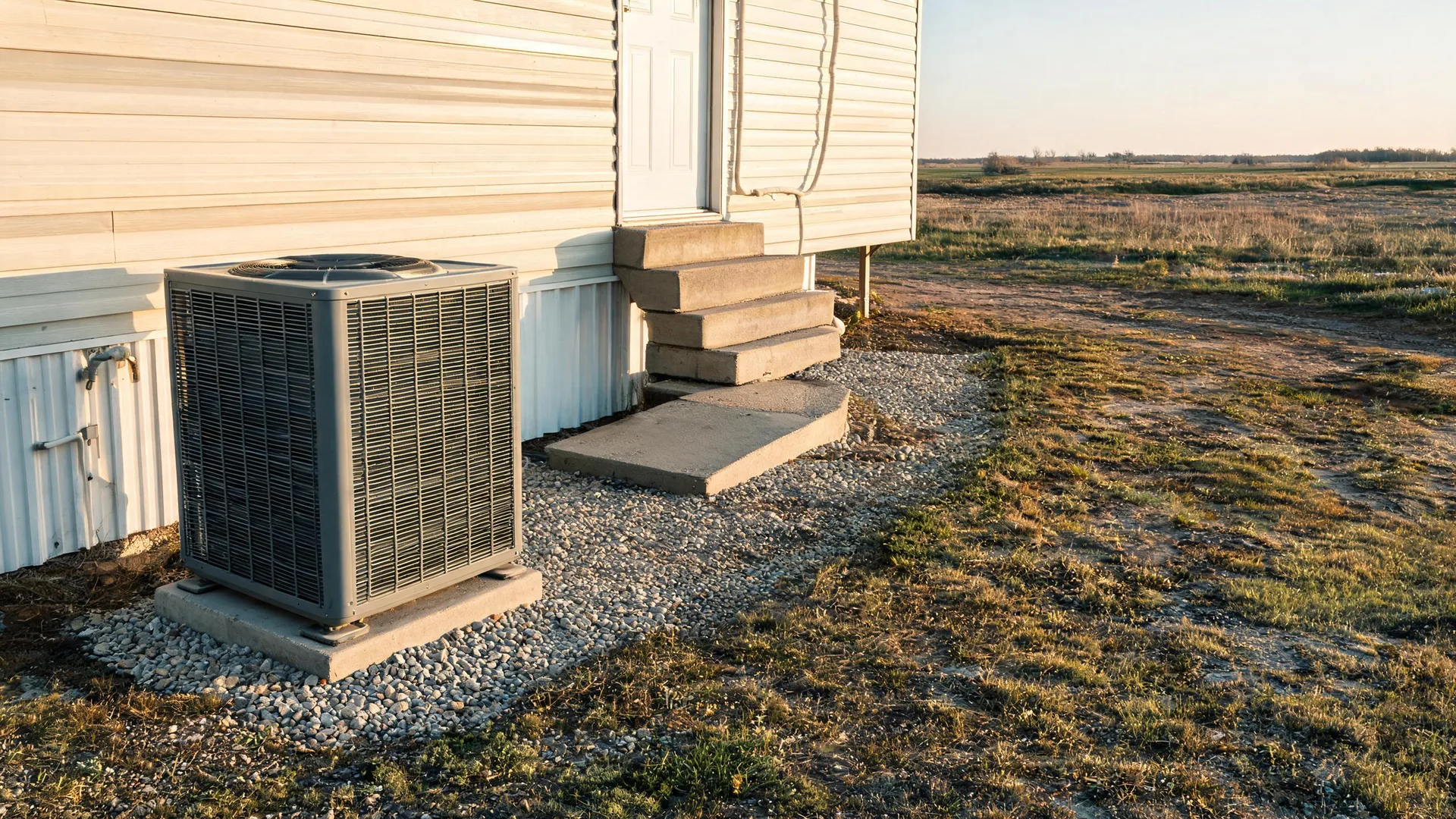
A gray heat pump outdoor unit mounted on a concrete pad next to the stone-accented exterior wall of a house.

What to check yourself before the diagnosis starts

Before anyone comes out, there's a check you can do yourself. Look at the outdoor unit. If the coil is caked in ice or buried in snow, that alone can cause everything from weak heat to a system that won't stop running. Clear snow away from the unit if you can reach it safely, and check that nothing is blocking airflow around it, no bushes grown in too close, no cover left on by mistake. Inside, check the air filter. A clogged filter starves the system of airflow and can trigger the same symptoms as a failing part. Check the thermostat is actually set to heat and not accidentally switched to a fan-only or emergency setting. If you have a breaker panel you can safely check, make sure the breaker for the outdoor unit hasn't tripped. None of this tells you whether the reversing valve or the charge is the problem, but it rules out the easy things first, and it's the same starting point any contractor would want you to have already covered.

Blowing air that isn't warm

A heat pump in heating mode should feel warm at the vent, not room temperature or cooler. Air that stays lukewarm points to the reversing valve stuck in the wrong position or refrigerant too low to carry heat inside. Either way the system is running without doing its job.
Short cycling or never shutting off

A unit that starts and stops every few minutes, or one that runs nonstop and never seems to catch up, is telling you something is wrong with the cycle itself. Short cycling points to a control or sensor problem. Running without end points to a charge or airflow problem. Both wear the compressor faster the longer they go unfixed.

A reversing valve that's starting to stick won't fail clean. It hesitates between modes, and the longer it runs that way, the more the seals inside wear from switching under pressure they weren't built for. Ice on the outdoor coil behaves the same way. A little frost melts off on schedule and does no harm, but once the defrost control falls behind, the ice layer thickens and blocks more airflow with each cycle, so the system pulls in less heat and runs longer to make up for it. That longer runtime is exactly what packs more ice on. A slow refrigerant leak follows the same pattern. Low charge makes the compressor work harder to move what's left, and a compressor working outside its normal pressures wears faster than one that's properly charged. None of these fix themselves by running. Each one gets harder to undo the longer the system keeps trying to push through it.

A diagnostic visit starts with gauges, not guesses. A contractor connects them to the service ports and reads refrigerant pressure on both sides, because that reading alone rules a lot in or out before anything gets taken apart. From there it's the reversing valve, watched while the system is forced through a mode change to see if it actually switches or just hesitates. The outdoor coil gets a look too, for ice or for airflow blocked by something simpler than a failing part. Only after that does the defrost control come into it, checked against the sensor it relies on to know when to run. Each step either clears a part or points to it, and that order matters, because replacing the wrong thing first just hides what's actually failing.