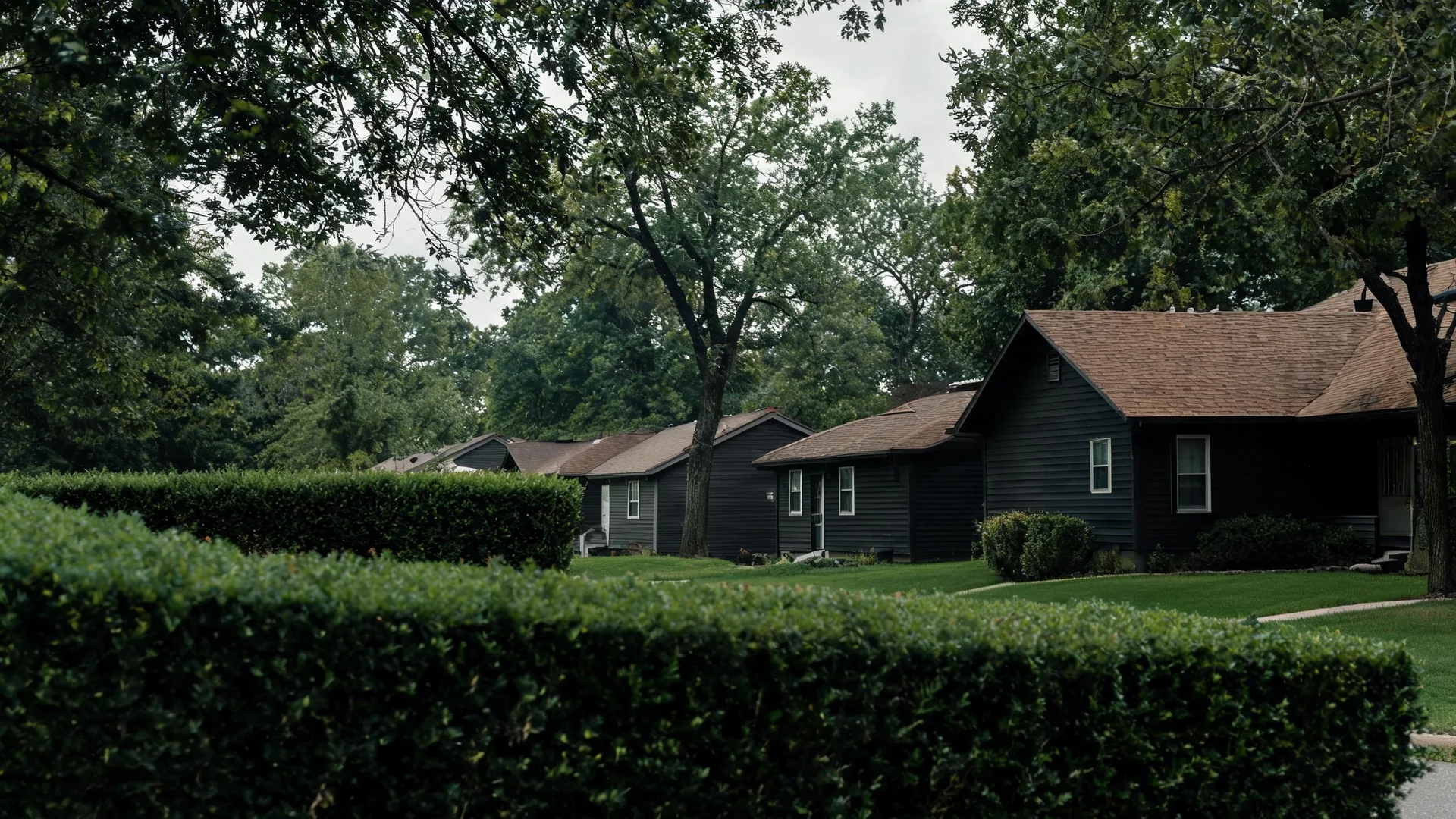

A row of dark-sided houses with brown shingled roofs behind trimmed hedges, lawn, and large deciduous trees under an overcast sky.

Heat Pump Repair in Sparta, WI

Tell us about the job

Takes about a minute. No obligation.

RepairHeat PumpMonroe County, WI
Step 1 of 2

What ZIP code is the job in?

Winter is the hard season for a heat pump here. Overnight lows in Monroe County average 10°F across December, January and February, cold enough that your system is working for most of its heating hours rather than coasting through a mild stretch. Still, nothing about this climate is unusual for a heat pump. A unit here is doing the same job as one in any cool, humid zone, no more. So if yours is short-cycling, running nonstop, or not keeping the house warm, the cause is almost always something specific. A low refrigerant charge. A defrost control that's not cycling right. A coil caked with dirt. A reversing valve stuck in one position. Find the actual part at fault and the fix is usually straightforward.

9 months
September through May, your system heats
3 months
June through August, it cools
10°F
the average winter night it heats against
79°F
the average summer afternoon it cools against
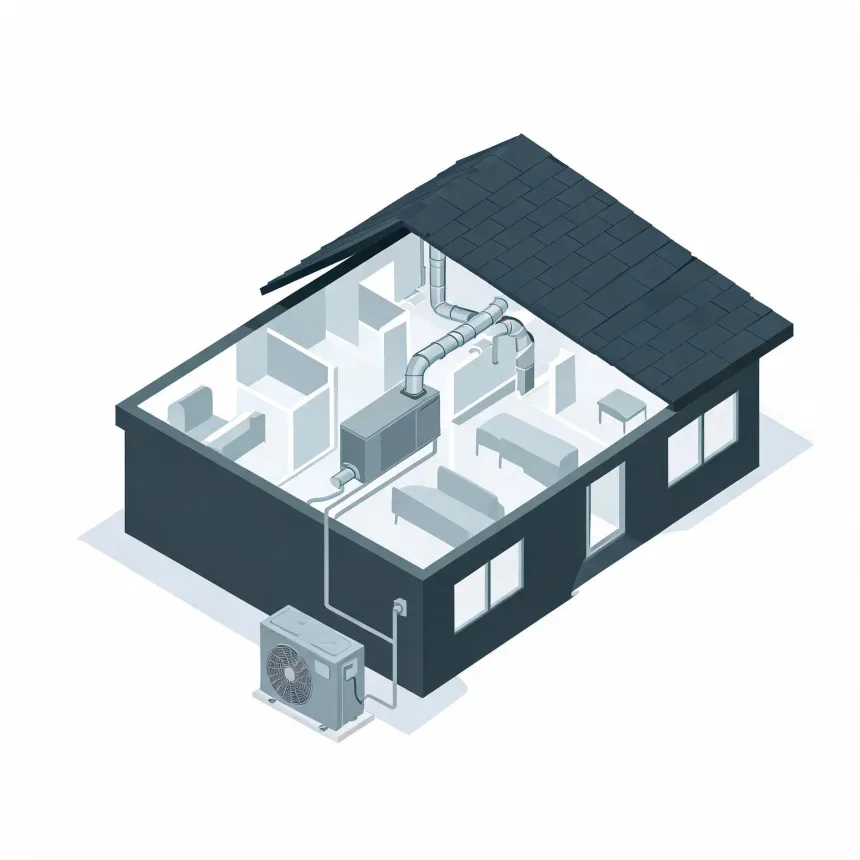
Isometric cutaway illustration of a single-story house showing interior rooms, ceiling ductwork connected to an air handler, and an outdoor condenser unit linked by a line set.
Your system heats September through May and cools June through August.

NOAA nClimDiv, 1991–2020 normals

Heat runs September through May here, nine months a year.

August is when a weak part gets tested, so a heat pump that struggled last winter will show it again.

Wisconsin electricity ran 17.18 cents per kilowatthour in 2024, among the higher rates in the country. A heat pump running clean costs what it costs. One with a low charge or a dirty coil has to run longer to do the same job, so every cycle draws more than it should. That difference shows up on the bill long before the unit quits outright. If yours has been running longer than it used to, or cycling on and off more than it should, that is worth having looked at now.

Get the usual fix

Nothing about this area is especially hard on it. It's most likely the usual problem with the usual fix.

Find a contractor
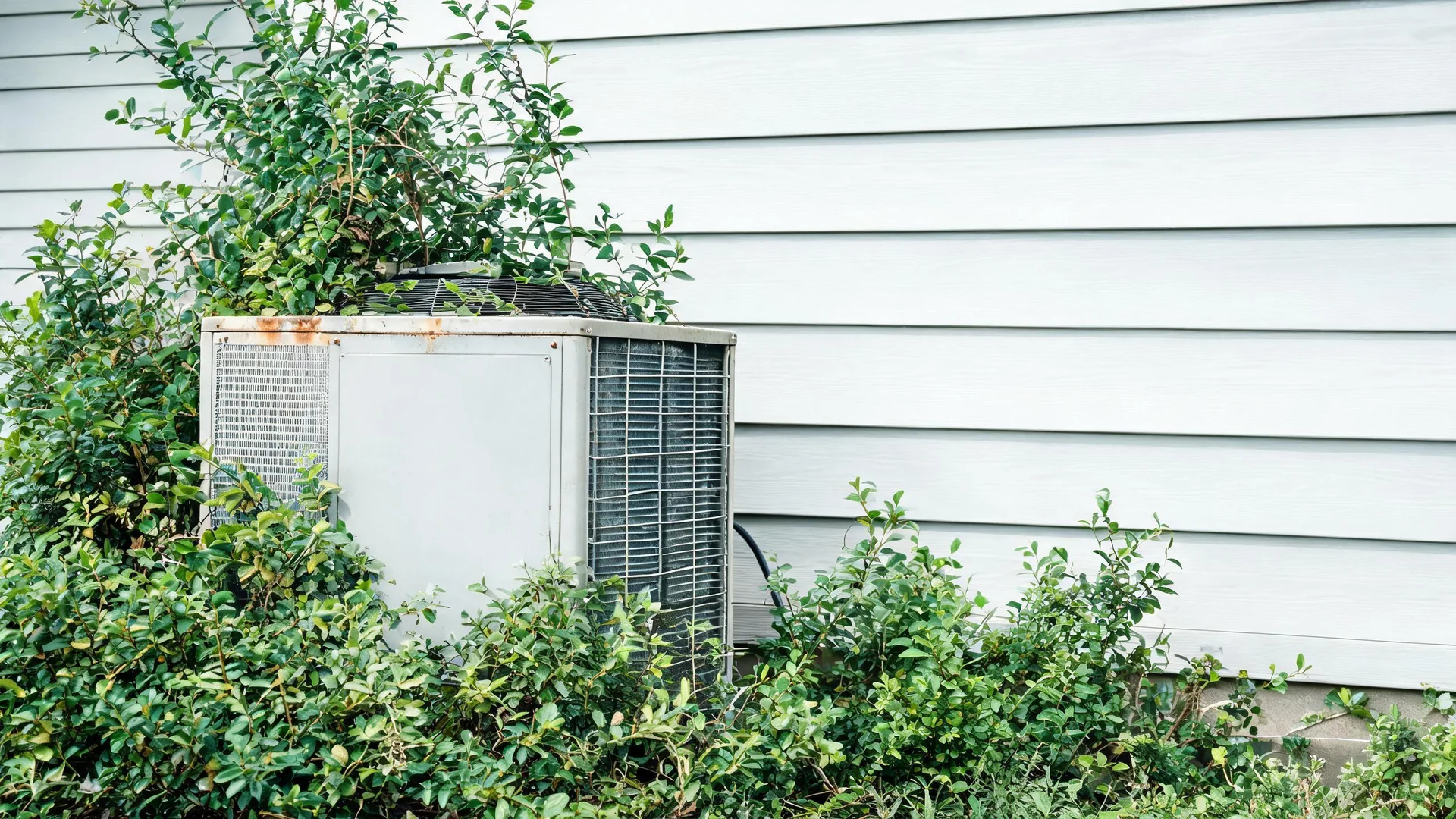
A gray air-source heat pump mounted on a concrete pad next to a house with gray vinyl siding, surrounded by gravel and flanked by green shrubs and white hydrangea flowers.

Check the system's age before you decide its fate

If your heat pump came with the house, check what year that was. A unit running for a handful of years still has most of its working life ahead of it. One stuck reversing valve or a failed capacitor doesn't change that. Get the part fixed and the system keeps going.

A small refrigerant leak gets worse under load

A heat pump low on charge will still run and still make some heat, so it's easy to let it go. But the compressor was built to pump a specific amount of refrigerant, and running it short makes it work harder and run hotter every cycle. Left alone, that heat is what kills compressors.
A failing part rarely fails alone

A stuck reversing valve or a weak capacitor puts extra strain on the compressor, since it has to start harder or run in the wrong mode to compensate. The longer the bad part stays in, the more cycles the compressor spends under that strain. Replacing a valve or a capacitor is a small job. Replacing a compressor is not.

Most heat pump failures trace back to a handful of usual suspects. The reversing valve sticks and the system heats when it should defrost, or the other way around. The defrost control fails and frost builds on the outdoor coil until airflow chokes off entirely. A capacitor weakens and the compressor or fan motor struggles to start, drawing more current each time it tries. Refrigerant leaks out slowly at a fitting or coil joint, and the system keeps running on a charge it was never built to run on. Contactors pit and burn from years of cycling on and off. None of these show up overnight. They wear in slowly, the system compensates for a while, and then one cold morning it can't anymore.

A diagnostic visit starts outside, at the unit itself. A tech checks the refrigerant pressures, the temperature split between supply and return air, and the amp draw on the compressor and fan motor. Those readings point to most problems before a panel ever comes off. From there it's a process of checking the parts most likely to be at fault. The reversing valve. The defrost control board. The capacitor. The contactor. Each one has a right reading and a wrong one, so there's not much guessing involved. If the system is low on charge, the next step is finding where it's leaking out, since adding refrigerant to a system that's losing it only buys a little time. By the end, the goal is a specific answer. This part, this failure, this fix, not a general sense that something's off.