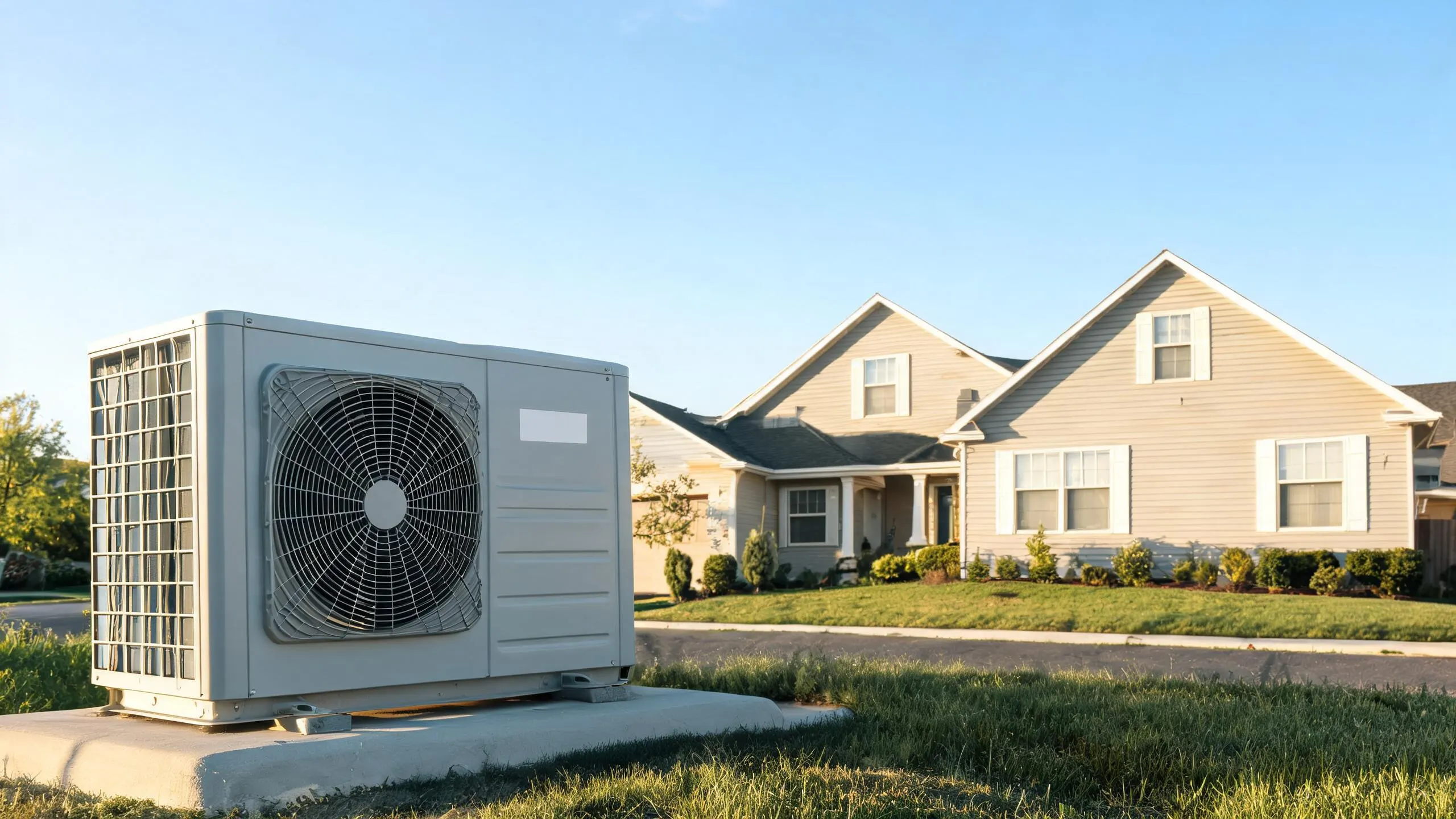





An outdoor heat pump unit mounted on a concrete pad in front of a two-story suburban house.

Heat Pump Repair in Shawano, WI

Tell us about the job

Takes about a minute. No obligation.

RepairHeat PumpShawano County, WI
Step 1 of 2

What ZIP code is the job in?

Winter here runs long and cold, with overnight lows averaging 10°F through December, January and February. That's normal strain for a heat pump, not a sign anything was built wrong. Most calls come down to a frozen outdoor coil, a failing defrost control, or a system that's low on refrigerant and working harder than it should. A unit that runs constantly without warming the house, or one stuck in defrost, is telling you something specific. Get a contractor to check it before you assume the whole system needs replacing.

9 months
September through May, your system heats
2 months
July through August, it cools
10°F
the average winter night it heats against
78°F
the average summer afternoon it cools against
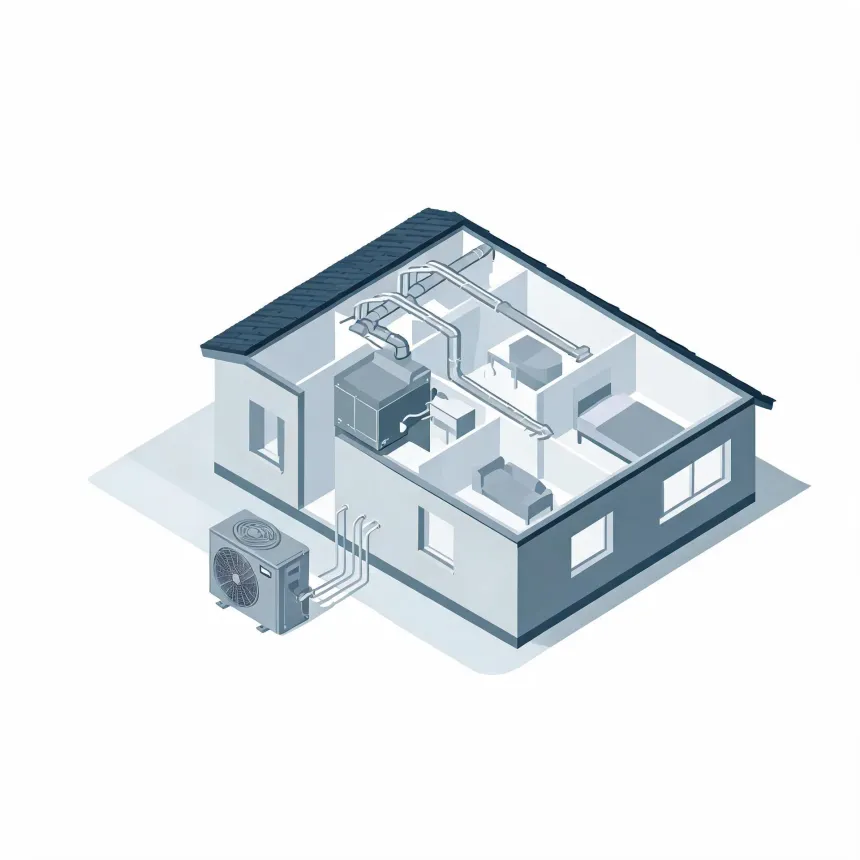
Isometric cutaway illustration of a single-story house showing interior rooms with ductwork, an indoor air handler unit, and an outdoor condenser unit connected by lines along the exterior wall.
Your system heats September through May and cools July through August.

NOAA nClimDiv, 1991–2020 normals

Heat here starts in September, right after a quiet stretch in July and August.

A heat pump that limped through summer without much work gets tested hard the first cold week, and that's when a weak part finally gives out.

At 17.18 cents a kilowatt-hour, a heat pump working harder than it should costs you every month it runs

Power costs 17.18 cents a kWh statewide
15 hail events from 2015 to 2024
29 winter storms from 2015 to 2024
Heat pump repair in Shawano CountyHalf the homes here were built in 1975 or earlier, half in 1975 or later. Age isn't what decides this repair.

A heat pump that's low on charge or stuck in defrost doesn't just heat poorly, it runs longer to make up for it. Every extra hour shows up on the bill at 17.18 cents a kilowatt-hour. Waiting a few weeks to get it looked at means paying that rate on a system working harder than it needs to, the whole time. Have a contractor find the actual cause, a frozen coil, a bad defrost control, a refrigerant leak, and fix that instead of letting the system grind through winter on extra power.

Get the usual fix

Nothing about this area is especially hard on it. It's most likely the usual problem with the usual fix.

Find a contractor
A white mini-split heat pump outdoor unit mounted on a concrete pad beside a gray-sided house, surrounded by gravel and green shrubs.

What to check yourself before the service call

Before anyone comes out, look at the outdoor unit. If the coil is caked in ice or snow, that's worth noting, but don't chip at it or hose it off. Check the thermostat is set to heat and the temperature is actually above room temp. Walk around inside and feel the vents. Air that's barely warm, or blowing cold, tells a contractor something different than no air at all. Check your breaker panel for anything tripped. If you have a disconnect box by the outdoor unit, make sure it's pushed in all the way. Look at your air filter while you're at it. A filter clogged with dust chokes airflow and can bring on a lot of the same symptoms as a real mechanical fault. None of this fixes a bad defrost board or a refrigerant leak, but it rules out the simple stuff fast, and it gives the contractor a clearer starting point than 'it's not working.'

The reversing valve gets blamed for everything

A heat pump switches between heating and cooling with one valve, and that valve moves every single cycle, all year. It's the part most likely to stick or fail outright, and when it does, the system can blow cold air in heating mode or get stuck in one mode entirely. If the outdoor unit sounds like it's trying to switch but the house temperature doesn't respond, that valve is worth checking first.
Refrigerant doesn't run out, it leaks out

A sealed system doesn't use up refrigerant the way a car uses gas. If the charge is low, there's a leak somewhere, usually at a fitting, a coil, or a line that's rubbed through. Topping it off without finding the leak just buys a few weeks before the same symptoms come back, and running low forces the compressor to work harder than it's built for.

Most heat pump problems show up as a change you can feel, not a system that quits outright. The air from the vents turns lukewarm instead of warm. The outdoor unit runs and runs without the house ever catching up. Short cycling is another sign worth paying attention to. The system kicks on, shuts off within a few minutes, then starts again, and that wears on the compressor every time it happens. Listen for anything new too, like a hard clunk when the system switches between heating and cooling, a hiss that wasn't there before, or a grinding sound from the outdoor unit. Ice building up on the outdoor coil and staying past a normal defrost cycle is also worth a call rather than a wait and see. None of these point to the same repair, but all of them mean something is wearing out now rather than later.

A heat pump works harder and runs longer than a furnace, so parts wear and the question of repair versus replacement comes up more often. Age by itself doesn't answer it. What matters is whether the compressor is still sound. That's the one part that's expensive to replace on its own, and if a contractor finds it's failing, putting money into anything else on an old system usually doesn't make sense. A refrigerant leak, a bad defrost board, a stuck reversing valve, those are worth fixing on a system that still runs well otherwise. If you're replacing the same part for the second or third time, or the system needed a service call every season for the last few years, that pattern tells you more than the part itself does.