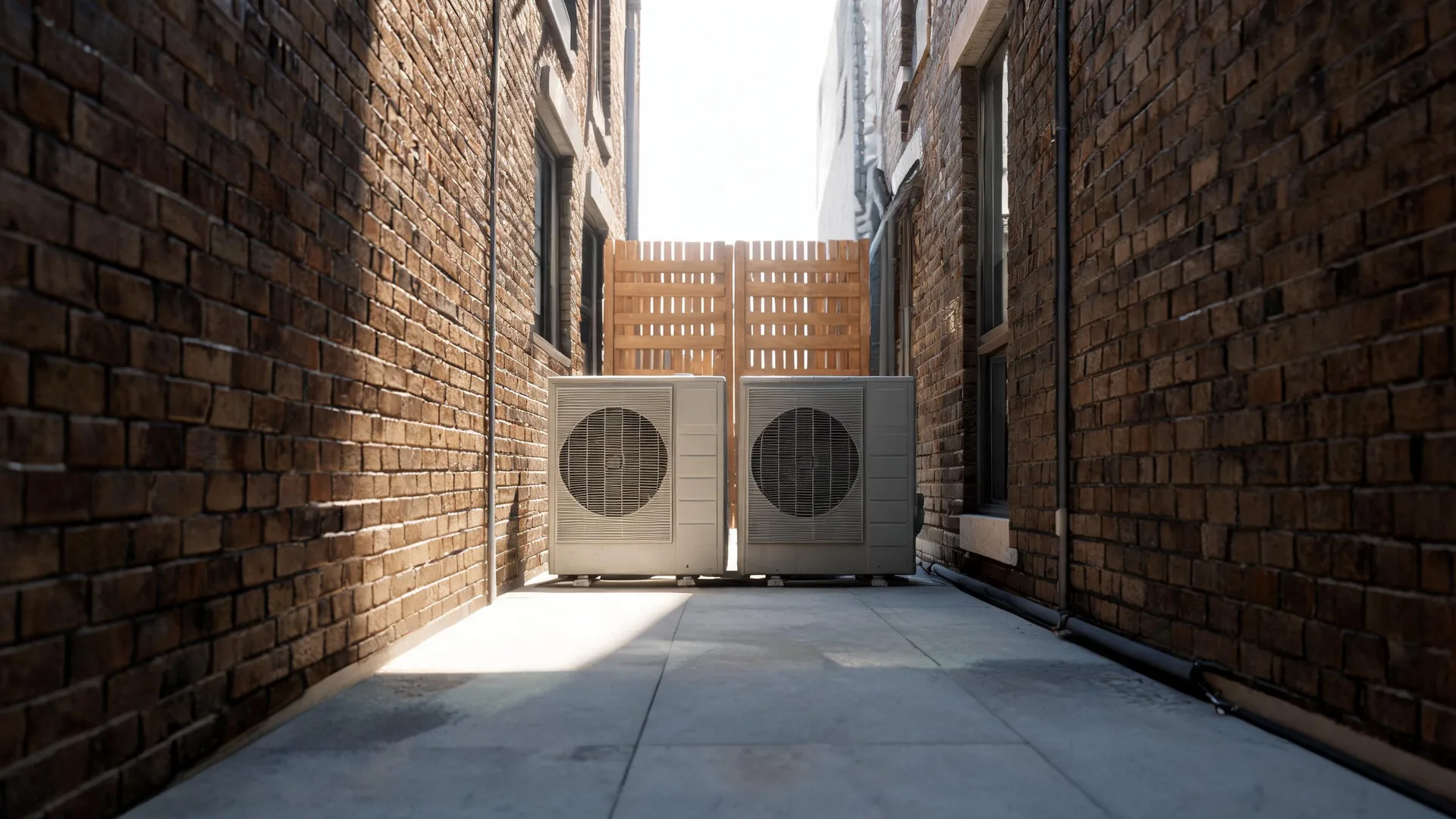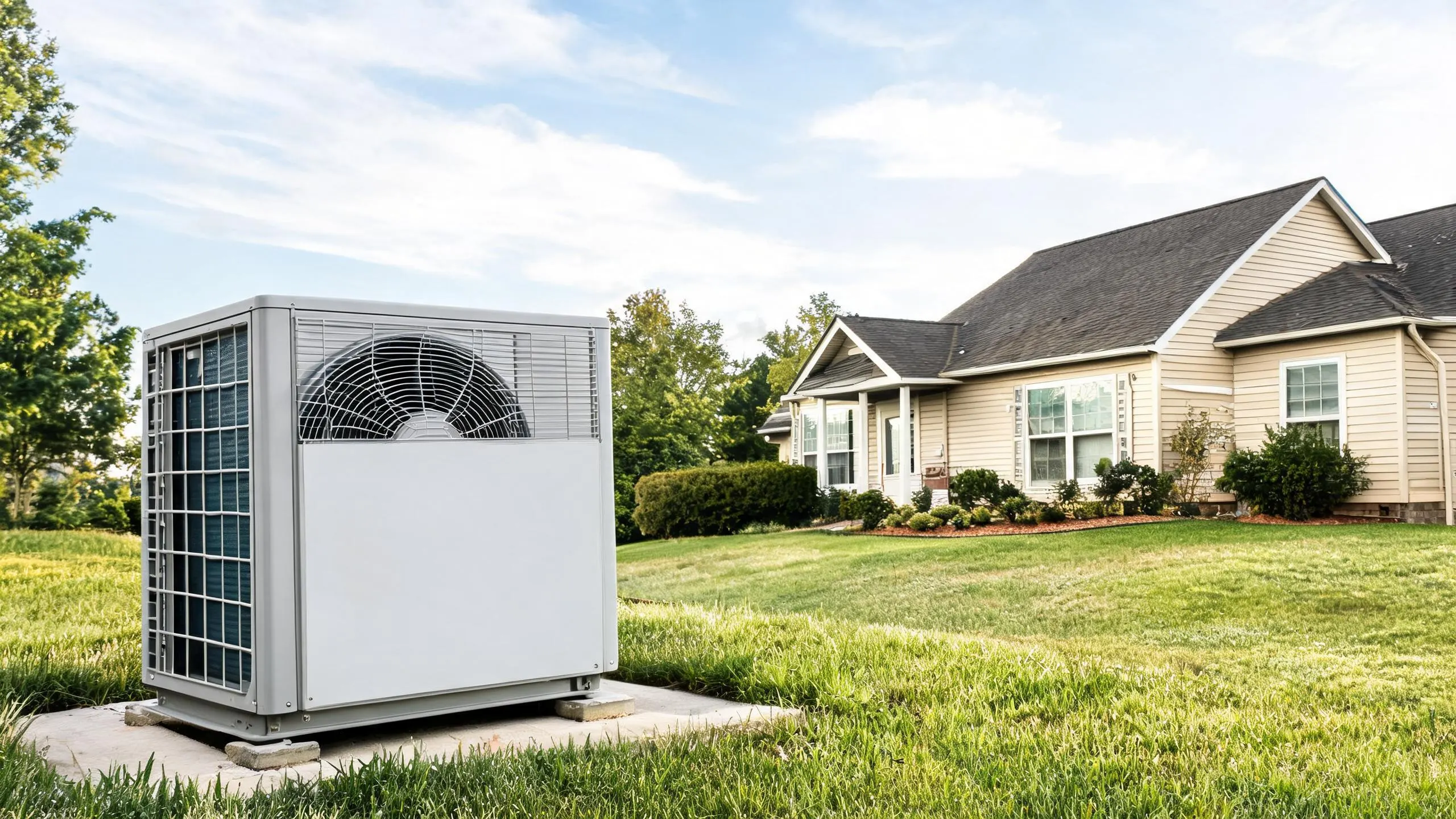
An outdoor heat pump unit mounted on a concrete pad in front of a single-story suburban house with beige siding.

Heat Pump Repair in Rice Lake, WI

Tell us about the job

Takes about a minute. No obligation.

RepairHeat PumpBarron County, WI
Step 1 of 2

What ZIP code is the job in?

August is when a weak heat pump shows itself

Heat here runs September through May, nine months of work for one system. When the switch to heat comes in September, a weak capacitor or low charge that coasted through the cooling months gets asked for more, and that is when it fails.


A failure now is usually one part, not the whole system

A heat pump that struggles the moment heat season starts is typically pointing at a single cause, like a stuck reversing valve or a low charge. Finding that part is the job, not replacing things until one of them fixes it.

9 months
September through May, your system heats
2 months
July through August, it cools
7°F
the average winter night it heats against
78°F
the average summer afternoon it cools against
Isometric line illustration of a cutaway single-story house showing interior ductwork, an indoor air handler unit, and an outdoor condenser connected by refrigerant lines, with a dark shingled roof.
Your system heats September through May and cools July through August.

NOAA nClimDiv, 1991–2020 normals

A heat pump that keeps cycling on a bad start capacitor makes the compressor pull harder every time it starts.

Run it long enough that way and the compressor itself gives out, which is a far bigger repair than the capacitor ever was.

At 17.18 cents a kWh, a heat pump running wrong is a cost you'll see every month

Power costs 17.18 cents a kWh statewide
26 hail events from 2015 to 2024
26 winter storms from 2015 to 2024
Barron County homes split evenly, 1977 or earlier and 1977 or laterNeither age points to anything unusual. The problem is most likely one part, not the house.

A heat pump that's short cycling or running too long to hit the thermostat setting is burning power the whole time it does it. At 17.18 cents a kWh, that shows up on the bill before you've pinned down what's wrong. Getting a contractor out to find the actual cause, a stuck reversing valve, a low charge, whatever it is, stops the waste at the source instead of letting it run through another month.

Get it looked at early

Problems tend to show up in the first weeks of the season, when the load hits a part that was already weak.

Find a contractor
A gray heat pump outdoor unit mounted on a concrete pad next to a residential house with lap siding and stone accents.

What a heat pump sounds and feels like before it quits

A heat pump in trouble usually tells you before it quits outright. Air coming from the vents feels cool instead of warm, even though the system is running. The house takes longer to reach the thermostat setting than it used to, or never quite gets there. Outside, frost can build up on the coil and stay past the point where it should have cleared itself. Listen for a clicking that repeats without the compressor ever starting up, or a new hum that wasn't there before. If the outdoor fan is turning but you don't hear the compressor join in, that's a sign on its own. None of this tells you which part has failed. That part is what a contractor figures out on site. What it does tell you is that the system is working harder than it should to do the same job, and that tends to get worse, not better, left alone.

What's safe to check yourself

Look at the thermostat first. Make sure it's set to heat and not fan only, and that the setting is actually above room temperature. Check the outdoor unit for anything blocking it, leaves, a snowdrift, anything sitting against the coil. Inside, pull the filter and hold it up to a light. If you can't see through it, swap it. None of this touches the refrigerant side or the electrical, and it shouldn't have to.

What to leave alone

Don't open the outdoor unit's cabinet or touch anything near the compressor. Don't try to clear frost off the coil by hand or with a tool, a heat pump is supposed to defrost itself, and if it isn't, that's a sign for a contractor, not a chore for you. If the breaker's tripped, you can reset it once. If it trips again, stop there and get someone out.

Most heat pump failures trace back to one of a few parts. The reversing valve is a common one, it's what switches the system between heat and cooling, and when it sticks, the system can't make that switch even though everything else runs fine. A low refrigerant charge is another, usually from a slow leak rather than one big loss, and it shows up as the system running longer and longer to do the same job. Capacitors and start components wear out from age and from heat cycling, and a weak one makes the compressor strain every time it starts. The defrost control is its own common failure point, since a heat pump depends on it to clear frost off the outdoor coil, and when it fails the coil stays frozen and the whole system loses efficiency. Most of these show warning signs for weeks before the system actually quits.

A repair is worth doing when the part that failed sits apart from the compressor, which covers most heat pump failures. A reversing valve, a capacitor, a defrost control, these get replaced on their own, and the compressor left behind has no reason to be weaker for it. Replacement starts to make sense when the compressor itself is what failed, since that part isn't really repaired, it's swapped at a cost close to a new system. Age works against a system quietly in the background too. A unit that's already lost a major part once is more likely to bring a different failure later than one that hasn't. None of that replaces having someone look at what actually broke this time before deciding what it's worth fixing.