







Three illuminated two-story brick houses on a tree-lined residential street photographed at twilight, with warm window light and landscape uplighting visible against a deep blue evening sky.

Heat Pump Repair in Racine, WI

Tell us about the job

Takes about a minute. No obligation.

RepairHeat PumpRacine County, WI
Step 1 of 2

What ZIP code is the job in?

Winter is the hard part for a heat pump here. Racine County sits in zone 5A, a cool climate where heating carries the bigger load, and overnight lows average 17°F across December, January and February. That means the unit is leaning on its backup heat on the coldest nights, and if that backup isn't kicking in right, you'll feel it fast. None of that is unusual for this equipment in this area. It's the normal strain a heat pump is built for, and when something breaks down, it's almost always a known failure, not a mystery.

8 months
October through May, your system heats
3 months
June through August, it cools
17°F
the average winter night it heats against
80°F
the average summer afternoon it cools against
Isometric cutaway illustration of a single-story house showing interior ductwork, an indoor air handler, and an outdoor condenser unit connected by lines along the exterior wall.
Your system heats October through May and cools June through August.

NOAA nClimDiv, 1991–2020 normals

Heat pumps here start their heating run in October.

September is when a weak part gets found before the cold hits, not after.

At 17.18 cents a kilowatt-hour, a heat pump running wrong gets expensive fast

Power costs 17.18 cents a kWh statewide
48 damaging wind events from 2015 to 2024
25 hail events from 2015 to 2024
Racine County homes have had time to wear out a heat pumpHalf the homes here were built in 1968 or earlier

A heat pump that's struggling shows itself in a few ways. The outdoor unit runs constantly and the house still doesn't feel warm. Air coming out of the vents feels cool rather than warm, even though the system is on and working. You hear it switch over to backup heat more than it should, or the backup heat runs and the air still isn't warm enough. Ice builds up on the outdoor coil and doesn't clear during the defrost cycle, so you see a thick layer instead of a light frost. The unit short cycles, turning on and off in quick bursts instead of running a full cycle. Any of these point to a part that's failing, not a system that's just working hard.

Find out if it's worth fixing before you pay for the repair

A heat pump installed when an older home was built is already well past the point where repairs are routine. Before you pay for another one, get a straight answer on how much life is left in the unit. That's worth knowing before the cold sets in, not after.

Find a contractor
A man in a cap, dark work shirt and tan pants carries a worn canvas tool bag up gray steps toward a green paneled front door of a shingled house, with a potted shrub beside the entry.
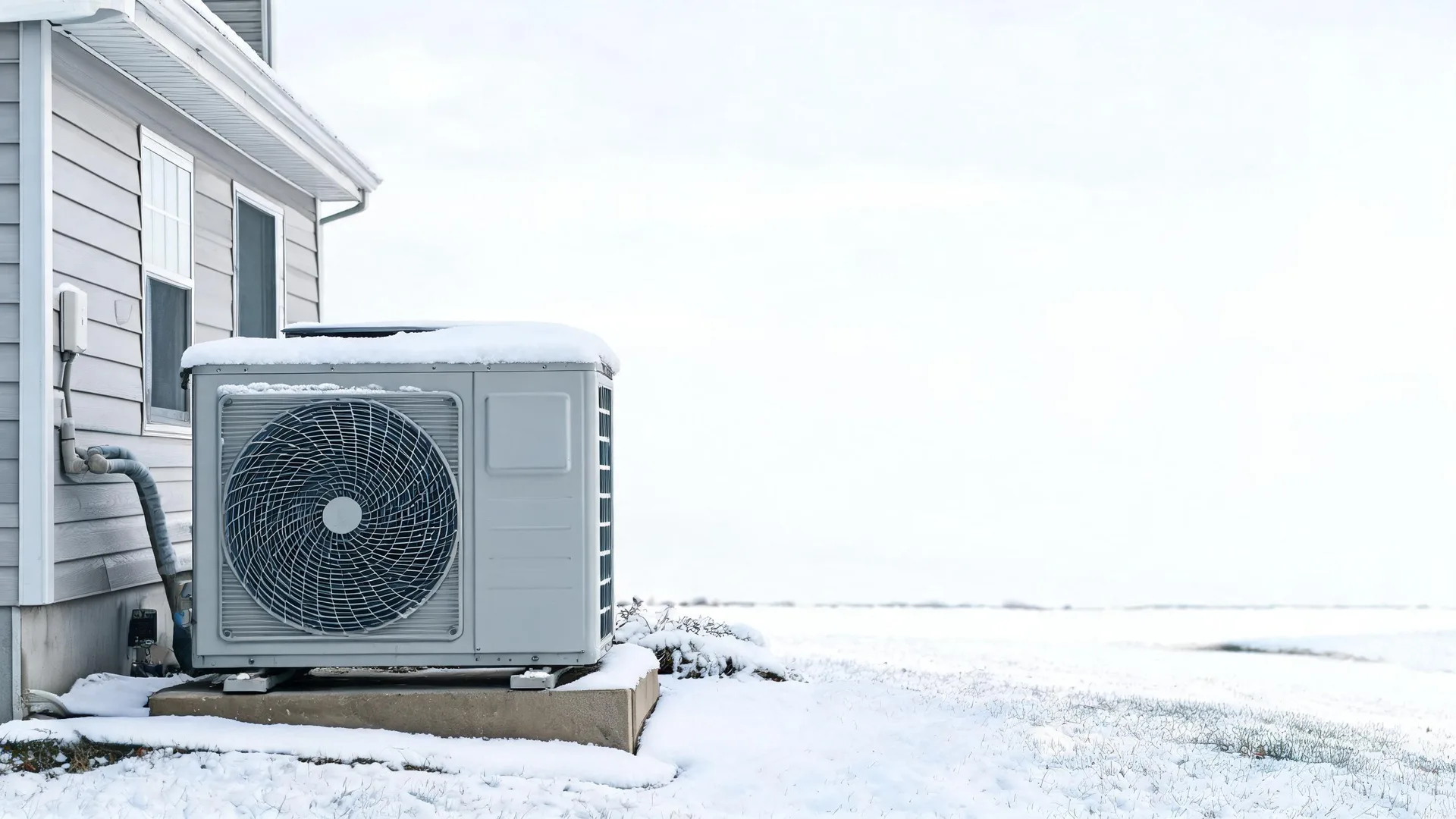
A residential heat pump outdoor unit mounted on a concrete pad next to a house with gray vinyl siding.

The parts that move are the parts that fail

A heat pump wears out from running, not from sitting idle, and the parts that fail first are the ones that move. The reversing valve is usually the earliest to go. It's what switches the system between heating and cooling, and every time it sticks, the house ends up getting the wrong kind of air. The outdoor fan motor and compressor take the next heaviest load. Bearings wear, windings break down, and a compressor that's been straining to keep up on cold mornings is a compressor that's closer to the end. The defrost control board is another common failure point. It's job is to tell the unit when to melt off the frost that builds up outside, and when the sensor or the board itself goes bad, frost just keeps building instead of clearing. Capacitors fail too, quietly, and usually show up as a unit that hums but won't start, or one that starts and shuts right back off. None of these parts fail because the system is old for its own sake. They fail because they've done the same job, over and over, through every heating run since they were installed.

A failing part doesn't hold steady

A reversing valve that sticks a little will stick more. A capacitor that's weak will get weaker. These parts fail in stages, and running the system through each stage pushes it to the next one faster than leaving it alone would.
One bad part can take others with it

A compressor forced to run against a stuck reversing valve or a failing capacitor is working harder than it was built to. The longer that goes on, the more likely the compressor itself ends up damaged, and the compressor is the hardest part in the unit to replace.

Before anyone comes out, check the simple things. Look at the thermostat and make sure it's set to heat, not cool, and that the set temperature is actually above room temperature. Go outside and look at the unit itself. If the outdoor coil is buried in snow or ice has built up around the base, clear it away so air can move through. Check the air filter. A filter clogged with dust chokes off airflow and can make the system struggle in ways that look like bigger problems. Walk around the house and check that vents are open and nothing is blocking them, like furniture or curtains. If you have a breaker panel, check it for anything tripped. None of this fixes a bad reversing valve or a failing capacitor, but it rules out the easy stuff before you pay someone to find out it wasn't the equipment at all.

Once you know what's failing, the next question is whether to fix it or put the money toward a new unit. Age alone doesn't answer that. What matters is whether the part that failed is a cheap, common one or whether it's the compressor. A reversing valve, a capacitor, a defrost board, these get swapped out on units of any age and the system runs fine again after. A compressor is a different call. It's the most expensive part in the unit, and if it's failing, a tech has to weigh that cost against putting the same money toward a replacement system instead. The other thing worth asking is how the unit has been running up to this point. One failure out of nowhere on a unit that's otherwise kept up fine is worth repairing. A unit that's had one part after another give out over a short stretch is telling you something different, even if each repair on its own looked small.