







A lit brick residential street at dusk showing a row of two-story homes with covered porches and mature trees.

Heat Pump Repair in Monroe, WI

Tell us about the job

Takes about a minute. No obligation.

RepairHeat PumpGreen County, WI
Step 1 of 2

What ZIP code is the job in?

Winter nights here average 15°F in December, January and February. A heat pump works harder at that temperature and leans more on its backup heat. That's normal, not a sign of a bad unit. If yours isn't keeping the house warm, the cause is usually one of a few things. A stuck reversing valve. A low refrigerant charge. A defrost cycle that isn't clearing the outdoor coil. None of that is particular to Green County. It's the same handful of issues a contractor checks on a heat pump anywhere this cold.

8 months
October through May, your system heats
3 months
June through August, it cools
15°F
the average winter night it heats against
81°F
the average summer afternoon it cools against
Isometric cutaway illustration of a single-story house showing interior ductwork, an indoor air handler and furnace unit, and an outdoor condenser connected by a line, on a white background.
Your system heats October through May and cools June through August.

NOAA nClimDiv, 1991–2020 normals

Heat pumps in Green County switch over in October and run through May.

A weak part that made it through summer often gives out in the first cold weeks of October.

At 17.18 cents a kWh, a heat pump running wrong wastes money every day you wait

Power costs 17.18 cents a kWh statewide
28 hail events from 2015 to 2024
17 winter storms from 2015 to 2024
Half the homes here are built for a furnace, not a heat pumpHalf the homes in Green County were built in 1972 or earlier, before heat pumps were common here.

A heat pump that's short cycling or leaning too hard on backup heat doesn't wait for a slow month to show up in the bill. At 17.18 cents a kWh, that shows up fast. Waiting through a weekend to get someone out means paying that rate for a system that's already working harder than it should. If yours has been running longer than it used to, or the backup strip heat seems to kick on more than it did last year, that's worth a call now rather than after the next bill lands.

Before you fix it, find out how much life it has left

If your heat pump came with a house built in 1972 or earlier, it's old enough that a repair might only buy a few more months. Before you pay for a major part, ask the contractor how much life the system has left. That answer should decide whether it's worth fixing or time to plan for something new.

Find a contractor
A man in a dark T-shirt and olive pants, seen from behind, carries a canvas tool bag up wooden porch steps toward a pale green front door beside a potted plant.
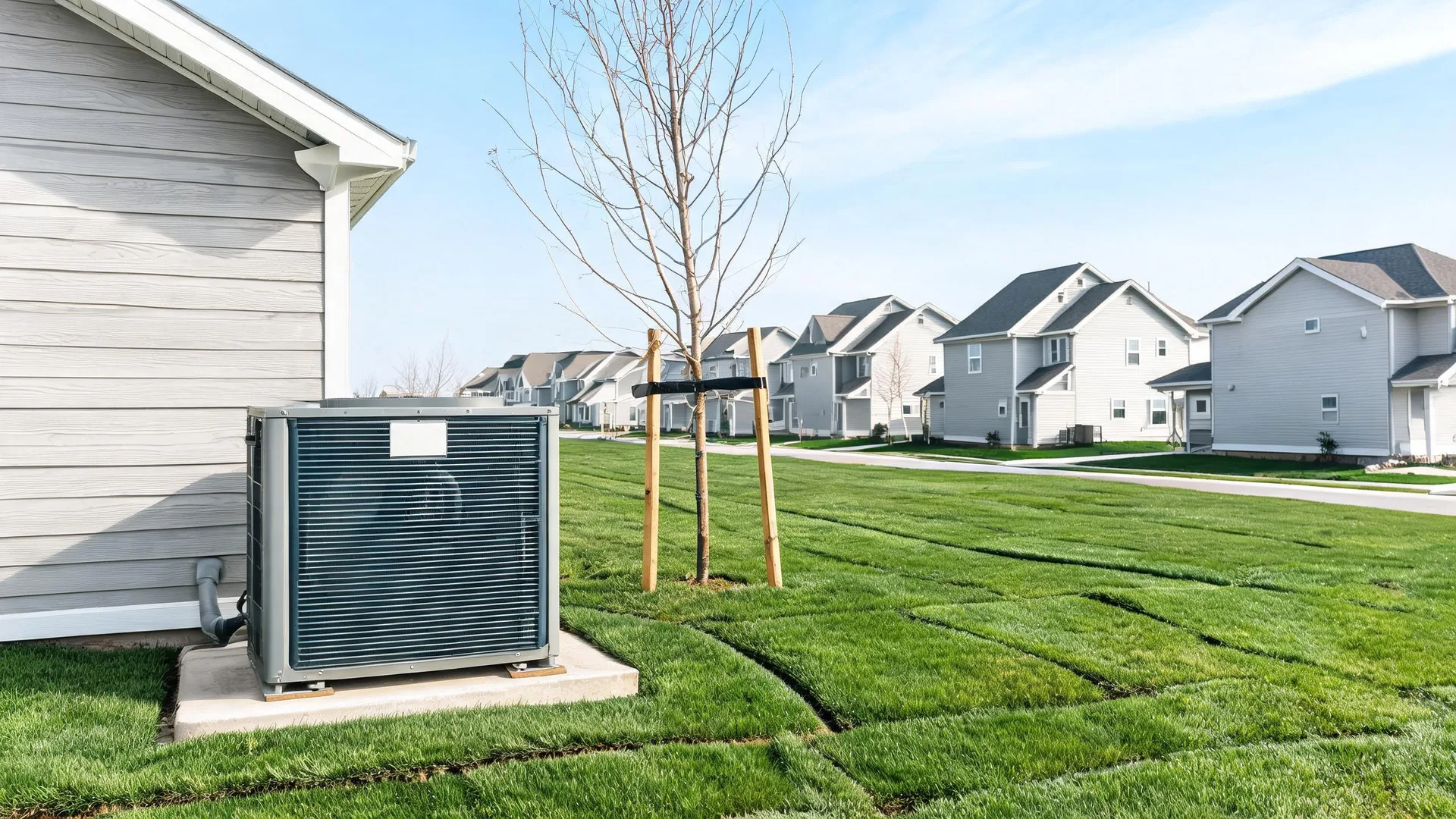
A gray heat pump outdoor unit mounted on a concrete pad next to a residential house with lap siding and stone accents.

It runs every month of the year, so wear shows up as a pattern, not a one-time glitch

A heat pump runs in both directions, cooling in the warm months and heating in the cold ones, so its moving parts rack up hours a furnace or a straight AC never would on its own. That steady use is what wears out a reversing valve or a contactor sooner than you'd expect. The signs are usually simple. The unit runs but the air coming out doesn't feel warm. It cycles on and off faster than it used to. Frost builds up on the outdoor coil and doesn't clear during defrost. You hear it running in rooms where the thermostat used to shut it off by now. Any one of those alone might not mean much, but a unit doing several of them at once is telling you a part is wearing out, not that it's having an off day.

A refrigerant leak gets worse every hour the system runs

A heat pump low on charge still moves refrigerant through the compressor, just not enough of it. Running that way starves the compressor of the oil it needs to stay cool, and heat builds up inside it. Caught early, a low charge is a simple repair. Left running for weeks, it can take the compressor down with it.
A failing part rarely stays a one-part job

When a contactor or capacitor is going bad, the compressor still draws power to try to start, over and over, each time pulling harder than it should. That strain spreads. A problem that starts in one small part can take out the compressor it was feeding before anyone gets a look at it.

Before you call, there are a few things worth a look. Check the thermostat is set to heat and the temperature set above room temperature, since a setting bumped by accident looks exactly like a broken unit. Go outside and look at the outdoor coil. A light frost in cold weather is normal, but a thick layer of ice that isn't clearing on its own is not. Check the breaker box. A heat pump that won't start at all sometimes just needs a tripped breaker reset. Look at the air filter if you can get to it easily. A filter packed with dust chokes airflow and can make the whole system struggle. None of that tells you what's actually wrong inside the unit, but it rules out the simple stuff before you pay someone to find it for you.

A repair is worth doing when it's fixing one part and the rest of the system is sound. A new contactor, a new capacitor, a defrost board that's stopped switching, those are normal wear items on any heat pump and replacing one doesn't say anything bad about the rest of the unit. It's a different question when the compressor itself is failing, or when the same system keeps coming back with a new problem every season. A compressor carries most of the cost of the whole unit, so a failing compressor usually settles the question on its own. A unit that's been short cycling or leaning hard on backup heat has likely been stressing the same parts that just failed, so ask whether the repair fixes the cause or just the symptom. If a contractor tells you the compressor is original to the system, that's worth knowing before you pay for a repair that only buys a little time.