






An outdoor air conditioning condenser unit mounted on a concrete pad in front of a single-story suburban house.

Heat Pump Repair in Milwaukee, WI

Tell us about the job

Takes about a minute. No obligation.

RepairHeat PumpMilwaukee County, WI
Step 1 of 2

What ZIP code is the job in?

A heat pump in Milwaukee works year round, not just one season. October is when it switches over to heating, and that first cold snap will find any weak spot that was hanging on through fall. A capacitor or contactor that limped through summer cooling often won't make it through the first hard freeze. Get a heat pump checked in September, before the switch, rather than after it stops keeping up on a cold morning in October.

8 months
October through May, your system heats
3 months
June through August, it cools
18°F
the average winter night it heats against
79°F
the average summer afternoon it cools against
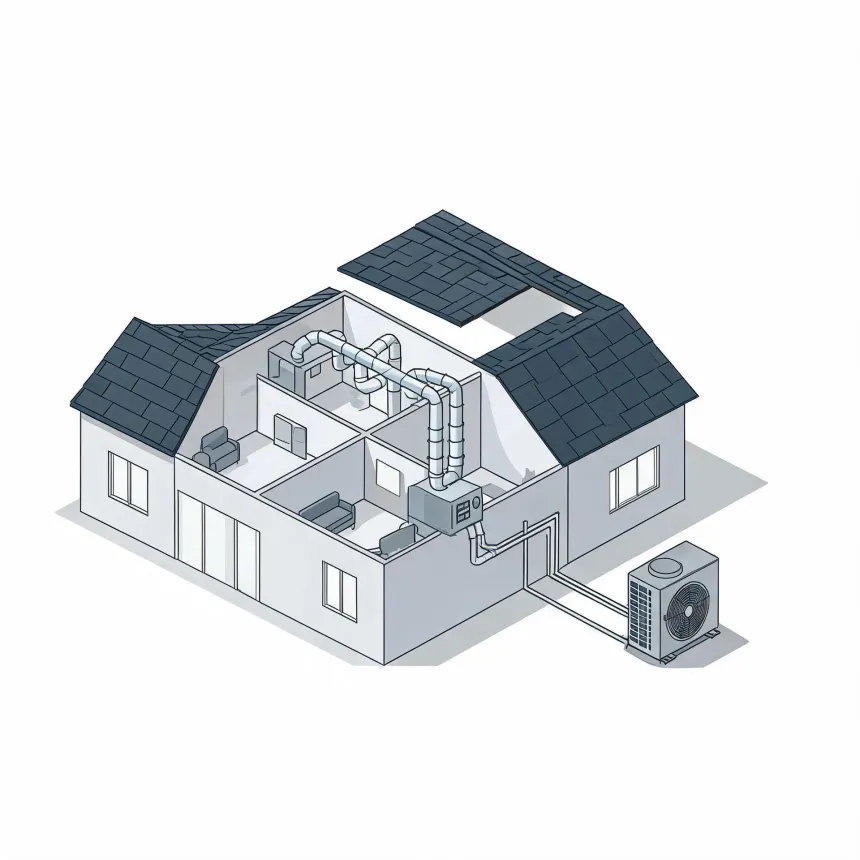
Isometric line illustration of a cutaway single-story house showing interior rooms, ceiling ductwork connected to an indoor air handler, and refrigerant lines running to an outdoor condenser unit on a pad.
Your system heats October through May and cools June through August.

NOAA nClimDiv, 1991–2020 normals

Overnight lows average 18°F across a Milwaukee winter, and a heat pump is built to run right through that.

A heat pump that stops keeping up almost always comes down to one ordinary part giving out.

Half the homes in Milwaukee County date to 1957 or earlier

Half the homes here were built by 1957
71 damaging wind events from 2015 to 2024
70 hail events from 2015 to 2024
Running costs add up fast hereWisconsin electricity ran 17.18 cents per kilowatthour in 2024, so a heat pump struggling to keep up costs you every day it's not fixed.

Age by itself doesn't tell you to replace a heat pump. A unit that gets a failing capacitor or a bad contactor replaced is often good for years after. What matters more is the compressor. If that's failing, the cost of the fix starts getting close to the cost of a new system, and a compressor that's gone once is a sign the whole unit is wearing out. It's also worth asking whether this unit has needed a repair every season for the last few years. One repair is a repair. A pattern of them is the system telling you it's done.

If your heat pump is as old as the house, find out before you pay for the repair

A lot of heat pumps in Milwaukee are running in houses built in 1957 or earlier. That doesn't mean yours is original to the house, but if it is, ask the contractor how much life is left in it before you pay for the fix. A failing capacitor or contactor is worth repairing on a unit with years left. A failing compressor on an old unit is a different question.

Find a contractor
A man in a cap, gray T-shirt and tan work pants carries a canvas tool bag up porch steps toward a green front door of a lap-sided house, with a potted shrub to the right.
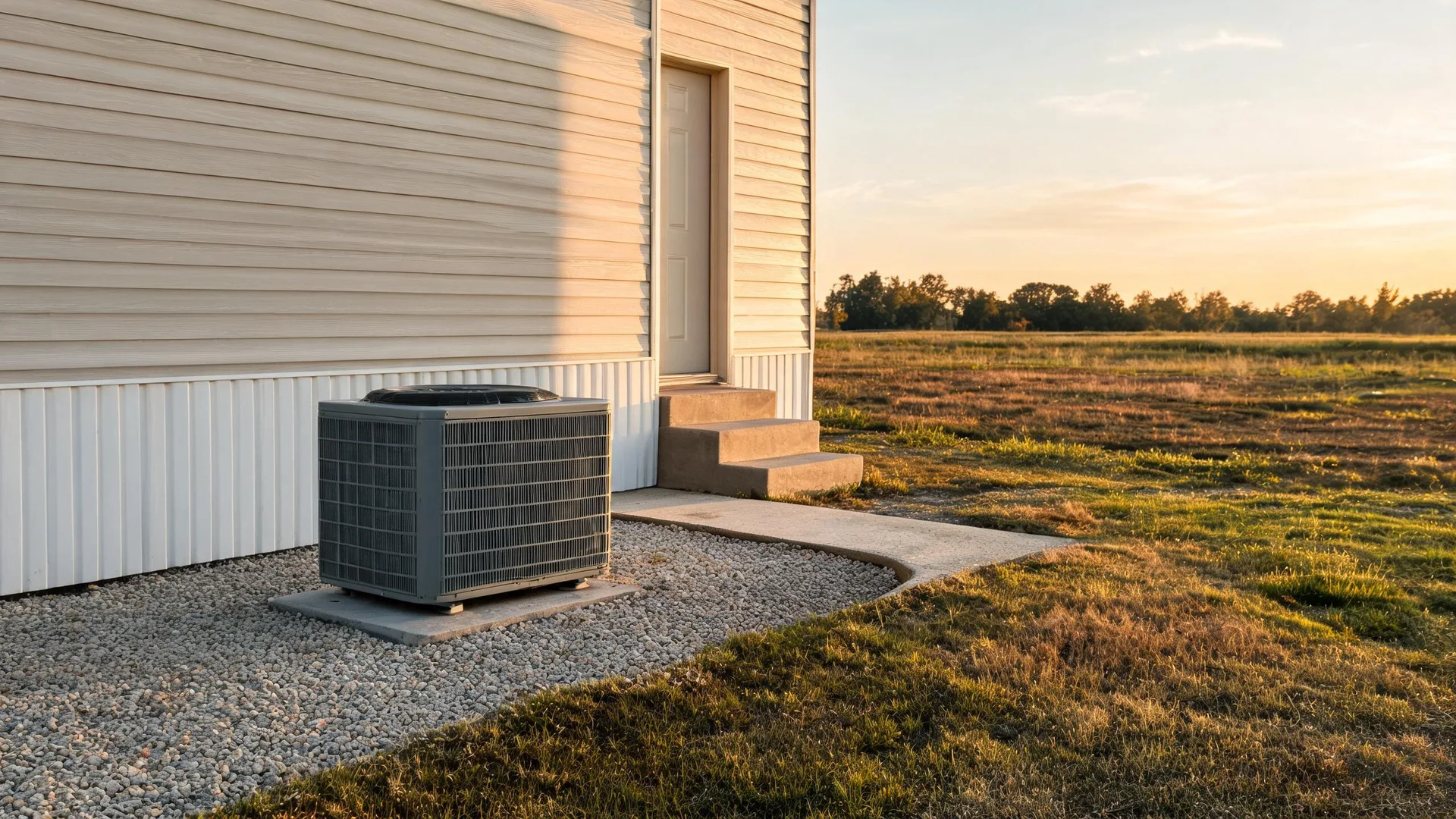
A gray heat pump outdoor unit mounted on a concrete pad next to the stone-accented exterior wall of a house.

What to check yourself before the service call

Before anyone comes out, go outside and look at the outdoor unit. Check that it's not buried in leaves or iced over, and that nothing is blocking the sides. Inside, check your thermostat is set to heat and the temperature is actually set above room temperature. Check your breaker panel for a tripped breaker on the heat pump circuit. Change the air filter if you can't remember the last time you did. A dirty filter chokes airflow and can make a heat pump run constantly without ever catching up. If the outdoor fan isn't turning at all, or you hear a hum but no spin, that's worth telling the contractor before they arrive. None of this fixes a bad capacitor or a failing compressor, but it rules out the simple stuff first.

It's blowing air that isn't warm

A heat pump in heating mode puts out air that feels warm next to room temperature, not hot like a furnace. People notice this and think the system is broken when it's running fine. What's actually a problem is air that's barely above cold, or air that stays cold no matter how long it runs. That points to low refrigerant or a reversing valve stuck in the wrong position.
It's icing over and not defrosting

Some frost on the outdoor coil in cold weather is normal, and the unit should clear it on its own every so often by briefly switching modes. If you walk outside and the coil is coated in thick ice or solid frost that never goes away, the defrost control or a sensor has likely failed. Left alone, that ice blocks airflow across the coil and the system stops moving heat at all.

A weak part rarely fails all at once. It fails a little more every time the system runs, and a heat pump that can't shut off because it isn't keeping up just gives that part more chances to get worse. A failing capacitor makes the compressor draw more current on every start, and more starts means more wear on a part that's already going. A coil caked in ice blocks the airflow the system needs to move heat, so the compressor keeps working against that blockage instead of resting between cycles. Low refrigerant means the compressor runs longer to move the same amount of heat, which is more hours of strain on a compressor that was already struggling. None of that damage reverses itself. The part that's failing keeps failing, and the longer it runs that way, the more likely it takes the compressor with it.

A diagnostic call starts outside, at the unit itself. The tech checks the outdoor fan is spinning freely and the coil isn't iced or blocked before touching anything electrical. From there it's gauges on the refrigerant lines, checking the pressure matches what the system should be running at. Low pressure points to a leak somewhere in the line set. The capacitor and contactor get tested under load, not just looked at, because a capacitor can look fine and still be weak. If the system runs, the tech watches it cycle between heating and defrost to see whether the reversing valve is actually switching when it's told to. Electrical readings at the compressor tell him whether it's drawing current the way it should or straining to start. By the end he can usually point to the one part that's failing rather than guessing at a few.