An outdoor air conditioning condenser unit mounted on a concrete pad beside a house at sunset.

Heat Pump Repair in Marinette, WI

Tell us about the job

Takes about a minute. No obligation.

RepairHeat PumpMarinette County, WI
Step 1 of 2

What ZIP code is the job in?

A small fault asks the system to work harder

A heat pump low on refrigerant still tries to hit the setpoint. The compressor keeps running, pulling more current and running hotter than it should. What started as a slow leak can end with a compressor that seized from running starved of refrigerant.

A strange noise or a short cycle is worth a call now

A hard start, a hum from the outdoor unit, ice on the coil that doesn't clear. Left alone, these put strain on the compressor and the board. Caught early, most of these trace back to a single worn part.

9 months
September through May, your system heats
2 months
July through August, it cools
10°F
the average winter night it heats against
78°F
the average summer afternoon it cools against
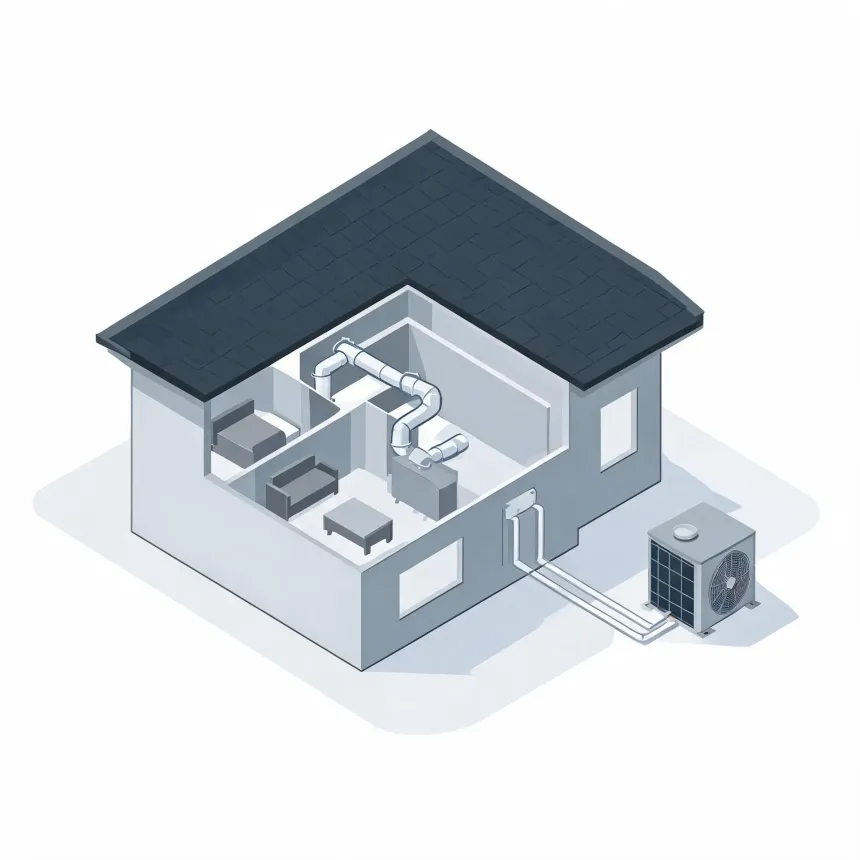
Isometric illustration of a cutaway single-story house showing interior ductwork, an indoor air handler and simple furniture, connected by lines to an outdoor condenser unit beside the building.
Your system heats September through May and cools July through August.

NOAA nClimDiv, 1991–2020 normals

An old heat pump that needs a new compressor has little left worth saving.

The coil and the fan motor have logged the same years in the weather as the part that just failed.

Marinette's homes are old and new, and neither one explains your heat pump

Half the homes here were built by 1975
23 hail events from 2015 to 2024
54 winter storms from 2015 to 2024

Wisconsin homes paid 17.18 cents per kilowatthour in 2024, among the higher rates in the country. A heat pump that's low on charge or struggling to start draws more current than it should, and at that rate it shows up on the bill fast. The longer a compressor runs strained, the more it costs you to keep it limping along. Getting the real problem found and fixed stops that drain and stops the wear that leads to a bigger repair.

Most heat pump trouble here comes down to one worn part

Marinette County has seen its share of hail, wind and winter storms, same as the rest of the region. None of that singles out your heat pump. What you've got is most likely one worn part asking the rest of the system to cover for it, and that's worth finding before it takes anything else down with it.

Find a contractor
A gray outdoor HVAC unit mounted on a concrete pad beside a house with gray lap siding and a stone foundation.

What to check before you pick up the phone

Check the thermostat first. Make sure it's set to heat and the setpoint is above room temperature. Go outside and look at the unit. If the outdoor fan isn't spinning and you don't hear or feel anything running, that's worth noting before you call. If the coil is covered in ice, look underneath and around the base for a clear drain path, and clear away any leaves, grass clippings or snow piled against the cabinet. Inside, pull the air filter and hold it up to a light. If you can't see through it, swap it or clean it. A clogged filter starves the system of airflow and can cause icing or short cycling on its own. Check that supply and return vents around the house are open and not blocked by furniture or rugs. If the system is tripping a breaker, you can reset it once, but if it trips again, leave it off and call. None of this tells you what's actually wrong inside the unit, but it rules out the easy stuff before someone has to come look.

The reversing valve is the part unique to a heat pump

The reversing valve switches the system between heating and cooling by redirecting refrigerant flow. A furnace or a straight air conditioner doesn't have one, and it fails in its own ways. A valve stuck in one position means the heat pump heats when it should cool, or won't switch at all. A valve that leaks internally lets refrigerant bypass instead of doing its job, and the system runs long cycles without catching up to the setpoint.

Defrost problems show up as ice that won't quit

A heat pump melts frost off the outdoor coil periodically during cold weather, then goes back to heating. That cycle depends on a sensor reading coil temperature and a control board timing the defrost. If the sensor reads wrong or the board doesn't trigger on schedule, frost builds past what the coil can shed on its own, and the outdoor unit keeps trying to heat through a block of ice.

A heat pump rarely fails without warning you first. Short cycling is one of the clearest signs, the system kicking on, running a few minutes, then shutting off before it's caught up to the setpoint. Warm air that isn't warm enough is another, the system running constantly but never quite closing the gap between room temperature and setpoint. A burning smell from the indoor unit means get it looked at, don't wait. So does water pooling where it shouldn't, which usually means a clogged condensate line or a cracked drain pan. Any of these is worth a call before the part involved takes the rest of the system down with it.

A diagnostic visit starts with questions, not tools. What's the system doing, when did it start, has it happened before. Then gauges go on to check refrigerant pressure, because that number says more about what's wrong than anything you can hear or see from outside. Electrical readings come next, checking the current the compressor draws against what it should draw under the same conditions. A sensor gets checked with a meter, not a guess, because a defrost sensor reading wrong can look exactly like a bad board. The reversing valve gets tested by listening to it shift and checking temperatures on both sides, since a valve that's stuck can mimic other problems entirely. None of this takes long once someone's standing in front of the unit. What takes time is chasing a symptom that could come from more than one part until the readings point to the one actually at fault.