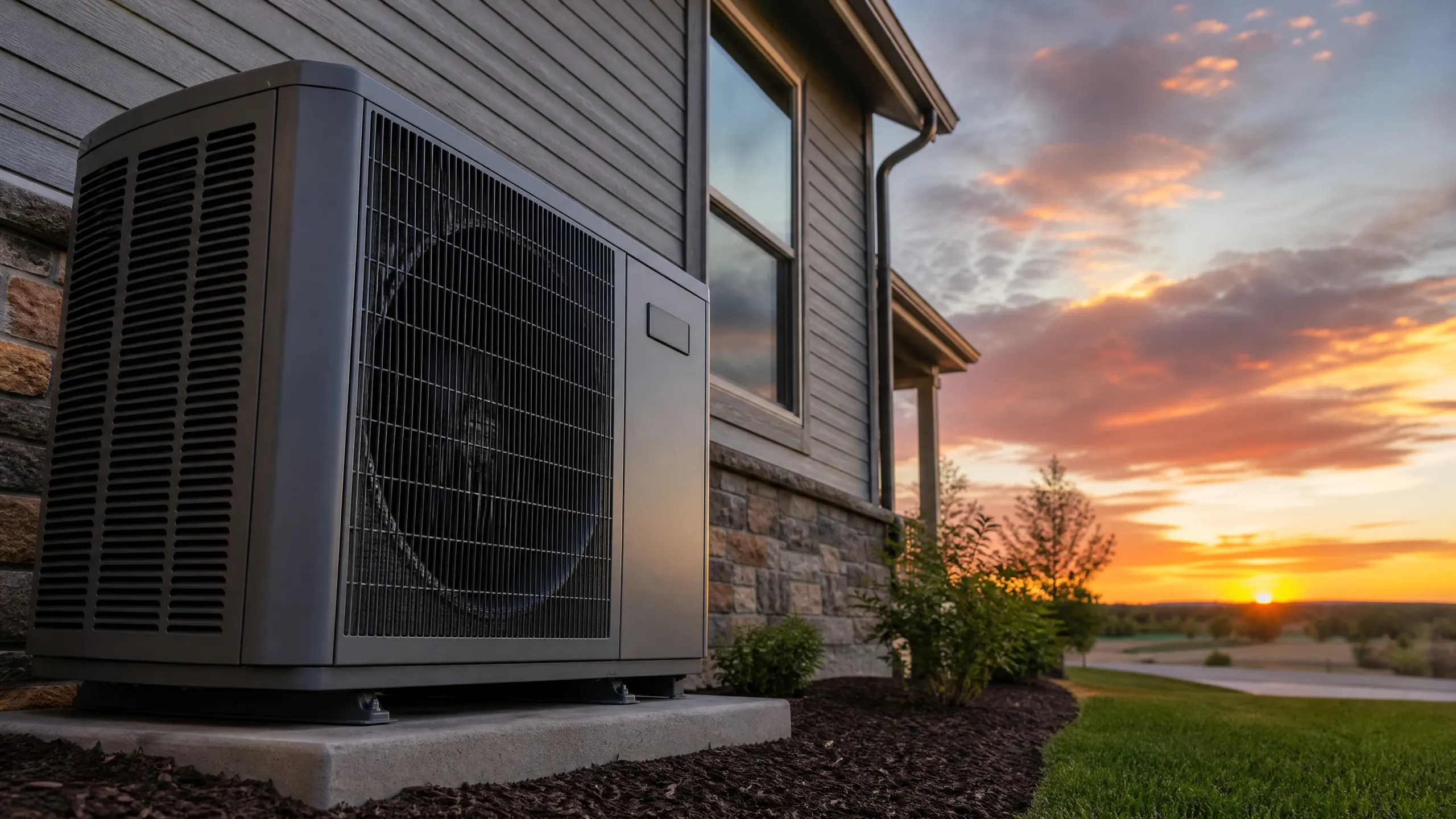





An outdoor air conditioning condenser unit mounted on a concrete pad next to a residential house at sunset.

Heat Pump Repair in Madison, WI

Tell us about the job

Takes about a minute. No obligation.

RepairHeat PumpDane County, WI
Step 1 of 2

What ZIP code is the job in?

Dane County saw 307 severe weather events between 2015 and 2024. Damaging wind came through 128 times in that stretch, hail another 140, and the county had 11 tornadoes touch down. Your heat pump's outdoor unit sits outside through all of it, with nothing but a thin fan grille between the coil and whatever the wind throws at it. Hail dents fins and bends the housing, and a unit can keep running after that while losing efficiency or wearing a part faster than it should. If a storm has come through and your heat pump has seemed off since, that is worth paying attention to, even if it still turns on.

8 months
October through May, your system heats
3 months
June through August, it cools
14°F
the average winter night it heats against
81°F
the average summer afternoon it cools against
Isometric cutaway illustration of a single-story house showing interior ductwork, an indoor air handler, and an outdoor condenser unit connected by lines along the exterior wall.
Your system heats October through May and cools June through August.

NOAA nClimDiv, 1991–2020 normals

Half the homes in Dane County were built in 1986 or later.

A heat pump in one of those homes probably has years left in it, which makes repair the job worth doing first.

At 19.09 cents a kilowatt-hour, a struggling heat pump shows up on every bill

Power here costs 19.09 cents per kilowatt-hour
Climate zone 5A
Cooling runs June through August

Heat pump trouble tends to show up right when the load on the system jumps. Here that means October, when heat switches on after months of sitting idle, and June, when cooling starts back up after a season of not running. A part that was already marginal, a weak contactor or a failing capacitor, often makes it through the easy months and then fails under the first real demand. October matters more in Dane County, since heat runs eight months of the year here against three for cooling, and that is also when overnight lows start sliding toward the 14°F average that holds through December, January and February. A heat pump that struggles to keep up right after the switch is worth having looked at before the cold settles in for good.

Get your heat pump checked after the next storm

If your heat pump has been outside through a storm this year, get it looked at even if it still runs. A technician can check the coil and housing for damage a dented unit won't always show you on its own.

Find a contractor
A residential heat pump outdoor unit mounted on a concrete pad next to a house with gray vinyl siding.

A machine that switches jobs needs a diagnosis that checks both

That same switching keeps happening after the unit is already worn, which is why a reversing valve or defrost control that's been struggling for a season tends to give out right when the system shifts from one job to the other. A technician checking a heat pump here should be checking both sides, the cooling it did all summer and the heating it's about to be asked for, not just whatever symptom brought the call in. Topping off refrigerant or resetting a defrost cycle can mask a reversing valve that's on its way out, and the same trouble shows back up at the next changeover. Finding which part is actually behind the symptom is what keeps you from paying for the same visit twice.

Most failures start with the outdoor unit

The outdoor unit holds the compressor, the fan motor, and the reversing valve, and it takes the brunt of wear because it runs in every condition the weather sends. A capacitor weakens over time and stops giving the compressor or fan motor the jolt it needs to start, so the unit hums but doesn't kick on. A contactor pits and sticks from years of opening and closing, which can leave the outdoor unit running when it shouldn't or not starting when it should. Refrigerant leaks show up slowly, usually at a fitting or a coil pinhole, and the system loses capacity long before it quits outright.
The signs usually show up before the breakdown does

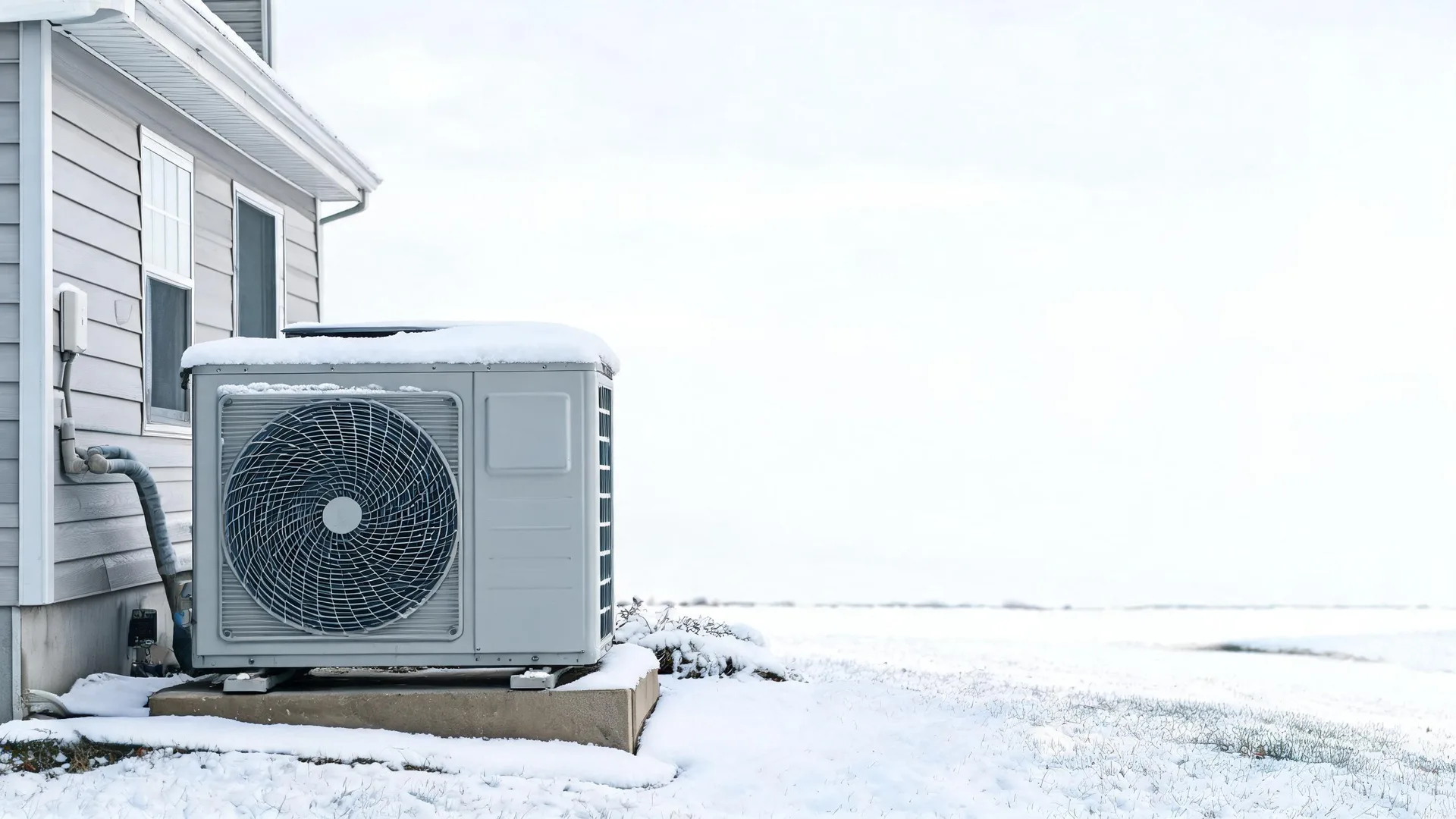
A heat pump that runs long cycles without reaching the set temperature is often low on refrigerant or losing airflow across a dirty coil. Ice building up on the outdoor coil and not clearing during the defrost cycle points to a failing defrost control or a reversing valve that isn't shifting the way it should. Short cycling, where the unit turns on and off in quick bursts, usually traces back to a failing capacitor or a thermostat sensor giving bad readings. None of these stop the system cold right away, but they're the kind of thing that gets worse, not better, left alone.

A heat pump that needs a repair usually tells you in small ways before it quits. Air coming from the vents that feels lukewarm instead of properly hot or cold is one of the first things people notice, especially right after the system switches between heating and cooling. A hissing or bubbling sound near the indoor or outdoor unit can mean a refrigerant leak, and that's worth calling in regardless of how the system is otherwise performing. Rattling, grinding, or a new clicking at startup usually means a part inside the outdoor unit, like the fan motor or a relay, is wearing out. A system that runs constantly without shutting off, or one that shuts off almost as soon as it starts, is struggling to do its job one way or another. Water pooling near the indoor unit, or frost that lingers on the outdoor coil well after a defrost cycle should have cleared it, both point to something that needs a technician's attention rather than time.

Wind and hail are not rare events here. Dane County took damaging wind 128 times between 2015 and 2024, and hail another 140 times in that same stretch, which means the outdoor unit spends its life exposed to one or the other most years. A coil that takes a hit doesn't always fail that day. It keeps running, just with bent fins or a strained motor mount, and whatever was already wearing on that unit gets pushed along faster. That's why a heat pump acting up here is usually wear catching up with it, not a sudden break. Getting the actual cause diagnosed, rather than just resetting the system or topping off refrigerant, is what makes the fix hold.