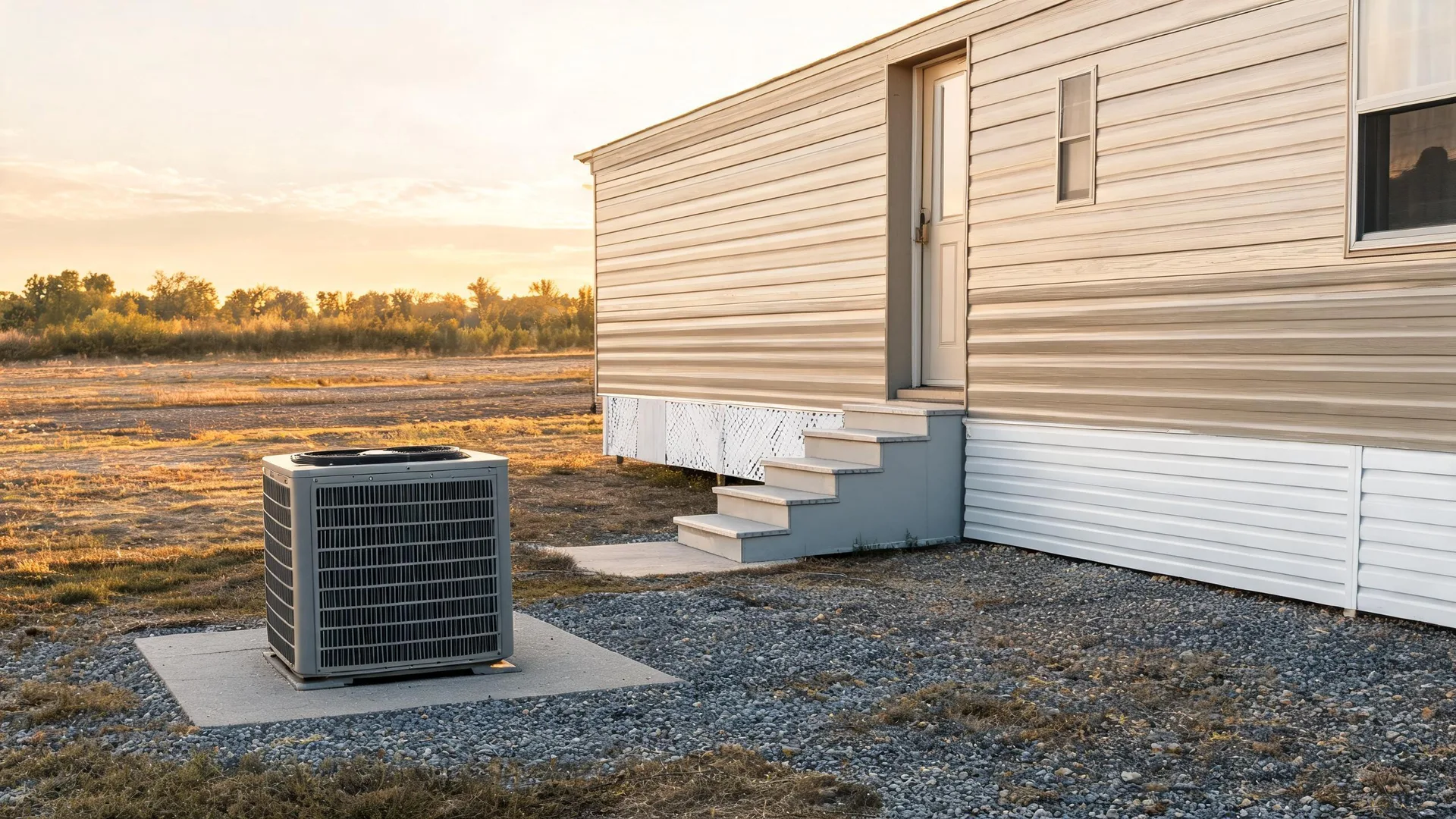
August heat pump problems start in September
Heat pumps in Brown County switch over to heating around September. A unit that struggled last winter or sat with a weak part through summer tends to show it in those first cold weeks, not before.
Takes about a minute. No obligation.
Heat pumps in Brown County switch over to heating around September. A unit that struggled last winter or sat with a weak part through summer tends to show it in those first cold weeks, not before.
A heat pump that's acting up in late summer is worth having checked before it has to carry the full heating load. Waiting until a hard freeze makes a small problem harder to catch early.
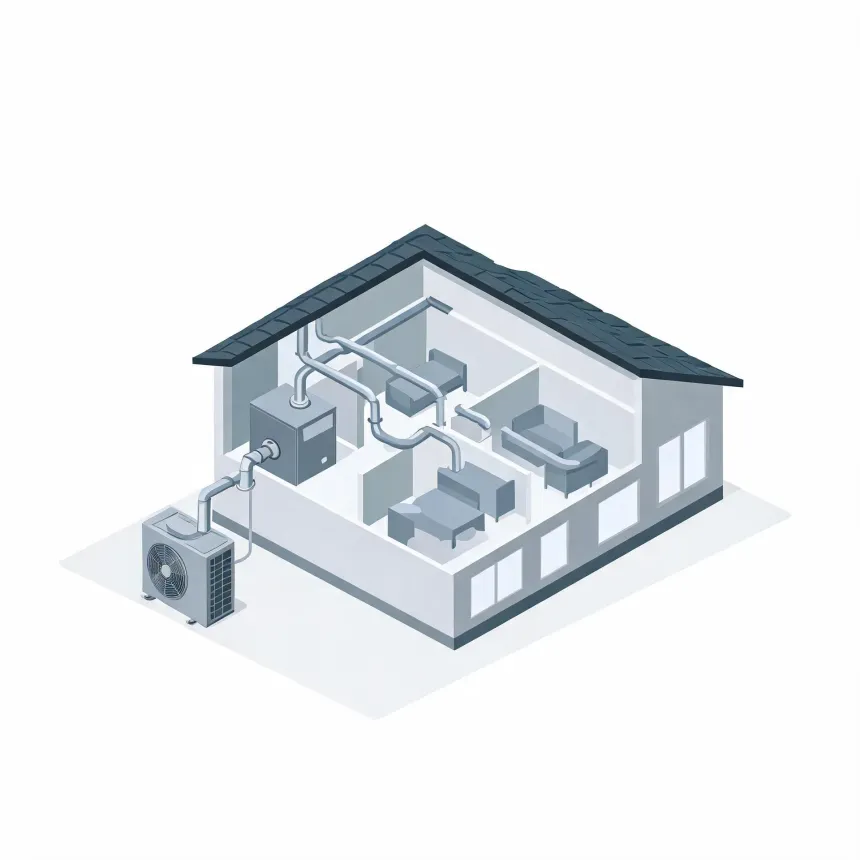
NOAA nClimDiv, 1991–2020 normals
A tech starts a diagnostic visit by running the heat pump and watching what it actually does, not by pulling panels first.
Whether the reversing valve, the defrost control or the wiring gets checked first comes from what that first run shows.



Brown County sees its share of wind, hail and winter storms, but none of it points to anything unusual going on inside a heat pump here. Wiring works loose, defrost sensors drift out of range, refrigerant charge drops a little every year. Those are the same failures a tech would expect to find in any climate like this one. Power blinks during a storm and most heat pumps come back on their own once it's restored, no reset needed. So if yours is acting up, the weather is probably not the reason. The reason is almost always something ordinary that a diagnostic visit finds and a repair fixes.
Half the homes in Brown County were built in 1981 or later. If yours is one of them, the heat pump likely isn't old enough to be worn out. A repair is usually the right call before replacement even comes into it.
Find a contractorA heat pump that's part of the original install has had less time on the compressor and the reversing valve than one in an older home. Less time running means less wear built up, so age is rarely the reason it's acting up now. That points to a repair call, not a replacement quote. The unit's data plate has the manufacture date if you want the actual number instead of the house's.
A heat pump that keeps blowing cold air when it should be heating is usually stuck on the wrong side of the reversing valve. Sometimes the valve itself has failed. Sometimes it's just the coil that moves it getting weak signal from the control board. Either way the unit needs a tech to confirm which it is before anything gets replaced.
Some frost on the outdoor coil in cold weather is normal, and the defrost cycle is supposed to melt it off every so often. A unit that stays frosted or ices over heavier each day has a defrost sensor or control board that isn't calling for that cycle when it should. Left alone, the ice blocks airflow across the coil and the unit works harder to move the same amount of heat.
Before calling anyone, look at the outdoor unit. Is anything stacked against it, leaves, a snow drift, a cover someone left on? Airflow across that coil matters as much as anything inside the cabinet. Check the thermostat is actually set to heat and not stuck on a schedule from last season. Go to the indoor filter and hold it up to light. If you can't see through it, air isn't getting through it either, and the unit will struggle no matter what else is right. Check the breaker for the outdoor unit hasn't tripped, since a heat pump that's gone fully dead sometimes just lost power on one side. None of this fixes a bad reversing valve or a failed control board, but it rules out the easy stuff first.
A heat pump that needs a repair now doesn't usually need a new compressor. Most failures come down to a single part. A capacitor loses its charge. A contactor gets pitted and stops making good contact. A sensor starts reading wrong. A slow leak drops the refrigerant charge over time. Any one of those stops the system or makes it run worse without meaning the whole unit is failing. The compressor and the outdoor coil are what's expensive to replace, and they're also the parts that tend to outlast everything else. A repair makes sense whenever the failure is isolated to one part and the rest of the system still checks out. Replacement starts to make sense when the compressor itself is the problem, or when the same unit keeps failing in different ways year after year.