




A dark horizontal-sided building corner in the left foreground beside a mowed lawn, with a light-colored single-story house and large deciduous trees under a pale sky in the background.

Heat Pump Repair in Eau Claire, WI

Tell us about the job

Takes about a minute. No obligation.

RepairHeat PumpEau Claire County, WI
Step 1 of 2

What ZIP code is the job in?

A heat pump in Eau Claire works nine months of the year, September through May, so it gets little rest before the next demand hits. August is when it's worth a look before heat season starts. The switch from cooling to heat puts new strain on a reversing valve or a defrost control that may have been struggling all summer without you noticing. Problems often surface in those first cold mornings in September, when the system has to work harder than it has in weeks. Catching a weak part in August, before you need heat every day, means less chance of waking up to a cold house.

9 months
September through May, your system heats
3 months
June through August, it cools
9°F
the average winter night it heats against
79°F
the average summer afternoon it cools against
Isometric line illustration of a cutaway house showing interior rooms with furniture, ceiling ductwork, and an outdoor condenser unit connected by lines along the exterior wall.
Your system heats September through May and cools June through August.

NOAA nClimDiv, 1991–2020 normals

Winter mornings in Eau Claire average 9 degrees overnight, December through February, and a heat pump here is built to answer that.

When it can't keep up on a cold morning, the cause is a real fault, usually the defrost control or a low charge, not the weather.

Electricity here runs 17.18 cents a kWh, so a heat pump working harder than it should shows up on your bill fast

Power costs 17.18 cents a kWh statewide
23 hail events from 2015 to 2024
27 winter storms from 2015 to 2024

Half the homes in Eau Claire County were built in 1978 or earlier, and half in 1978 or later. That's a normal mix, not a lopsided one, and it means the age of your house isn't the thing to focus on. If your heat pump is short cycling, blowing cool air, or icing up without defrosting, the cause is almost always in the unit itself. A failing defrost control, a low refrigerant charge, a reversing valve stuck in one position, these fail the same way in an older house as a newer one. The job is to find which part is actually causing the symptom, not to blame the house around it.

A heat pump running wrong costs you every day it's not fixed

A heat pump working harder than it should keeps pulling power at 17.18 cents a kWh the whole time it sits broken. Get the cause found now instead of paying for it every day until you do.

Find a contractor
A gray outdoor HVAC unit mounted on a concrete pad beside a house with gray lap siding and a stone foundation.

A small fault now is a bigger one by the time it fails

A heat pump that's struggling doesn't fix itself by staying on. If the charge is low, the compressor keeps trying to move refrigerant that isn't there, and it runs hotter every cycle. A reversing valve that's slow to shift keeps stressing the same seals and seats each time it's asked to switch, so a valve that's starting to stick gets worse at sticking. Ice on the outdoor coil works the same way. Once it builds, airflow across the coil drops, the system pulls in less heat, runs longer trying to make up for it, and lays down more ice before the next defrost cycle. A part that's already failing under load does not get better under more load. The time to get it looked at is when you first notice the system struggling, not after it quits.

Most failures start with the reversing valve or the defrost board

The reversing valve is what lets a heat pump switch between heating and cooling, and it moves every time the system changes modes. When it sticks, the system can blow cold air during a heat call or get stuck in one mode entirely. The defrost control fails differently. It senses ice on the outdoor coil and runs a brief defrost cycle, and when the sensor or board goes bad, the system either never defrosts and ices over, or defrosts too often and can't keep up.
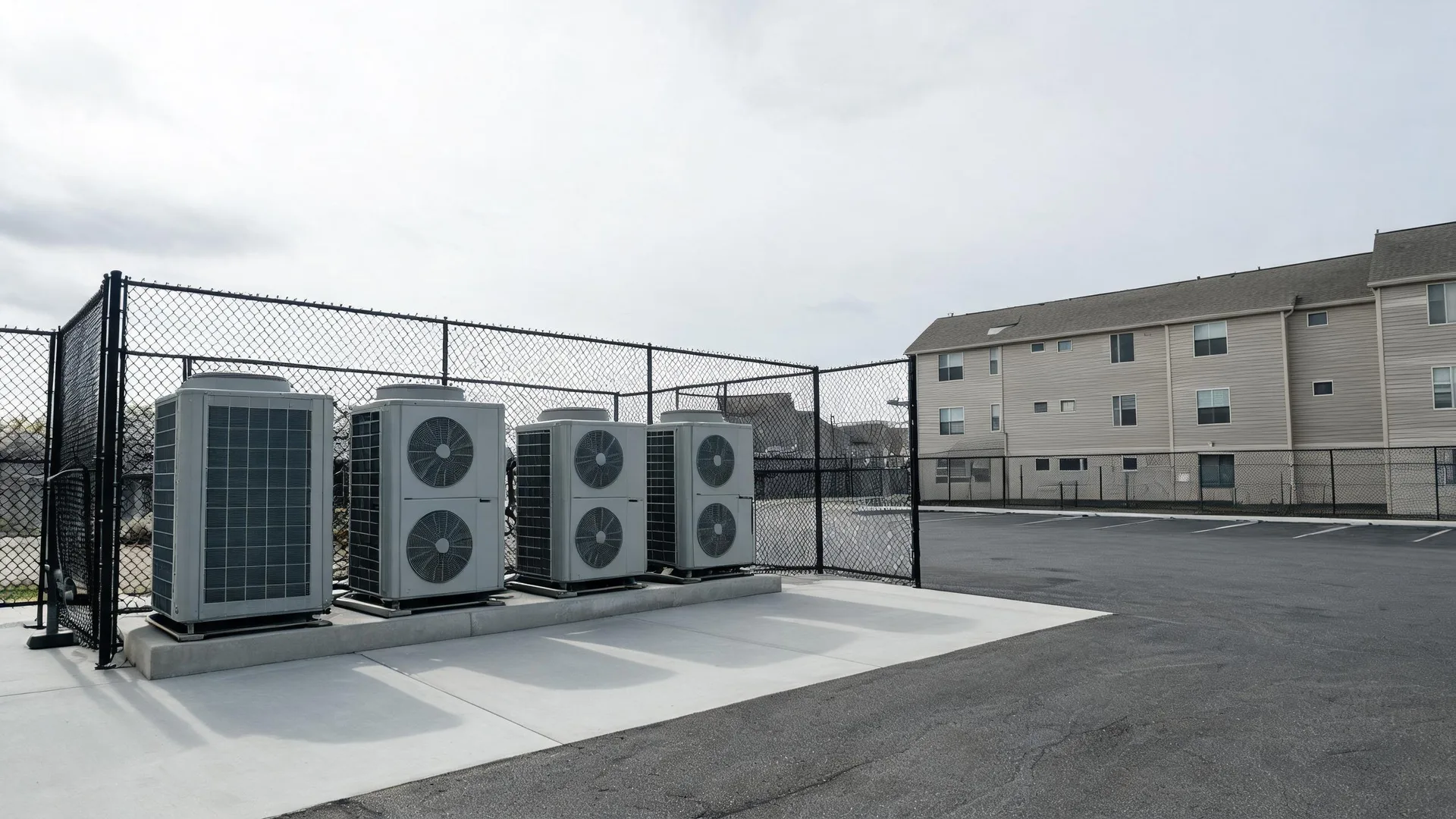
A low refrigerant charge wears out the compressor

A heat pump doesn't use up refrigerant the way a car uses gas. If the charge is low, it's almost always because of a leak somewhere in the line set or coil. Running low makes the compressor work harder to move what's left, and it runs hotter than it should. A compressor that keeps overheating loses efficiency over time, and once it fails, the whole outdoor unit usually has to come out with it.

Most calls start with something the homeowner felt rather than saw. Warm air in winter that never gets quite hot enough to feel right, even though the system is running. A unit that cycles on and off every few minutes instead of settling into a long run. Ice building up on the outdoor unit that doesn't clear on its own after a defrost cycle. A low hum or buzz from outside when the system should be quiet, or the opposite, no sound at all when it should be running. Any of these means something inside is already struggling, and it's worth having looked at before it stops working altogether.

A diagnostic call starts outside, at the outdoor unit, before anything gets opened up. The tech checks refrigerant pressure and temperature split, runs the system in both modes, and watches how it responds when it's told to switch. That's how a stuck reversing valve shows up, the system gets the call to change modes and either doesn't, or hesitates in a way it shouldn't. From there it's the defrost board, checked against the actual coil temperature, to see if it's calling for defrost when it should and skipping it when it shouldn't. If the charge is suspect, the next step is finding the leak, not just adding refrigerant back in, because topping it off without finding where it's going only buys a few weeks. A good diagnosis ends with one part named as the cause, not a list of things that might be involved.