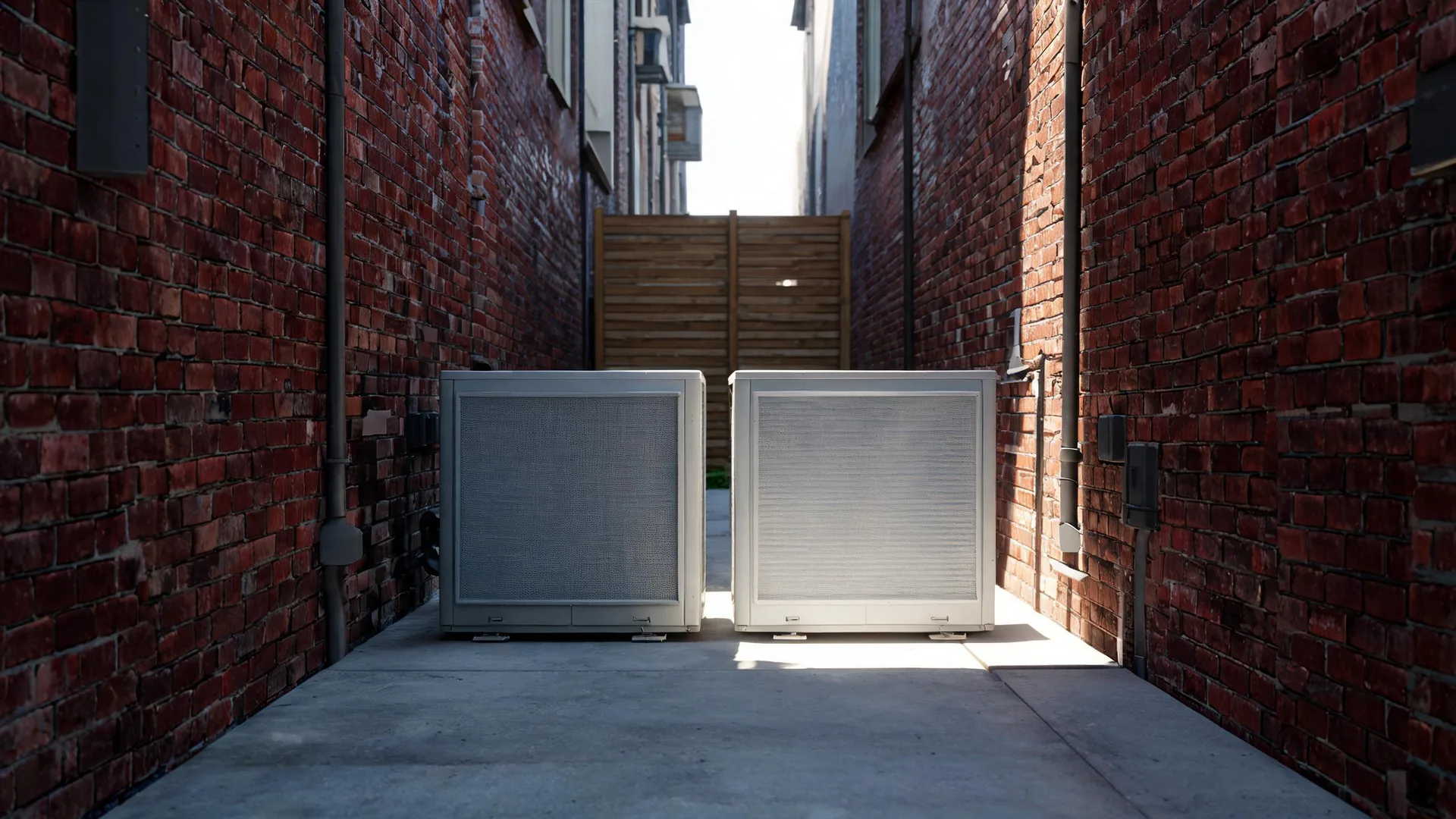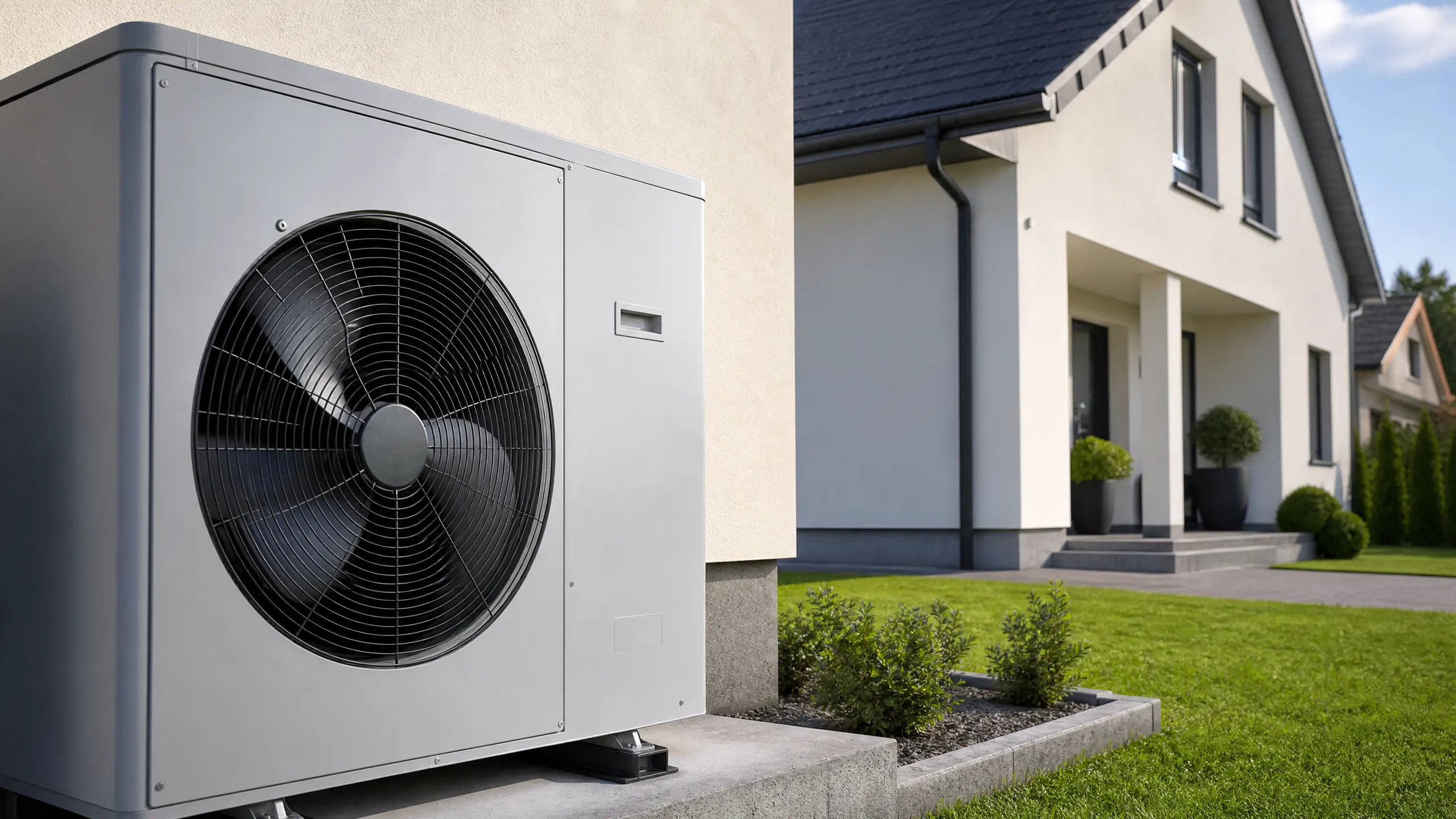
A grey air-source heat pump outdoor unit mounted on a concrete pad next to a modern white-rendered residential house.

Heat Pump Repair in Chippewa Falls, WI

Tell us about the job

Takes about a minute. No obligation.

RepairHeat PumpChippewa County, WI
Step 1 of 2

What ZIP code is the job in?

August is when a weak heat pump shows itself

Heat in Chippewa County runs September through May. The first cold stretch in August and September is when a heat pump already struggling has to work hard, and that's when a bad capacitor or low charge finally gives out.


Waiting until the cold sets in makes it worse

A heat pump limping along in August will not get better once it's leaning on backup heat every day through winter. Getting a contractor to look at it before the system is running nine months straight gives them a real shot at catching the problem early.

9 months
September through May, your system heats
2 months
July through August, it cools
8°F
the average winter night it heats against
78°F
the average summer afternoon it cools against
Isometric line illustration of a cutaway house showing interior rooms with furniture, a furnace or air handler with overhead ductwork, and an outdoor condenser unit connected by lines outside the wall.
Your system heats September through May and cools July through August.

NOAA nClimDiv, 1991–2020 normals

Chippewa County winters average 8°F overnight through December, January and February.

A heat pump that can't keep up on a mild day will not keep up on a cold one, so repairs here need to hold at real winter temperatures, not just take the edge off.

Weather here isn't unusual. Most heat pump trouble isn't either.

116 severe weather events from 2015 to 2024
18% of homes statewide lost power a day or more in 2024
53 damaging wind events from 2015 to 2024

Half the homes in Chippewa County were built in 1978 or earlier, and half in 1978 or later. That split doesn't tell a contractor much on its own. An older heat pump and a newer one can both throw the same fault, a stuck reversing valve, a dirty outdoor coil, a thermostat that isn't talking to the system right. What matters more than the house's age is whether the equipment was sized and installed correctly for it, and that's something a contractor checks on site. If your system came with the house, check with the previous owner or an inspection report for when it actually went in. That date is worth more than the house's age.

A heat pump running wrong costs more every month it stays that way

Wisconsin homes paid 17.18 cents per kilowatthour in 2024, on the higher side for this part of the country. A heat pump that's struggling pulls more of that just to keep up with the same heat. The longer it runs wrong, the more it costs before a contractor ever sees it.

Find a contractor
A dark gray heat pump unit mounted on a concrete pad next to a house with gray siding and a stone veneer wall.

A heat pump never shuts off for good, and that's what wears on it

A heat pump runs in both directions, all year, so it wears from the same causes whether it's pushing heat into the house or pulling it out. The reversing valve usually goes first. It's the part that switches the system between heating and cooling, and every switch is a little more wear on the seals inside it until one day it sticks halfway, and the system blows warm air when it should be cold or the other way around. The outdoor coil takes the next worst of it, sitting outside through every condition the year brings, with dirt and debris building up on the fins until airflow suffers. A compressor can handle a lot, but not a slow refrigerant leak left alone, and it will wear down and quit if the charge stays low long enough. Capacitors weaken with age and heat and tend to give out without warning, usually right when the system is working hardest. None of this happens overnight. It's what shows up in a machine that never gets a real offseason to rest in.

What the homeowner notices first

A heat pump in trouble usually shows up as air that comes out warm but not warm enough, or a system that runs constantly without ever hitting the set temperature. The unit might switch on and off more than it used to. Sometimes there's a smell, a burning or musty odor from the vents. Sometimes there's a sound, a clicking at startup that doesn't resolve into normal running, or a hissing from the outdoor unit. Ice on the outdoor coil while the system is heating is never normal and means something underneath needs attention.

Why it's worth calling before the system stops

A reversing valve sticking halfway gives you heat when you asked for cool, or the other way around. A low refrigerant charge gives you weak heat and ice building up on the outdoor coil. A failing capacitor gives you a unit that struggles to start or cycles oddly. Each of these signs means the heat pump is still running, just running wrong, and a contractor has more to work with on a system that's limping than one that's already quit.

Before a contractor comes out, there are a few things worth checking yourself. Look at the thermostat first and make sure it's set to heat, not cool or auto, and that the set temperature is actually above the room temperature. Check the outdoor unit for ice or snow packed against the coil or blocking the fan, and clear away any leaves or debris around it. Go to the vents and feel whether air is actually moving, a vent with no airflow at all points to something different than one blowing air that's just not warm enough. Check the circuit breaker for the unit, since a tripped breaker will shut the whole system down and looks like a bigger problem than it is. If the system has a filter you change yourself, pull it and look at it, a filter packed with dust chokes off airflow and can make a healthy heat pump act like a failing one. None of this fixes a stuck reversing valve or a low charge, but it rules out the simple stuff before anyone pays a visit for it.

A capacitor or contactor is almost always worth fixing. Those parts are cheap next to the whole system, so there's not much to weigh. The compressor is the harder call. Replacing one runs close to the cost of a new outdoor unit, so a failing compressor is usually where a contractor starts talking about replacing the system instead of patching it. Age matters less than what's actually broken and whether the rest of the system is sound around it. A heat pump with one bad part and a healthy compressor is a repair. A heat pump with a failing compressor and a corroded coil is a different conversation. The honest way to think about it is whether you're fixing the thing that's actually wrong, or fixing one part while the next one waits its turn.