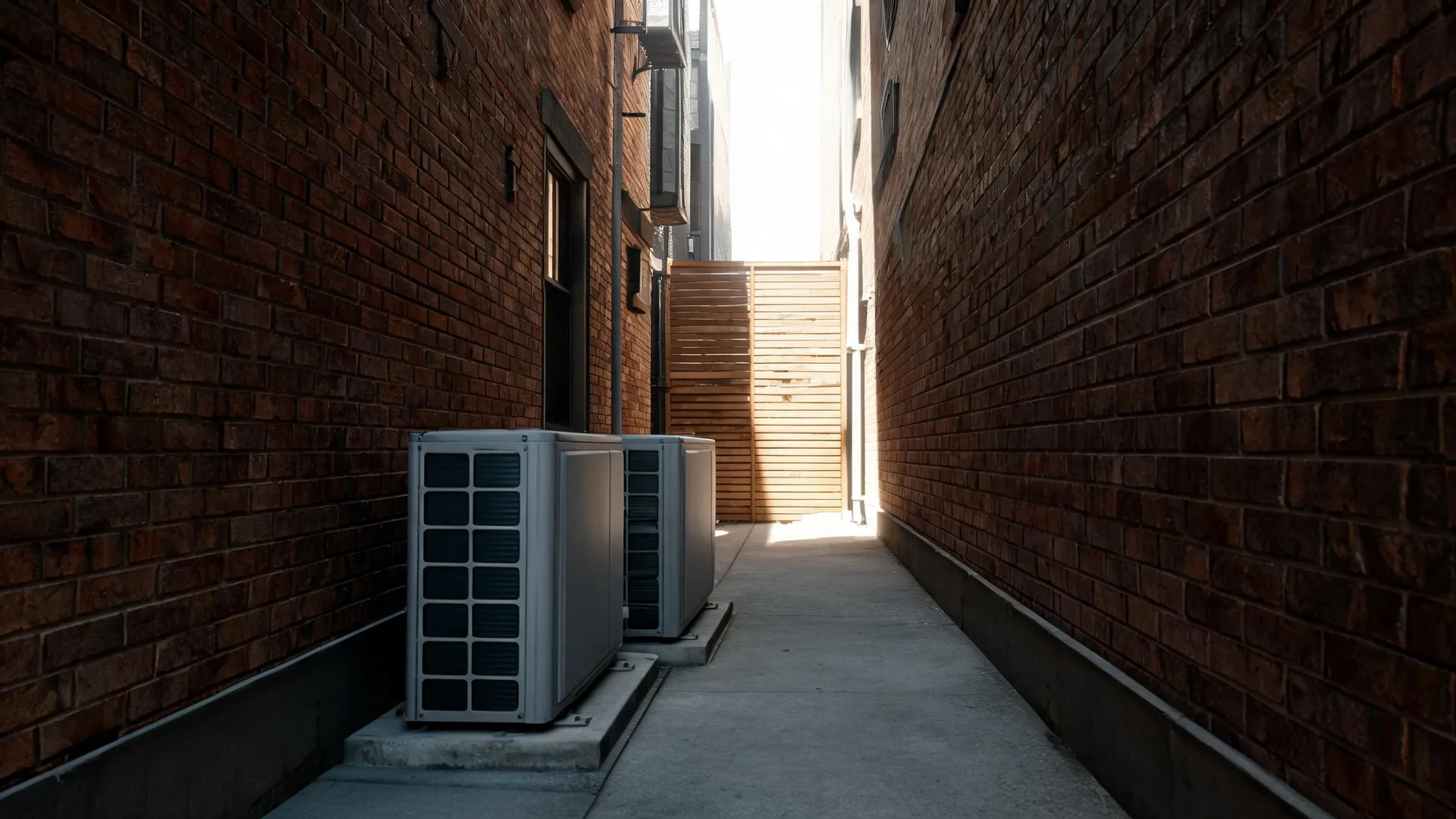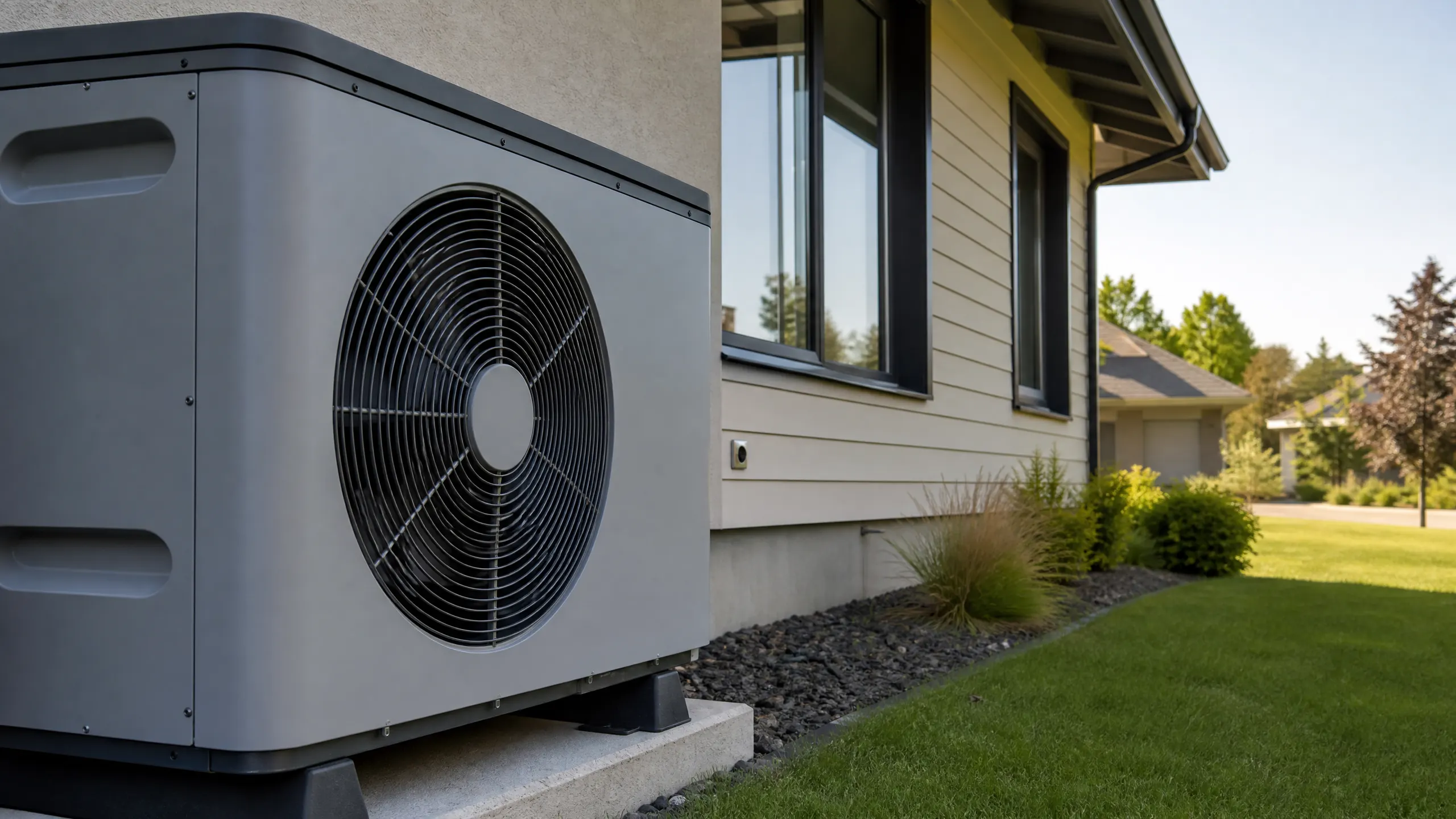
A grey outdoor HVAC unit mounted on a concrete pad beside the beige-sided exterior wall of a suburban house.

Heat Pump Repair in Beaver Dam, WI

Tell us about the job

Takes about a minute. No obligation.

RepairHeat PumpDodge County, WI
Step 1 of 2

What ZIP code is the job in?

Winters here ask a lot of the compressor

Beaver Dam winters average 14°F overnight through December, January and February. A heat pump covers most of that load by pulling heat from outside air, and the compressor runs long hours to do it. That duty is normal for this zone, but it means worn parts wear the way they're supposed to, on schedule, not early.


So the common faults show up here too

A failing defrost board, a low charge, a stuck reversing valve. These are the faults that turn up in any cool climate zone, and Dodge County is no exception. Finding which one is behind your system acting up matters more than guessing at it.

8 months
October through May, your system heats
3 months
June through August, it cools
14°F
the average winter night it heats against
80°F
the average summer afternoon it cools against
Isometric line illustration of a cutaway single-story house showing interior rooms with furniture and ceiling ductwork, connected to an outdoor condenser unit on the ground outside the left wall.
Your system heats October through May and cools June through August.

NOAA nClimDiv, 1991–2020 normals

Heat pumps here run from October through May, eight months straight.

October is when a weak capacitor or low charge finally gets found out.

Dodge County doesn't see more storms than anywhere else in Wisconsin

137 severe weather events from 2015 to 2024
18% of homes statewide lost power a day or more in 2024
79 damaging wind events from 2015 to 2024
Half the homes here were old before heat pumps were commonHalf of Dodge County's homes were built in 1970 or earlier.

Wisconsin electricity ran 17.18 cents per kilowatthour in 2024, and that rate applies whether your heat pump is running clean or struggling. A heat pump losing charge or fighting a bad reversing valve pulls more power to deliver the same heat. It does that every time it runs, all winter long. The fix doesn't get cheaper by waiting, and the power it wastes in the meantime is real money leaving every month it runs this way.

A heat pump that's struggling costs you every month it runs

Get the real cause found now, before another month of Wisconsin winter runs through a system working harder than it should.

Find a contractor
A gray heat pump condenser unit mounted on a concrete pad against the gray lap-siding exterior wall of a house.

How old is the system behind that wall

If your heat pump came with the house rather than being swapped in later, that's worth finding out before paying for a major repair. A system installed decades ago is closer to the end of its working life than one put in five years ago. The fix might be the same either way, but what you do with that fix depends on how much life is left in the system behind it. Ask whoever comes out to look at both things. What's actually wrong, and how much life the system has left once it's fixed.

What you'll actually notice first

One room runs warm and another stays cold no matter where the thermostat is set. Air comes out of the vents but it's barely above room temperature instead of warm. The outdoor unit ices over and stays that way instead of clearing itself during a normal defrost cycle. The system short cycles, kicking on and off every few minutes instead of running a steady stretch. Any one of these is the heat pump telling you something specific is wrong, not just working hard.

What those signs are worth paying attention to

A heat pump that's struggling doesn't fail quietly. It runs longer to make less heat, and the strain shows up in the parts doing the extra work, the compressor, the reversing valve, the defrost board. Catching the sign early, before the unit is running constantly just to keep up, usually means a smaller repair. Wait until the system can't keep the house warm at all and you're often looking at a compressor that's taken damage it can't come back from.

Most heat pump failures trace back to one of a handful of parts. The reversing valve is a common one. It's what switches the system between heating and cooling, and when it sticks, the unit either won't switch or gets stuck partway, running inefficiently or not heating at all. The defrost board is another. It's supposed to sense when the outdoor coil has iced over and run a defrost cycle, and when it fails, ice builds up until the unit can't pull heat from the air at all. Low refrigerant charge is its own problem, usually from a slow leak rather than a sudden loss, and it shows up as the system running longer to make less heat. The compressor is the part nobody wants to hear about, because by the time it's damaged, the other faults have usually been straining it for a while already. Catching the earlier ones is what keeps you from that last one.

A diagnostic visit starts outside, at the unit itself. A tech checks the refrigerant charge, reads the pressures, and watches how the system responds when it switches between heating and cooling. That tells them whether the reversing valve is doing its job. Inside, they'll check the air temperature coming off the vents against what's going back in, which is what points to a charge problem versus an airflow problem versus something electrical. They'll also pull the panel and look at the defrost board and the contactor, since a board that's failed or a contactor with burnt points won't always announce itself until the system is asked to work hard. None of this is guesswork. Each reading rules something out until what's left is the actual cause, not just a likely one.