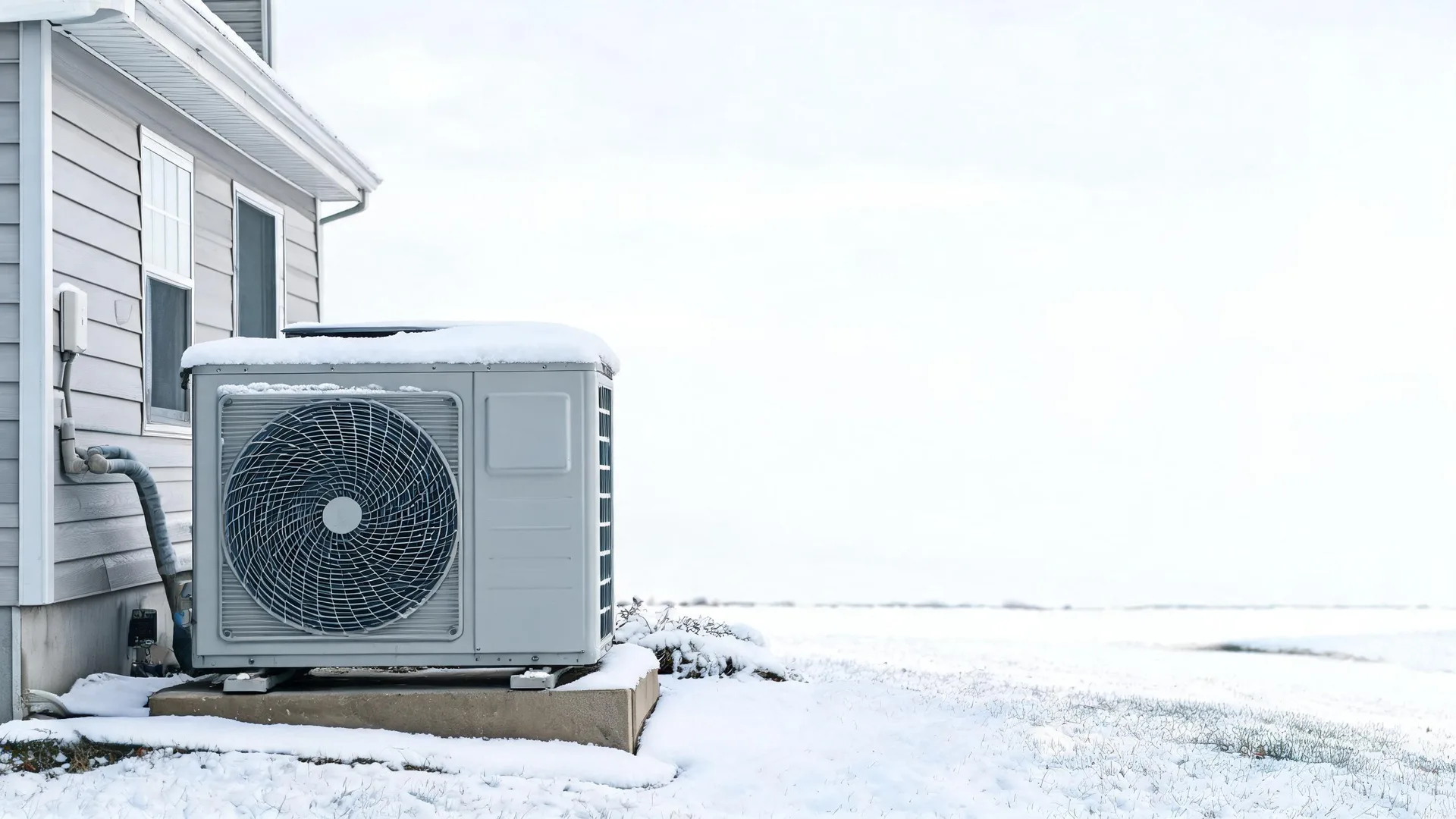
Aerial view of a gray central air conditioning condenser unit on a concrete pad next to a house with vinyl siding.

AC Repair in West Bend, WI

Tell us about the job

Takes about a minute. No obligation.

RepairCentral ACWashington County, WI
Step 1 of 2

What ZIP code is the job in?

Three months of real work

Air conditioners in Washington County run from June through August, and the afternoon high averages 79°F across those months. That's a short season compared to most of the country, and a mild one. The compressor in your unit just doesn't log the hours that one in a hotter state would.

Less strain behind a repair call

The air here stays fairly dry, with a summer dew point around 59°F, so your AC isn't fighting heavy, humid air on top of the heat. A unit that hasn't been worked hard tends to have more life left in it. When something goes wrong, it's more likely a part wore out or was overlooked than a system that's been run into the ground.

3 months
June through August, your air conditioner is on duty
79°F
the average summer afternoon it cools against
53 hail events
in ten years, and hail bends the fins on outdoor coils
54 wind events
in ten years, and wind drives debris into outdoor units
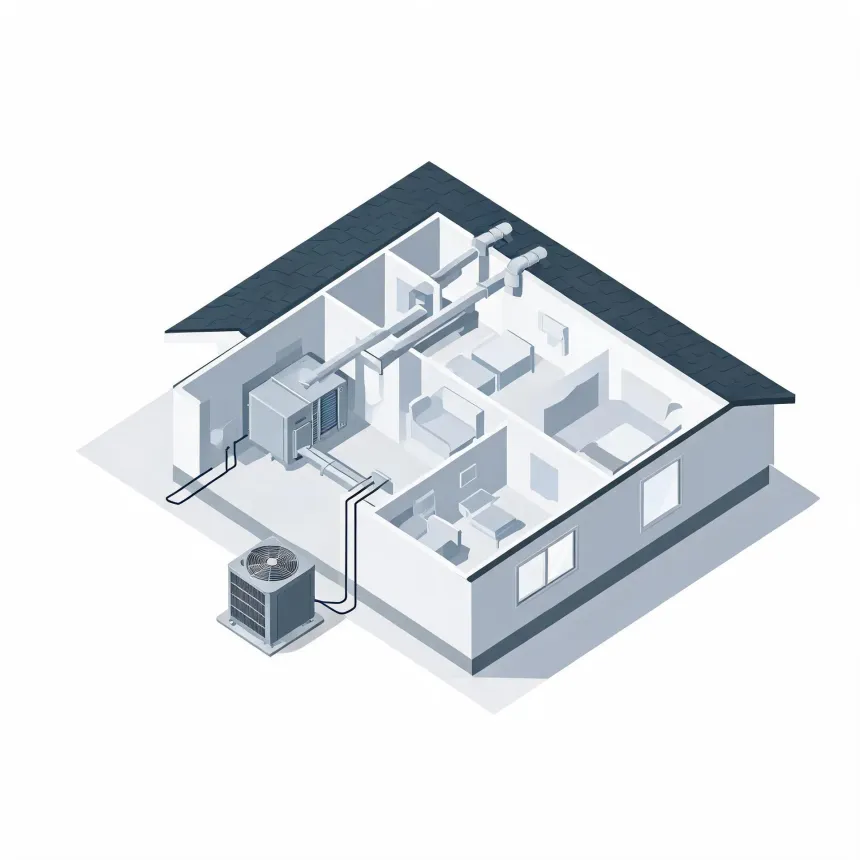
Isometric cutaway illustration of a single-story house showing interior rooms, ceiling ductwork, an indoor air handler, and an outdoor condenser unit connected by lines, in gray and white tones on a white background.
Your air conditioner works hardest from June through August.

NOAA nClimDiv, 1991–2020 normals

A capacitor that's been failing slowly still throws full voltage right up until it doesn't.

That's why a unit that looked fine last week can be dead on arrival this week.

Half the homes here were built in 1986 or later, and so were their AC systems

Half the homes here were built by 1986
Climate zone 5A
Power here costs 19.27 cents per kilowatt-hour

A newer system is a repair, not a replacement

Half the homes here were built in 1986 or later, and the AC system usually matches the house. A system that age still has years of working life in it. When a part fails, the fix is almost always that part, not a full replacement. Worth getting a technician out to look at it before assuming the worst.

Find a contractor
A gray metal air conditioning condenser unit mounted on a concrete pad in a flat grassy field under a partly cloudy sky.

What Actually Happens During a Service Call

A diagnostic call starts outside at the condenser, listening to it run and checking what it's drawing against what it should draw. From there the tech checks refrigerant pressure on both sides of the system, because that number tells on almost everything else, a dirty coil, a failing metering device, a leak. Inside, they'll pull the panel off the air handler and look at the coil and the blower wheel, since airflow problems show up as ice on the lines or a system that runs long without catching up. The capacitor and contactor get checked by hand, not just by eye, because a capacitor can look fine and still be weak. Most of this gets done with the system running, under load, since a part that fails under strain often tests fine sitting still. By the time the panels go back on, the tech usually knows which part is the problem and whether it's worth fixing or it's a symptom of something bigger.

What the homeowner notices first

The system runs longer than it used to, or it cycles on and off in short bursts instead of finishing a cycle. Air comes out of the vents warm or barely cool. Some rooms feel fine and others don't. There's a hissing or bubbling sound near the lines, or ice forming on the copper where there shouldn't be any. A smell when it kicks on, or a rattle that wasn't there before. Any one of these is the system telling you something specific, not just getting old.

What those signs actually mean

Warm air usually points to refrigerant charge or a failing compressor. Short cycling often means a bad capacitor or a thermostat losing its signal. Ice on the lines means airflow is restricted somewhere, a dirty filter, a weak blower, or low refrigerant. A hissing sound is almost always a leak. None of these fix themselves, and running the system while they're happening is what turns a part replacement into a bigger repair. The sign tells a tech where to look first.

An outdoor central air conditioning unit mounted on a concrete pad beside a blue-sided house at sunset.

A new air conditioner would save little on running costs in Washington County, so the repair decision comes down to the unit's condition.

  • A new one at the federal minimum, 13.4 SEER2$140 a year
  • An older air conditioner$150 a year

Estimates for a typical Washington County home, compared with an older unit built to the previous federal minimum, from EIA household energy data, Wisconsin fuel prices and NOAA climate normals. Your home will differ.

Repair makes sense when a part like a capacitor or contactor has failed.

Replacement makes sense when the compressor has failed or the system uses R-22 refrigerant, which is no longer made.

A technician looking at a failed system is really asking one question: is this part wearing out on its own, or is it a symptom of something that's going to take the next part with it. A capacitor or a contactor fails pretty much on its own. It does its job for years and then it doesn't, and swapping it in brings the system right back to normal. Other failures are downstream of something else. A compressor that's seized usually got that way because it was starved of refrigerant or oil for a while first. A blower motor that burned out may have been straining against a clogged filter for months before it gave up. So the real question isn't just what broke, it's why that part was the one to go. If the cause gets fixed along with the part, the repair holds. If it doesn't, the next part in line is already on the clock.