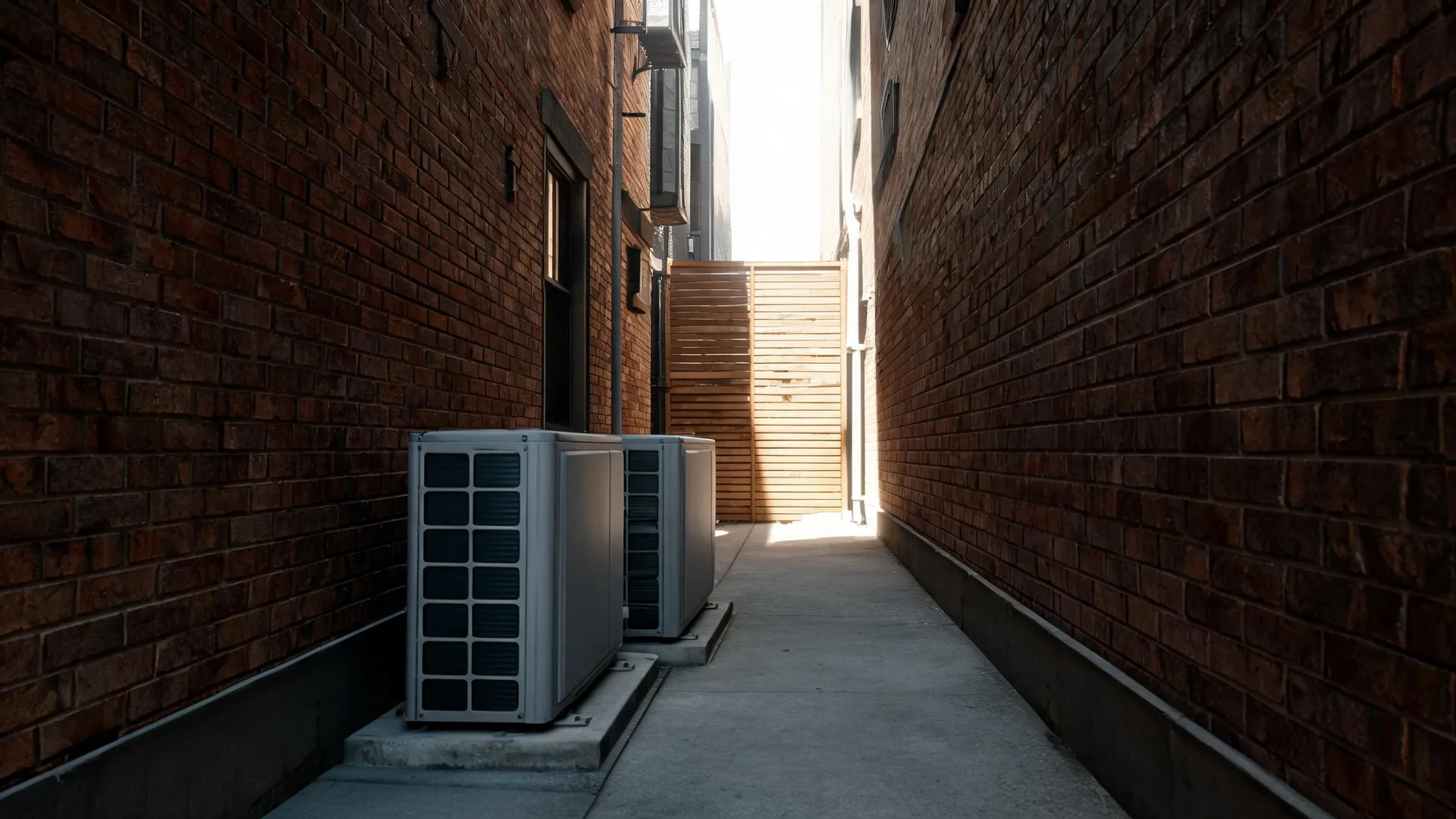
Storms come through often here
Marathon County saw 174 severe weather events between 2015 and 2024. That includes 82 damaging wind events, 49 hail events, and 10 tornadoes. An outdoor AC unit sits outside through all of it.
Takes about a minute. No obligation.
Marathon County saw 174 severe weather events between 2015 and 2024. That includes 82 damaging wind events, 49 hail events, and 10 tornadoes. An outdoor AC unit sits outside through all of it.
Hail can dent the fins on a condenser and wind can drive debris into the cabinet without stopping the unit right away. If yours took a hit this year, don't wait for it to fail to have someone look at it.
NOAA nClimDiv, 1991–2020 normals
A breaker you can check yourself saves a wasted service call.
Before anyone comes out, check the breaker, the thermostat batteries, and the filter.




So when something goes wrong with a unit that has had it this easy, the problem is usually fixable rather than fatal. A compressor that only runs two months a year doesn't rack up the hours that lead to a worn-out replacement. More often the trouble is a part that's failed outright, a capacitor, a contactor, a low charge from a slow leak, something a contractor can diagnose and swap without writing off the whole system. Age counts for more than use here. If the unit is old, that's from sitting through winters, not from being run hard. Worth asking someone to look at it before assuming it's done.
A dented condenser or a cabinet full of debris does not always stop a unit from running. It can run anyway while the coil or fins take the damage, and by the time it quits for good the repair is bigger than it had to be. If the outdoor unit took a hit this year, have it looked at now, while it's still just a check.
Find a contractor
Most AC failures start outside, at the condenser. The capacitor is usually first. It holds a charge that kicks the compressor and fan motor on, and it weakens over years of heat cycling until one day it can't deliver that push. The fan runs but the compressor hums and won't start, or nothing happens at all. A contactor goes a similar way, the switch that feeds power to the outdoor unit. Its contacts pit and burn from years of opening and closing until they stick or stop making contact. Refrigerant loss is the other common one, almost always a slow leak at a fitting or coil rather than the system just using it up. A unit low on charge will run long and cool poorly, and it can ice the coil if it keeps going like that. None of these mean the compressor itself is bad. The compressor is the part nobody wants to hear about, because replacing it usually costs as much as replacing the system. But it's also the part that fails least often, especially when the smaller parts around it get fixed before they take it down with them.
A capacitor that's weakening doesn't always fail clean. The compressor can start hard and run anyway, pulling more current than it should every time it cycles on. That extra strain heats the windings more than a normal start would. Run it that way for weeks and a part that would have been a simple swap can take the compressor down with it.
A coil that's losing refrigerant or not getting enough airflow drops below freezing and starts icing over. The unit keeps running, so the owner doesn't always notice right away. Ice blocks airflow further, the coil gets colder, and the ice builds. Liquid refrigerant can end up reaching the compressor instead of boiling off in the coil like it should, and a compressor isn't built to handle liquid.
Estimates for a typical Marathon County home, compared with an older unit built to the previous federal minimum, from EIA household energy data, Wisconsin fuel prices and NOAA climate normals. Your home will differ.
Repair makes sense when a part like a capacitor or contactor has failed.
Replacement makes sense when the compressor has failed or the system uses R-22 refrigerant, which is no longer made.
Deciding whether to fix or replace comes down to what's actually wrong, not how the unit looks or how old it is. A failed capacitor, a stuck contactor, a leak at a fitting, these get fixed and the unit runs like new because the compressor and coil underneath are usually fine. What changes the math is when the compressor itself is the problem, or when a contractor opens the cabinet and finds the coil corroded through in more than one spot. At that point you're paying to fix one failure while the next one is already forming somewhere else. A good contractor will tell you which situation you're in before doing any work. If they're recommending a part swap, that's usually because the rest of the system checked out fine.