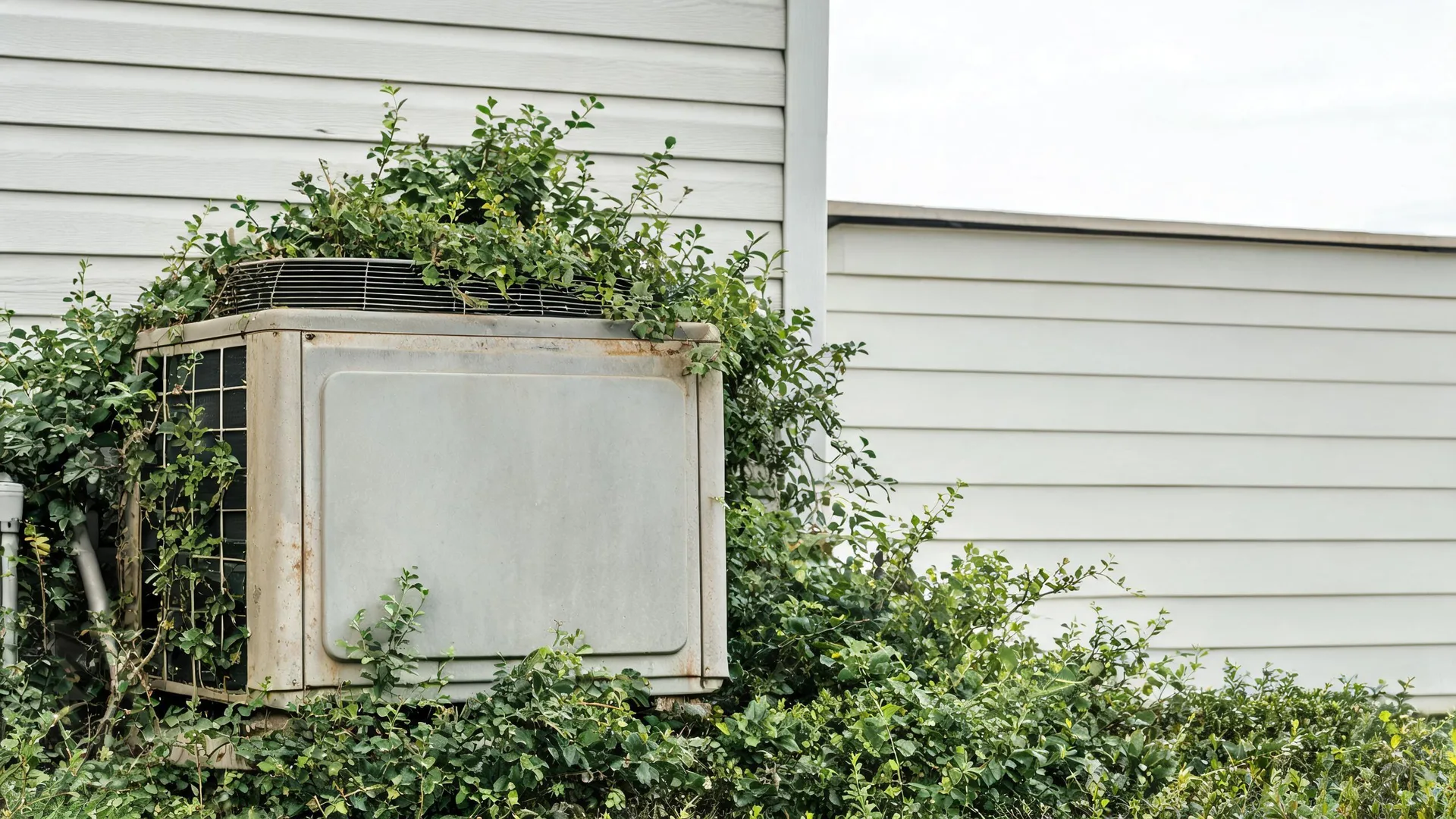
May is when to get it looked at
Cooling in Waupaca County runs June through August. May is the month to get a weak system checked, before the first real heat load finds the part that's already failing.
Takes about a minute. No obligation.
Cooling in Waupaca County runs June through August. May is the month to get a weak system checked, before the first real heat load finds the part that's already failing.
A capacitor or contactor that limped through last August often won't start this one. When the system kicks on for the season, it's running harder right away, and that's when a marginal part gives out.
NOAA nClimDiv, 1991–2020 normals
Three months of cooling a year is a short season for an AC to work hard in.
A compressor with that light a load usually has more life in it, so most repairs here are worth making.



Waupaca County gets its share of rough weather, with dozens of wind and hail events over the past decade and a handful of tornadoes too. None of that is aimed at your AC. The unit outside is built to sit through wind, hail and snow without any of that reaching the parts that make it run. What a storm can do is knock out power, and a surge when it comes back on can trip a contactor or blow a capacitor. If your AC won't start after an outage, check the breaker first, then the contactor. Most of the time that's the whole fix, not a sign the unit is failing.
Half the homes in Waupaca County were built in 1975 or earlier. Half were built in 1975 or later. Either way, the AC parts that fail are the same ones. A capacitor, a contactor, a weak run of refrigerant. The age of the house doesn't change the diagnosis. Find the actual cause and it's usually a straightforward fix.
Find a contractorThree summers' worth of heat a year is what this unit sees, June through August, with afternoons averaging around 79. That's a light load compared to what a compressor runs further south. When a repair comes up here, the part failing is rarely worn through from use. More often it's a capacitor that weakened or a contactor with pitted contacts, parts that fail from age or a bad cycle, not from years of hard running. That's worth knowing before anyone tells you to replace the whole unit. Get the actual cause diagnosed first.
Set the thermostat below room temperature and listen for the system to respond. If nothing happens, check the breaker panel and any shutoff switch near the indoor unit. A tripped breaker or a flipped switch looks exactly like a dead system but takes a moment to rule out.
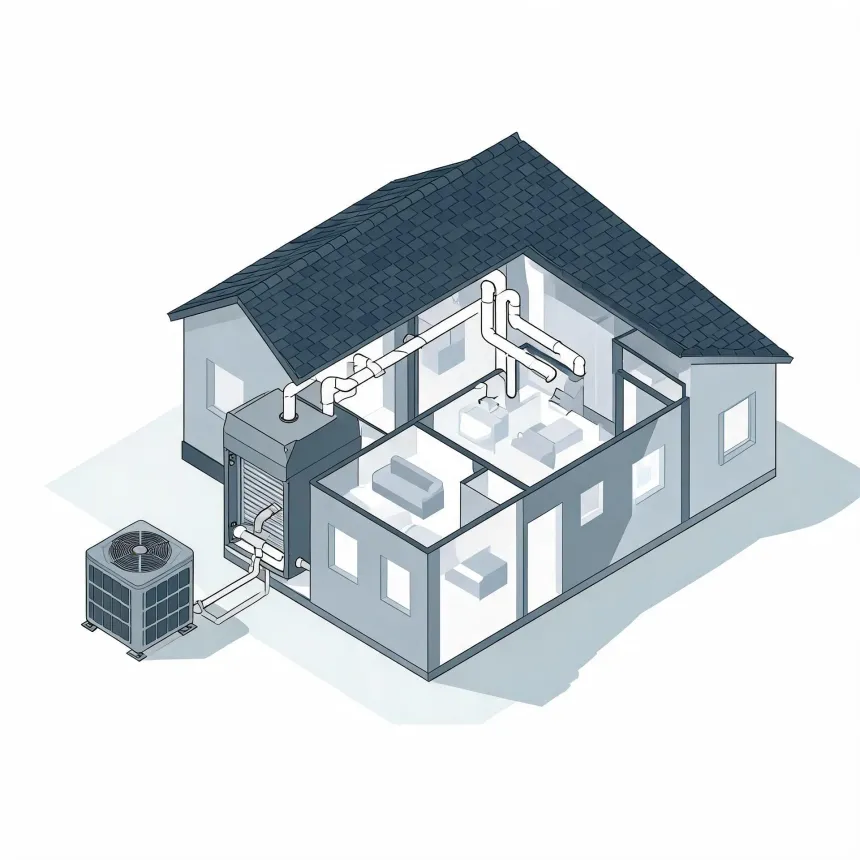
Walk outside and see if the fan is spinning and the unit is making noise. If it's silent, that points to power or a failed part, not refrigerant. Back inside, pull the filter and hold it to the light. A filter clogged enough to block the light choke airflow enough to mimic a much bigger problem.
Estimates for a typical Waupaca County home, compared with an older unit built to the previous federal minimum, from EIA household energy data, Wisconsin fuel prices and NOAA climate normals. Your home will differ.
Repair makes sense when a part like a capacitor or contactor has failed.
Replacement makes sense when the compressor has failed or the system uses R-22 refrigerant, which is no longer made.
A diagnostic call starts outside at the unit itself. A tech checks for power at the disconnect then checks the capacitor and the contactor, since a weak capacitor or a pitted contactor causes more no-start calls than anything else. From there it's readings. Refrigerant pressure on both sides, the temperature of the air coming off the coil, the amp draw on the compressor while it's running. Low pressure on one side with normal pressure on the other points somewhere different than both sides running low. Back inside, the tech checks airflow across the coil and looks at the drain line, since a clogged drain can shut the whole system down on its own as a safety measure. None of this is guesswork. It narrows down to one answer, and the fix follows from whatever that answer turns out to be.