




A dark two-story house with a wide covered front porch, framed by large leafy trees, behind a trimmed hedge and a striped mowed lawn.

AC Repair in Superior, WI

Tell us about the job

Takes about a minute. No obligation.

RepairCentral ACDouglas County, WI
Step 1 of 2

What ZIP code is the job in?

Cooling here really only runs in July, with June the only month it gets tested at all before that. A system that sat idle since last summer doesn't show its weak spots until the first hot day asks something of it. If your AC is struggling now, early in its one month of work, that's not bad luck. That's a capacitor or a charge that was already marginal, finally getting found out. With just one month of cooling, there's no long stretch for a small problem to announce itself before the heat is gone again, so it's worth having someone look at it now rather than hoping it works itself out.

1 months
July through July, your air conditioner is on duty
76°F
the average summer afternoon it cools against
40 hail events
in ten years, and hail bends the fins on outdoor coils
54 wind events
in ten years, and wind drives debris into outdoor units
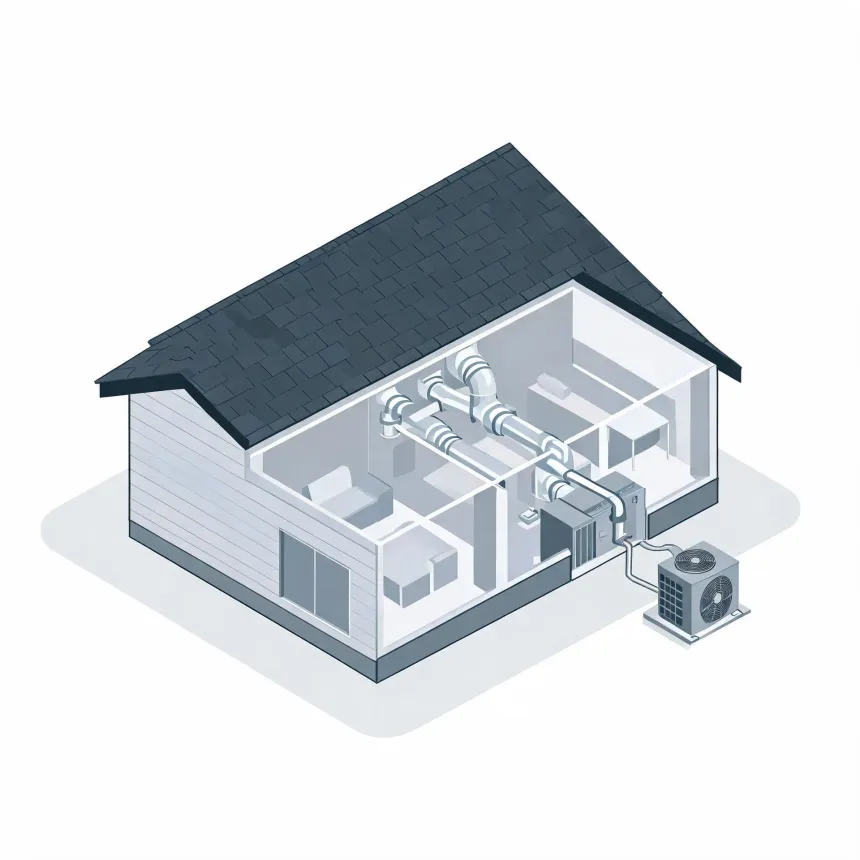
Isometric cutaway illustration of a house with a dark shingled roof, showing interior ductwork connected to an indoor air handler and an outdoor condenser unit beside the building.
Your air conditioner works hardest from July through July.

NOAA nClimDiv, 1991–2020 normals

Superior summers only ask your AC to work through July, with afternoon highs averaging around 76°F.

A compressor that short on real demand usually has a lot of good life left, so a repair now is worth making.

One month of summer isn't why it's broken

Power costs 17.18 cents a kWh statewide
Climate zone 6A
Cooling runs July through July
Half of Superior's homes were built in 1969 or earlierAn older system can be near the end of its life. That's worth checking before paying for a big repair.

Douglas County sees its share of rough weather. Winter storms have hit 54 times between 2015 and 2024, and damaging wind about as often. Those are the kind of events that take out power lines or knock a branch into a condenser. They're not the kind that wear down a compressor or a capacitor over time. If your AC is giving you trouble, it's worth asking whether the power went out recently or something hit the unit outside, because that's a different fix than a part that's simply worn out. Short of that, the usual suspects still cover most of what goes wrong here.

Worth fixing, not replacing

Get the actual cause fixed now, while it's just one part, and there's no reason it shouldn't see you through plenty more Julys.

Find a contractor
A gray residential air conditioner condenser unit mounted on a concrete pad in an open grass field.

Running it while it struggles can take other parts with it

A system that's struggling still moves some heat, so it's easy to let it ride and see if it sorts itself out. A low charge doesn't sort itself out. The compressor keeps pulling in refrigerant that isn't there in the right amount, running hotter than it's built to, and every hour it does that is an hour closer to the compressor itself giving out instead of just a leak needing a patch. A capacitor on its way out works the same way. The motor it's supposed to start draws hard every time it tries and fails, and a motor that strains repeatedly can burn out from the strain alone. None of this gets better with time. The part that's failing now is the easy fix. Leave it running and it can take a healthy compressor or motor down with it.

A capacitor that just gives out

The run capacitor holds a charge that gets the compressor and fan motor started and keeps them turning. It weakens with age and heat, and when it finally fails the outside unit either hums without starting or doesn't turn on at all. This is one of the most common reasons a cooling system stops cold with no warning.

A charge that's been low for a while

A low refrigerant charge almost always means a leak somewhere in the coil or line set, not a system that simply burned through its charge. A unit low on refrigerant will run longer than it should and cool less while it does it. Left alone, the compressor ends up working harder against a problem that won't fix itself.

Overhead view of a gray outdoor AC condenser unit on a concrete pad beside a mulched garden bed and a house with vinyl siding.

A new air conditioner would save little on running costs in Douglas County, so the repair decision comes down to the unit's condition.

  • A new one at the federal minimum, 13.4 SEER2$70 a year
  • An older air conditioner$80 a year

Estimates for a typical Douglas County home, compared with an older unit built to the previous federal minimum, from EIA household energy data, Wisconsin fuel prices and NOAA climate normals. Your home will differ.

Repair makes sense when a part like a capacitor or contactor has failed.

Replacement makes sense when the compressor has failed or the system uses R-22 refrigerant, which is no longer made.

A capacitor, a contactor, a fan motor, these fail on their own, apart from everything else in the system, and swapping one doesn't say anything bad about the rest of the unit. A compressor is different. When a compressor is failing, or a coil is leaking refrigerant, that's the system reaching the end of what it has, and putting money into it gets harder to justify. The other thing worth weighing is what a repair leaves behind. Fix one part on a system that's otherwise sound and you're back to a working AC, not a patched one. Fix the same part again, or fix one thing while another starts acting up, and that's the unit failing in more than one place, which changes the math even when each repair looks small on its own.