





A two-story black-painted house with a covered front porch and gray shingled roof, framed by large deciduous trees and fronted by a mowed lawn and trimmed hedge.

AC Repair in Sturgeon Bay, WI

Tell us about the job

Takes about a minute. No obligation.

RepairCentral ACDoor County, WI
Step 1 of 2

What ZIP code is the job in?

Half the homes in Door County were built in 1983 or later. If yours is one of them, the air conditioner probably isn't that old either, even if it's not the original unit. A newer compressor or condenser fan usually still has good years left in it. That changes the math on a repair. Putting money into a system that still has life left in it makes more sense than replacing it early. Worth finding out what year your place was built, if you don't already know.

2 months
July through August, your air conditioner is on duty
75°F
the average summer afternoon it cools against
16 hail events
in ten years, and hail bends the fins on outdoor coils
43 wind events
in ten years, and wind drives debris into outdoor units
Isometric cutaway illustration of a house showing interior ductwork, an air handler, and an outdoor condenser unit connected by lines, with simple furniture in the rooms.
Your air conditioner works hardest from July through August.

NOAA nClimDiv, 1991–2020 normals

A refrigerant leak doesn't fix itself once the level drops low.

A compressor running low on refrigerant works harder and can wear itself out, so a small leak is cheaper to chase down now than after it burns out the compressor.

Two months of mild heat a year is not much to ask of a compressor

Cooling runs July through August
Summer afternoons average 75°F
43 damaging wind events from 2015 to 2024
Trouble Usually Starts Right AwayCooling here runs July and August. A weak part tends to give out in the first stretch of real heat, not later.

Warm air coming out of the vents instead of cold is the one everybody notices first. Sometimes it means the system is just low on refrigerant. Sometimes the compressor itself is on its way out, and the unit is pushing air without actually cooling it. A system that short cycles, turning on and shutting off every few minutes instead of running a full cycle, is usually struggling with something electrical, often a failing capacitor. Ice on the copper line or the indoor coil points to restricted airflow, a dirty filter, or low refrigerant, and running it iced up can damage the compressor. A noticeable drop in airflow, even with no ice anywhere, often means a failing blower motor or a duct problem. Grinding, squealing, or a hard metallic bang when the unit kicks on are never normal and usually mean something loose or worn inside the cabinet. None of these fix themselves. Left alone, most of them get more expensive, not less.

A mild climate has kept this compressor from working hard

Two months of real heat a year doesn't wear a system down the way it does in hotter places. If yours is acting up, it's more likely a worn part than a worn-out machine. Get it looked at and see what it needs.

Find a contractor
An outdoor air conditioning condenser unit mounted on a concrete pad beside a house, with electrical conduit running to a wall-mounted disconnect box.

How Much Life Is Left In It

If your place was built in 1983 or later, a repair bill is less likely to be the first domino before a full replacement. Ask whoever comes out to look at the unit how old it actually is, separate from the house. Years of light work here plus a system that isn't old to begin with usually means fixing what broke is the right call, not trading up.

Check the filter first

A clogged filter chokes off airflow, and the indoor coil can ice over because of it. Pull the filter out and hold it up to the light. If you can't see through it, replace it. This alone fixes a surprising number of weak-cooling complaints, and it costs you nothing to check.

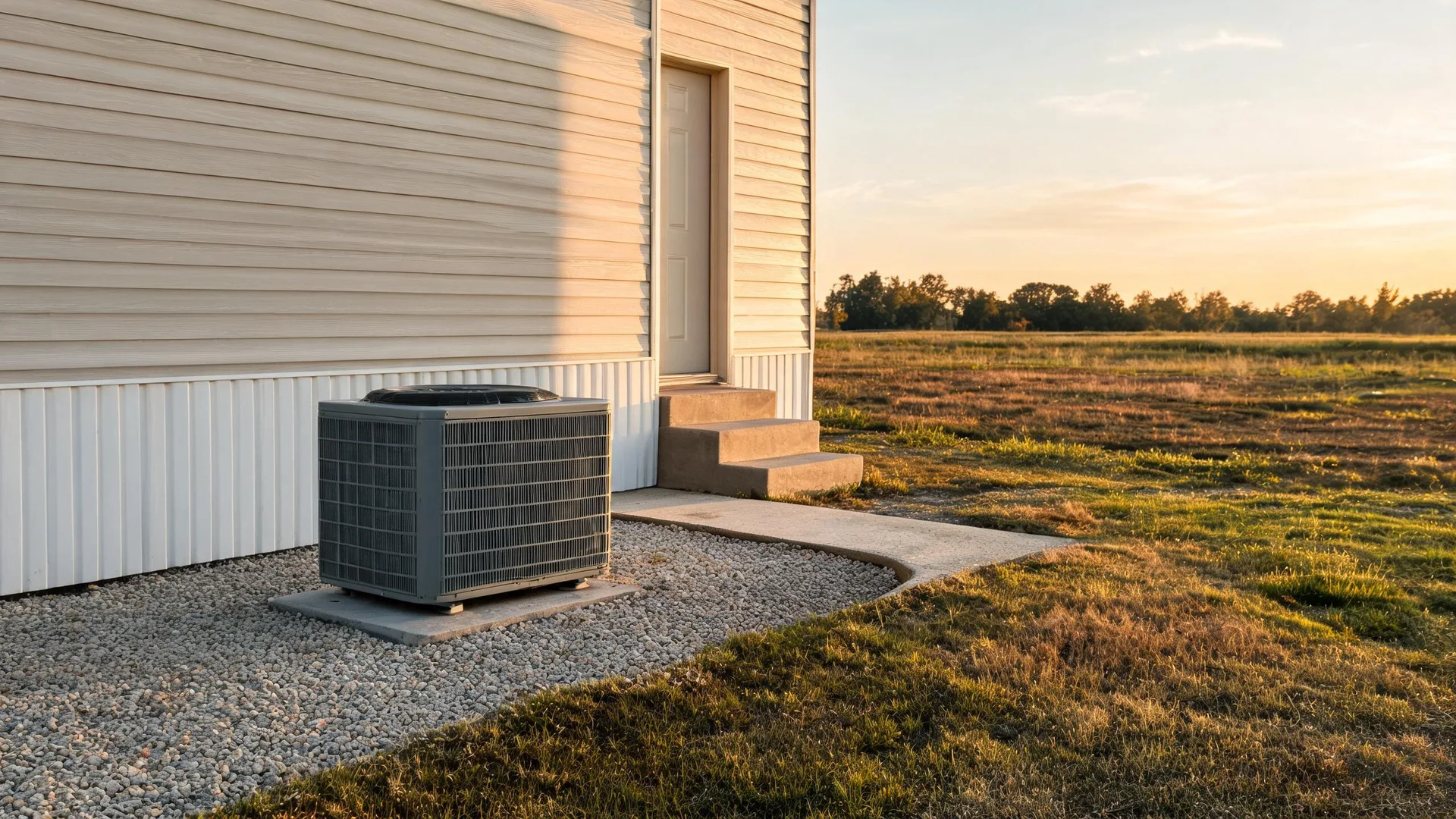
Look at the outdoor unit

The condenser outside needs clear airflow to work at all. Leaves, grass clippings, or a fence line growing in close can choke it. Clear anything within a couple feet of it and make sure the top isn't covered. Also check that the breaker hasn't tripped and the indoor thermostat has fresh batteries if it's a battery model. These are the only checks worth doing yourself. Past this, the cabinet should stay closed and the diagnosis is a job for someone with gauges.

Overhead view of a gray outdoor AC condenser unit on a concrete pad beside a mulched garden bed and a house with vinyl siding.

A new air conditioner would save little on running costs in Door County, so the repair decision comes down to the unit's condition.

  • A new one at the federal minimum, 13.4 SEER2$90 a year
  • An older air conditioner$100 a year

Estimates for a typical Door County home, compared with an older unit built to the previous federal minimum, from EIA household energy data, Wisconsin fuel prices and NOAA climate normals. Your home will differ.

Repair makes sense when a part like a capacitor or contactor has failed.

Replacement makes sense when the compressor has failed or the system uses R-22 refrigerant, which is no longer made.

A diagnostic visit starts outside, not in the cabinet. A tech will check the condenser fan, look at the refrigerant pressures, and see how hard the compressor is working to do its job. Inside, they'll check the air coming off the coil against the air going into it, since that gap says a lot about whether the system is actually cooling or just moving air around. Electrical parts get tested too, the capacitor and contactor especially, since those are what fail quietly and cause the bigger breakdowns if left alone. Most of this takes gauges and meters a homeowner doesn't have on hand, which is why a visit matters even when the problem seems obvious from the vents. By the end, you should know which part is failing and what it takes to fix it, not just that something's wrong.