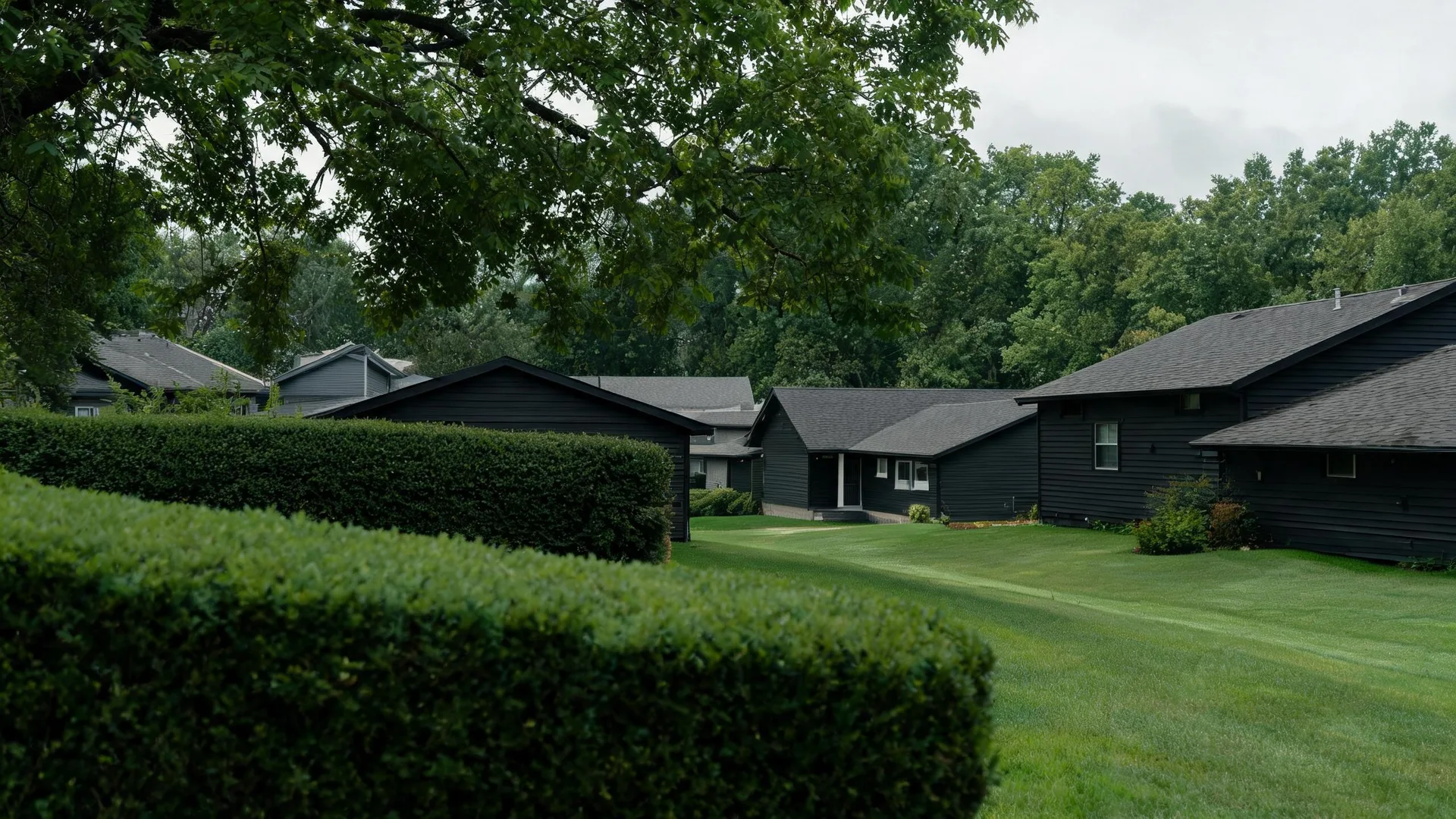
Dark-painted single-story houses with gray shingle roofs behind a trimmed green hedge and mown lawn, surrounded by leafy trees under an overcast sky.

AC Repair in Sparta, WI

Tell us about the job

Takes about a minute. No obligation.

RepairCentral ACMonroe County, WI
Step 1 of 2

What ZIP code is the job in?

Half the homes here were built in 1980 or later

Monroe County splits close to down the middle. Half the homes went up in 1980 or earlier, half in 1980 or later. A newer house generally means tighter construction, and that means less strain on the air conditioner that came with it.


A newer system usually still has life in it

If your air conditioner came with a house built in 1980 or later, it likely hasn't been run as hard as one in an older place. That's a good reason to lean toward repair instead of writing it off.

3 months
June through August, your air conditioner is on duty
79°F
the average summer afternoon it cools against
39 hail events
in ten years, and hail bends the fins on outdoor coils
58 wind events
in ten years, and wind drives debris into outdoor units
Isometric line illustration of a cutaway single-story house showing interior rooms, ductwork, an indoor air handler or furnace, and a refrigerant line running to an outdoor condenser unit on a pad.
Your air conditioner works hardest from June through August.

NOAA nClimDiv, 1991–2020 normals

Capacitors and contactors wear from years of starting the compressor and fan, and that kind of wear catches up with any system eventually.

A unit that's had an easier run usually gets more years before that wear turns into a real failure.

Three months a year, mild afternoons: this compressor doesn't work hard

Cooling runs June through August
Summer afternoons average 79°F
58 damaging wind events from 2015 to 2024
June Is When the Weak Part Finds OutCooling here runs June through August, so May is worth a look before the first hot week asks something of a part that's already tired.

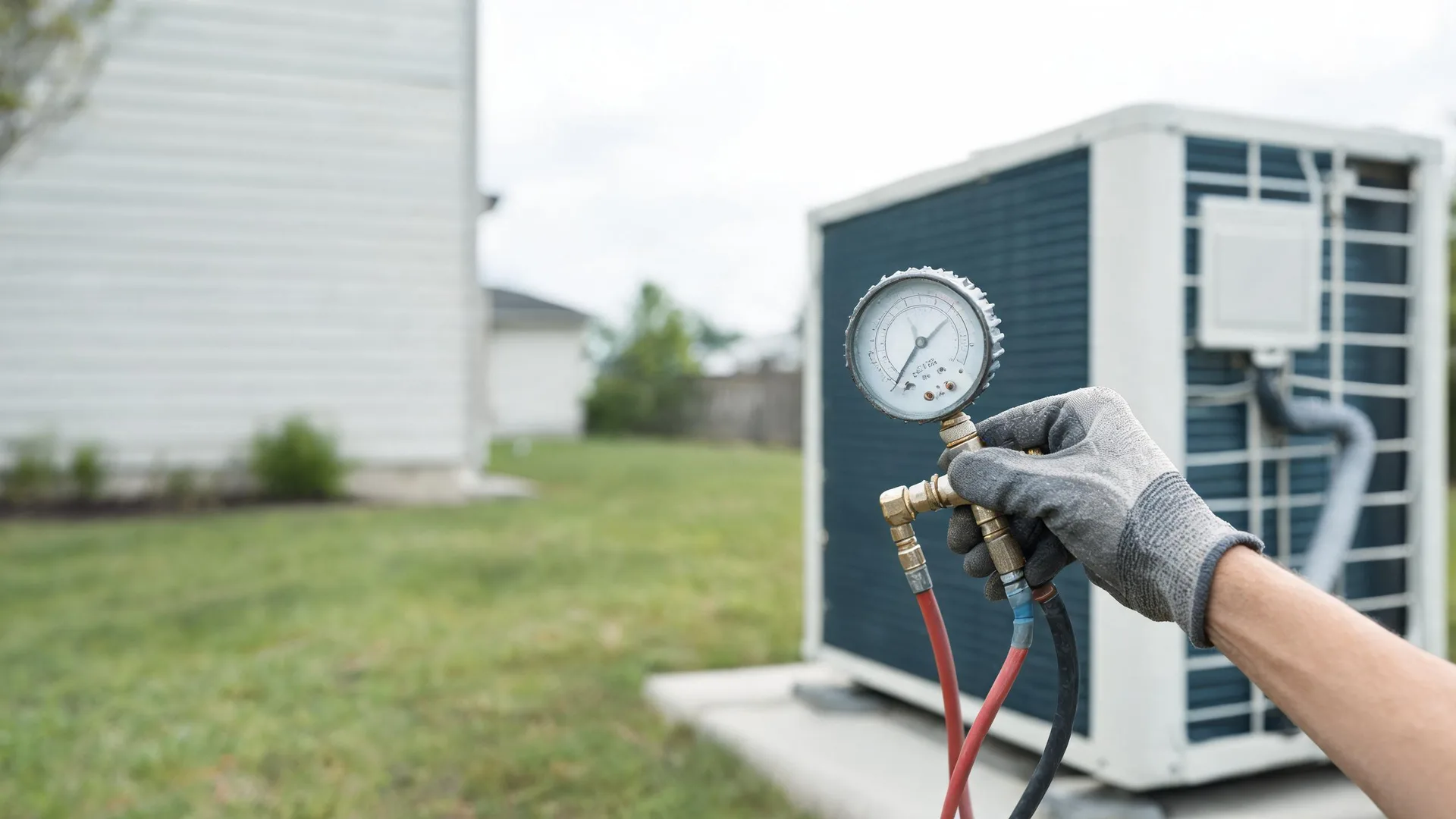
A tech starts by asking what the system is doing. Short cycling, warm air, ice on the line, a smell, a sound. That narrows things before a single panel comes off. Next comes the outdoor unit: checking the capacitor's reading against its rating, watching whether the compressor and fan start clean or hesitate. Refrigerant charge gets checked too, since a low charge points to a leak somewhere in the line set or coil rather than a failing part. Indoors, the tech checks the coil for ice or buildup and pulls the filter if it hasn't been looked at in a while, because restricted airflow strains the whole system and can mimic a refrigerant problem. The thermostat and electrical connections get a check as well, since a loose wire can cause symptoms that look like something bigger. By the end, the tech can usually point to the one part behind the trouble and explain what replacing it involves.

A light workload means most problems are one part, not the whole system

Three months of real work a year is not enough to wear a compressor out on its own. When one is struggling in month two of three, the cause is almost always a single part, a capacitor, a low charge, a stuck contactor, not the system giving out from the load. That's a repair most of the time, not a replacement.

Find a contractor
A man in a dark T-shirt and tan work pants carries a canvas tool bag up wooden porch steps toward a green panelled front door, with a potted shrub beside the entry.
A gray cylindrical air conditioning condenser unit mounted on a concrete pad next to a light-colored vinyl-sided house exterior.

A Newer House Means Fewer Summers on the Compressor

Half the homes in this county went up in 1980 or later. If yours is one of them, the unit outside has probably sat through fewer summers than the number painted on it suggests, especially if it's original to the house. A compressor that age still has working parts worth checking before anyone talks about pulling it out.

Check the filter before anything else

A clogged filter starves the system of airflow and can cause warm air, ice on the coil, or a system that runs constantly without cooling. Pull it out and hold it up to a light. If you can't see through it, that alone could be the whole problem.

Check the thermostat and the breaker

Make sure the thermostat is set to cool and set below room temperature, not just on. Then check the breaker box for anything tripped. Both take a minute to rule out and both can look exactly like a failed unit when they're not.

Overhead view of a gray residential air conditioning condenser unit mounted on a concrete pad beside a house with asphalt shingle roofing.

A new air conditioner would save little on running costs in Monroe County, so the repair decision comes down to the unit's condition.

  • A new one at the federal minimum, 13.4 SEER2$150 a year
  • An older air conditioner$160 a year

Estimates for a typical Monroe County home, compared with an older unit built to the previous federal minimum, from EIA household energy data, Wisconsin fuel prices and NOAA climate normals. Your home will differ.

Repair makes sense when a part like a capacitor or contactor has failed.

Replacement makes sense when the compressor has failed or the system uses R-22 refrigerant, which is no longer made.

Repair and replacement come down to how many parts are involved and how old the ones failing actually are. A capacitor, a contactor, a fan motor, these fail one at a time and get swapped one at a time, usually without touching anything else on the system. That's a repair, and a straightforward one. Replacement starts to make sense when the compressor itself is failing, since that's the one part that isn't practical to swap on its own, or when several parts are going within a short stretch of each other. A tech can tell you which situation you're in by what's actually wrong, not by guessing at how the unit looks from outside.