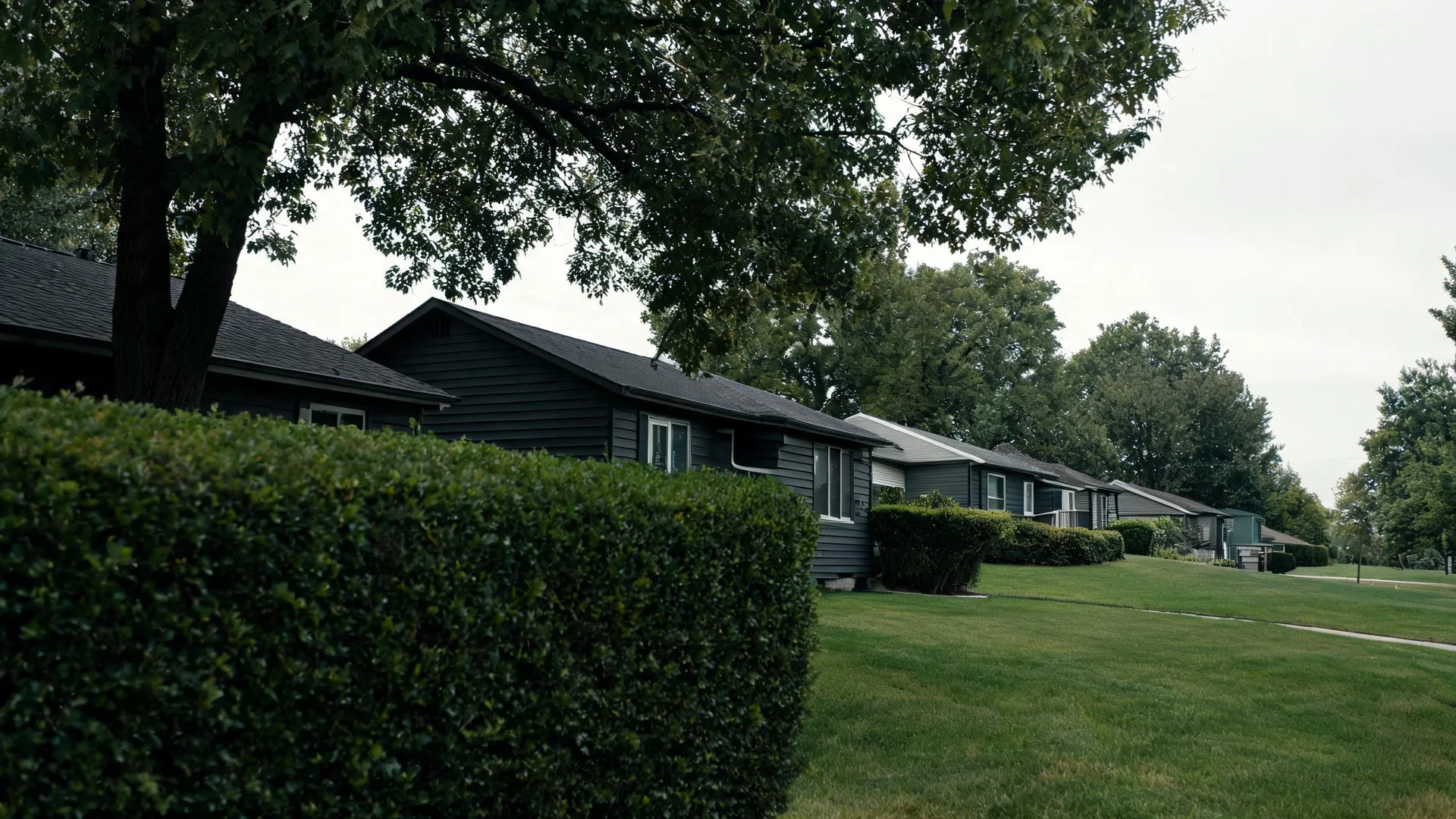





A row of dark-sided single-story houses behind a tall trimmed hedge and a large tree, with a mown lawn and a paved path under an overcast sky.

AC Repair in Shawano, WI

Tell us about the job

Takes about a minute. No obligation.

RepairCentral ACShawano County, WI
Step 1 of 2

What ZIP code is the job in?

Your AC only has to carry two months of real work here, July and August, and the afternoon high over that stretch averages 78. That's not much strain compared to what these units handle further south. So if something's gone wrong with yours, it's rarely because the machine's been run into the ground. More often it's a part that's worn out or failed on its own, worth fixing rather than replacing. Wind and hail are the bigger threat to equipment out here, so a sudden problem that shows up right after a storm points outside the unit, not inside it.

2 months
July through August, your air conditioner is on duty
78°F
the average summer afternoon it cools against
15 hail events
in ten years, and hail bends the fins on outdoor coils
40 wind events
in ten years, and wind drives debris into outdoor units
Isometric line illustration of a cutaway house showing an indoor air handler with branching ducts in the attic space, connected by a line set to an outdoor condenser unit beside the building, with simple furniture in two rooms.
Your air conditioner works hardest from July through August.

NOAA nClimDiv, 1991–2020 normals

June is the month before cooling starts in Shawano County.

If your AC struggles the first week it runs in July, that's a part that was already weak, not one worn out from the season.

A mild summer here means the usual parts fail, not the whole machine

Power costs 17.18 cents a kWh statewide
Cooling runs July through August
Summer afternoons average 78°F

Shawano County splits about evenly between houses built before 1975 and after. That doesn't point to any particular cause when your AC quits. An older house might still have the original ductwork and a newer condenser, or a newer house might have whatever came with it from day one. Neither tells a contractor what's wrong without a look. What matters more is the unit itself, its age and what's failed on it before, not the age of the house around it.

Worth repairing, not replacing

A repair is usually the right call on a unit that's had an easy couple of months a year to work with. Get the part diagnosed and fixed rather than planning around a replacement.

Find a contractor
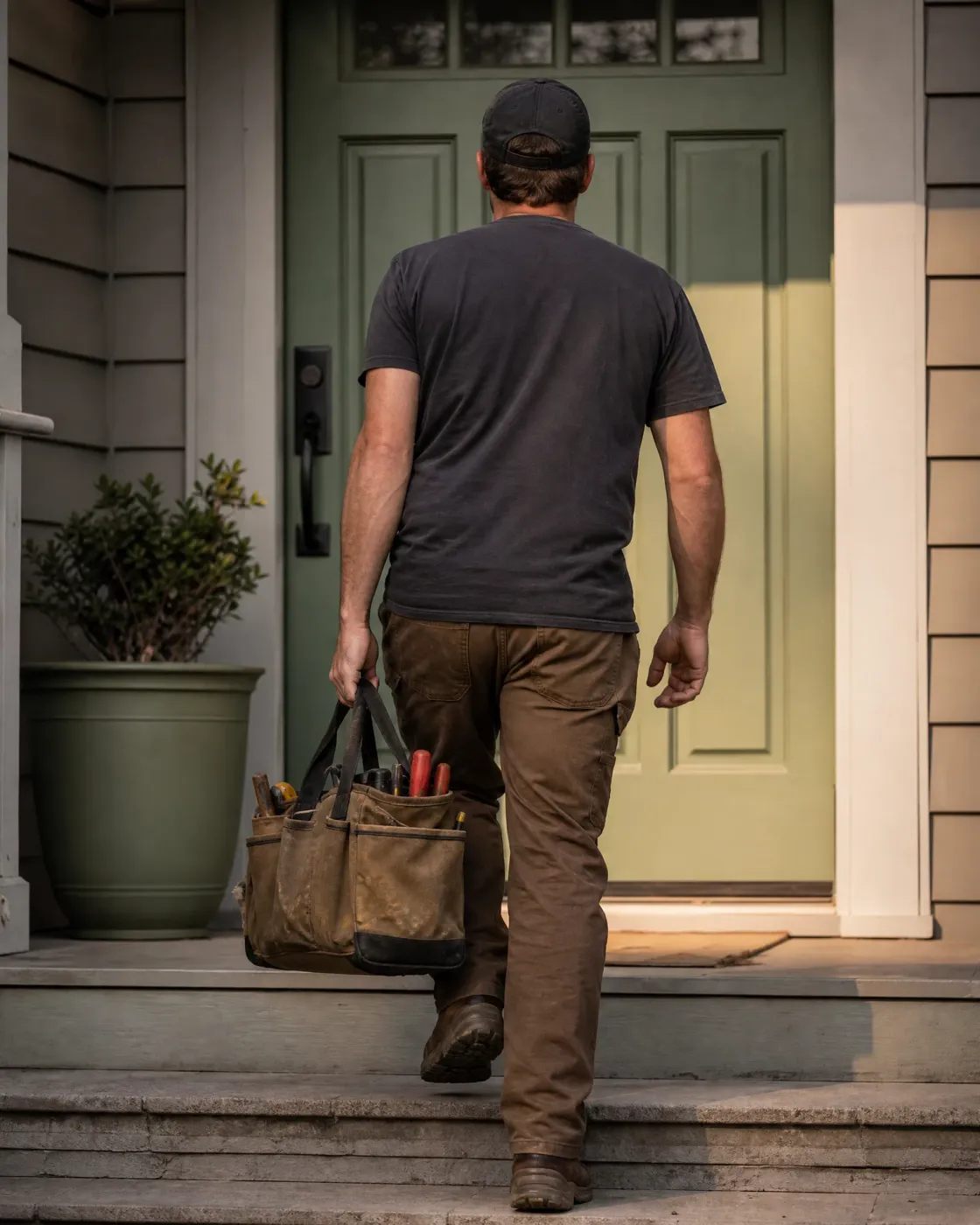
A man in a dark cap, dark T-shirt and brown work pants, seen from behind, carries a canvas tool bag up concrete steps toward a green front door.
An outdoor air conditioning condenser unit mounted on a concrete pad surrounded by gravel, photographed against a partly cloudy blue sky.

The small parts give out first, long before the compressor does

A capacitor is the part most likely to give out first. It holds the charge that kicks the compressor and fan motor on, and it can weaken without any warning, sitting fine all winter and then failing the moment it's asked to work. Once it's too weak, the unit hums and won't start, or the fan turns slowly instead of spinning up. A contactor can fail the same way, the switch pitting until it sticks or stops making contact, and that failure doesn't care how hard the unit ran before it. A refrigerant leak is a different kind of problem. It starts as a small crack or worn fitting, and it gets slowly worse on its own schedule, so the first sign is often weaker cooling on a mild day rather than a hot one. None of this points to the compressor itself. That part usually outlasts the smaller ones around it, and when it does fail, it's often because one of those smaller parts failed first and put strain on it for longer than it should have.

What you can check yourself

Look at the outside unit and see if the fan is spinning. Check the air filter and swap it if it's gray or clogged. Go to the thermostat and make sure it's set to cool and the setting is below room temperature. Check your breaker panel for a tripped breaker tied to the AC. These take a couple of minutes and rule out the simplest causes.

What to leave alone

Don't open the outdoor unit's cabinet or touch anything inside it. Don't add refrigerant yourself, a leak needs to be found and sealed first or it just leaks out again. If the unit is tripping the breaker repeatedly, stop resetting it and get it looked at, that's usually a motor or wiring fault that gets worse if it keeps running.

An outdoor central air conditioning unit mounted on a concrete pad beside a blue-sided house at sunset.

A new air conditioner would save little on running costs in Shawano County, so the repair decision comes down to the unit's condition.

  • A new one at the federal minimum, 13.4 SEER2$120 a year
  • An older air conditioner$130 a year

Estimates for a typical Shawano County home, compared with an older unit built to the previous federal minimum, from EIA household energy data, Wisconsin fuel prices and NOAA climate normals. Your home will differ.

Repair makes sense when a part like a capacitor or contactor has failed.

Replacement makes sense when the compressor has failed or the system uses R-22 refrigerant, which is no longer made.

Repair versus replacement comes down to one thing. Is the rest of the unit healthy enough to be worth fixing the one part that failed. A failed capacitor or contactor on an otherwise sound system is a clear repair. The part is simple to replace and the rest of the unit was never the problem. A compressor that's failed is a harder call. A compressor rarely fails on its own. It's usually the last part to go after something else strained it for a long time, so a contractor will want to know what caused it before deciding the rest of the system is worth building around. Age matters less than how the unit has been kept up. A unit that's had its filter changed and its coils kept clean tends to fail one part at a time, and each of those is worth fixing. A unit that's been neglected tends to fail in ways that cascade, one worn part damaging the next, until replacing the whole thing costs less trouble than chasing each failure as it comes.