





A row of dark-sided single-story houses with gray shingled roofs behind trimmed hedges and a mown lawn, framed by overhanging tree branches under an overcast sky.

AC Repair in Rice Lake, WI

Tell us about the job

Takes about a minute. No obligation.

RepairCentral ACBarron County, WI
Step 1 of 2

What ZIP code is the job in?

AC in Rice Lake only has to work July and August, so June is when a weak part finally gets tested. A capacitor or contactor that limped along last summer and sat unused since doesn't get better over the winter. The first hot stretch is when it gives out, usually in the first few weeks of the season. If your AC is struggling or not cooling right as summer starts, get it looked at rather than waiting to see if it sorts itself out. With only two months of real use, a repair now is what gets you through the rest of the season.

2 months
July through August, your air conditioner is on duty
78°F
the average summer afternoon it cools against
26 hail events
in ten years, and hail bends the fins on outdoor coils
35 wind events
in ten years, and wind drives debris into outdoor units
Isometric cutaway illustration of a single-story house showing interior rooms with ductwork and an air handler, connected by refrigerant lines to an outdoor condenser unit on the left.
Your air conditioner works hardest from July through August.

NOAA nClimDiv, 1991–2020 normals

A repair fixes the part that actually failed, not the whole system.

If the compressor still runs fine, replacing it along with everything else is money spent on something that wasn't broken.

An old house isn't why your AC quit

Half the homes here were built by 1977
Cooling runs July through August
Summer afternoons average 78°F
Nothing unusual here, just the usual part giving outWisconsin homes paid 17.18 cents per kilowatthour for electricity in 2024.

That light yearly load is why a repair is usually the right call here, even on an older unit. A compressor that only works two months a year and never sees much strain isn't the part that typically fails first. When something does go wrong, it's more often the capacitor, the contactor, or a control board, parts that wear out on their own schedule and get replaced on their own. Fixing that one part usually brings the system back to where it was, with no reason to think the rest of it is close behind.

Get it looked at early

Problems tend to show up in the first weeks of the season, when the load hits a part that was already weak.

Find a contractor
A gray residential air conditioner condenser unit mounted on a concrete pad in an open grass field.

What to check before you call

Check the thermostat first. Set it to cool, set it below room temperature, and see if the display even lights up. A blank screen points to a breaker, not the AC itself. Go reset it once. If it trips again right away, stop there and leave it for someone licensed. Next look at the condenser outside. A hum with no fan movement, or a fan spinning slow and struggling, usually means a weak capacitor, and running it that way can take the compressor down too. Make sure nothing's stacked against the unit or sitting on top of it, since it needs air moving through it. Pull the filter and hold it to a light. If no light comes through, it needs to be swapped or cleaned. A blocked filter starves the system of air and can ice the coil over, which stops cooling altogether. If you find ice anywhere, on the indoor coil or the line outside, shut the system off and let it thaw before anyone looks at it further. Running it iced up just makes the repair bigger.

Weak cooling shows up before total failure

Warm air from the vents, or air that's cool but not cold, usually means the system is losing capacity rather than quitting outright. A low refrigerant charge, a struggling compressor, or a coil caked with dirt all show up this way first. The unit still runs, it just can't keep up once the heat of the day sets in.

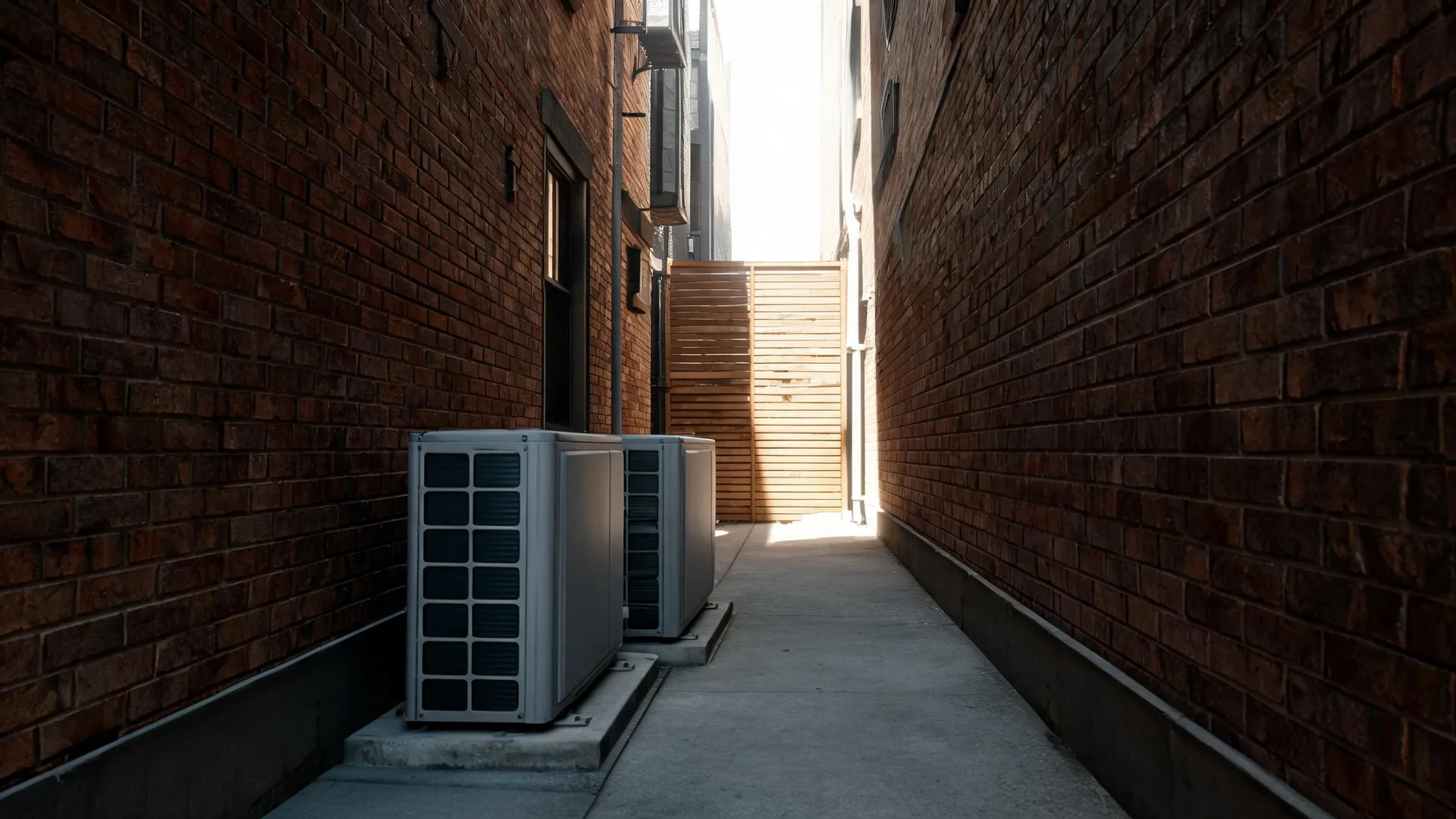
Sound and smell tell you where to look

A grinding or screeching from the outdoor unit points to the fan motor bearings. A musty smell from the vents usually means moisture sitting in the ductwork or on the coil. A burning smell is different from either of those and means stop the system and get it looked at before running it again.

An outdoor air conditioning condenser unit installed beside the exterior wall of a blue vinyl-sided house at sunset.

A new air conditioner would save little on running costs in Barron County, so the repair decision comes down to the unit's condition.

  • A new one at the federal minimum, 13.4 SEER2$120 a year
  • An older air conditioner$130 a year

Estimates for a typical Barron County home, compared with an older unit built to the previous federal minimum, from EIA household energy data, Wisconsin fuel prices and NOAA climate normals. Your home will differ.

Repair makes sense when a part like a capacitor or contactor has failed.

Replacement makes sense when the compressor has failed or the system uses R-22 refrigerant, which is no longer made.

A diagnostic starts outside at the condenser, checking that the compressor is running and the fan is turning the way it should. The tech will check refrigerant pressures, since too little charge means the system is losing heat instead of pulling it from the house. Electrical parts get tested too, the capacitor and contactor especially, since those are what wear out first and don't always fail all at once. Inside, the coil gets checked for ice or dirt buildup, either of which chokes airflow and drops cooling capacity before anything quits outright. Once the bad part is found, most of the time the fix is replacing that one part rather than touching anything else. A system that's otherwise sound doesn't need more than that.