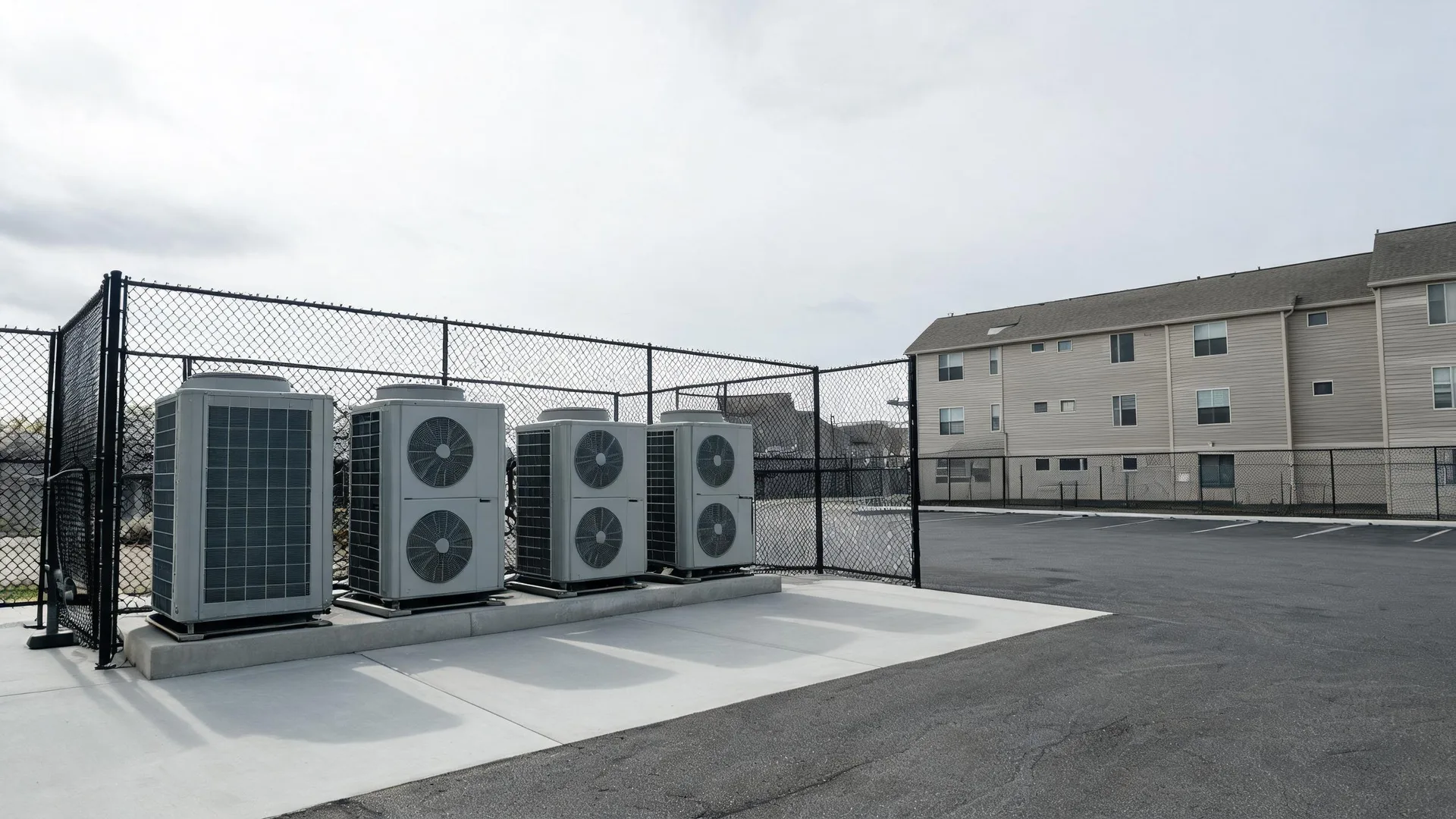
June is when weak parts fail
Cooling in Portage starts in June. A capacitor or contactor that was already marginal often doesn't make it through that first hot stretch.
Takes about a minute. No obligation.
Cooling in Portage starts in June. A capacitor or contactor that was already marginal often doesn't make it through that first hot stretch.
Once June hits, every AC in the area is working at once and a failing part has no slack left. Getting it looked at in May means the fix happens before the season puts load on it.

NOAA nClimDiv, 1991–2020 normals
Summers in Columbia County run about three months, with afternoon highs near 80.
An AC here isn't worked as hard as units in hotter places, so most repair calls come down to a part that failed, not a system that's worn out.




There's nothing about Portage summers that pushes an AC past what it's built for, which is exactly why repair calls here almost always trace back to one failed part. A capacitor loses its charge. A contactor pits and sticks. A low refrigerant charge means a leak somewhere in the line. None of that comes from the weather working the system too hard. It's wear on one component, the same as it would be anywhere, and once a contractor finds which one, the fix is usually straightforward. Wisconsin electricity ran 17.18 cents per kilowatthour in 2024, so a unit that's short on refrigerant or running on a failing capacitor is working harder than it needs to and costing more to run until that part gets replaced.
A failed part is almost always a part worth replacing, not a reason to replace the whole system. Get it looked at and know what you're dealing with.
Find a contractorA compressor starts and stops every cycle, and that start is the hardest moment in its life. Same with a fan motor. The bearings and the start windings wear from the number of cycles, not from how hot it got outside. A capacitor loses its charge the same way over time, a little more each season, until it can't deliver the jolt the compressor needs to start. A contactor is just a switch, and its contacts pit and burn a little more with every cycle until they stick or stop closing clean. Refrigerant doesn't get used up or wear out. If a system is low, it's leaking somewhere in the line, usually at a joint or a coil, and that can happen in a system that's barely run at all. None of these parts care whether the air outside was mild or brutal. They care how many times they've been asked to do their job, and eventually one of them has done it enough times to quit.
The air coming out isn't as cold as it was, or the system runs and runs without the house catching up. Sometimes it's a smell, musty or burning. Sometimes it's a sound, a hum, a click that repeats, a rattle that wasn't there before. The thermostat might say it's cooling when the vents say otherwise. Whatever you notice, it means one part back in the system is already struggling to do its job.
A noise or a weak airflow doesn't tell you which part is failing, but it tells you the system is already past marginal. An AC that's straining still cools, for a while, right up until the part gives out and it doesn't. Getting it looked at while it still runs gives a contractor something to diagnose, instead of a dead system to guess at.
Estimates for a typical Columbia County home, compared with an older unit built to the previous federal minimum, from EIA household energy data, Wisconsin fuel prices and NOAA climate normals. Your home will differ.
Repair makes sense when a part like a capacitor or contactor has failed.
Replacement makes sense when the compressor has failed or the system uses R-22 refrigerant, which is no longer made.
A diagnostic visit starts with the thermostat and the vents, checking what the system is actually doing against what it's supposed to do. From there a contractor checks the capacitor's charge and the contactor's contacts, since those fail the most and show the clearest signs when they do. Refrigerant pressure gets checked too, because a low charge points to a leak that needs finding, not just topping off. The outdoor unit gets opened up so the fan motor and the coil can be looked at directly instead of guessed at. Most of this takes measurements, not guesswork, a gauge on the refrigerant line, a meter on the capacitor, readings that say plainly what's failing and what isn't. By the end of it you know which part is the problem, not just that something is wrong.