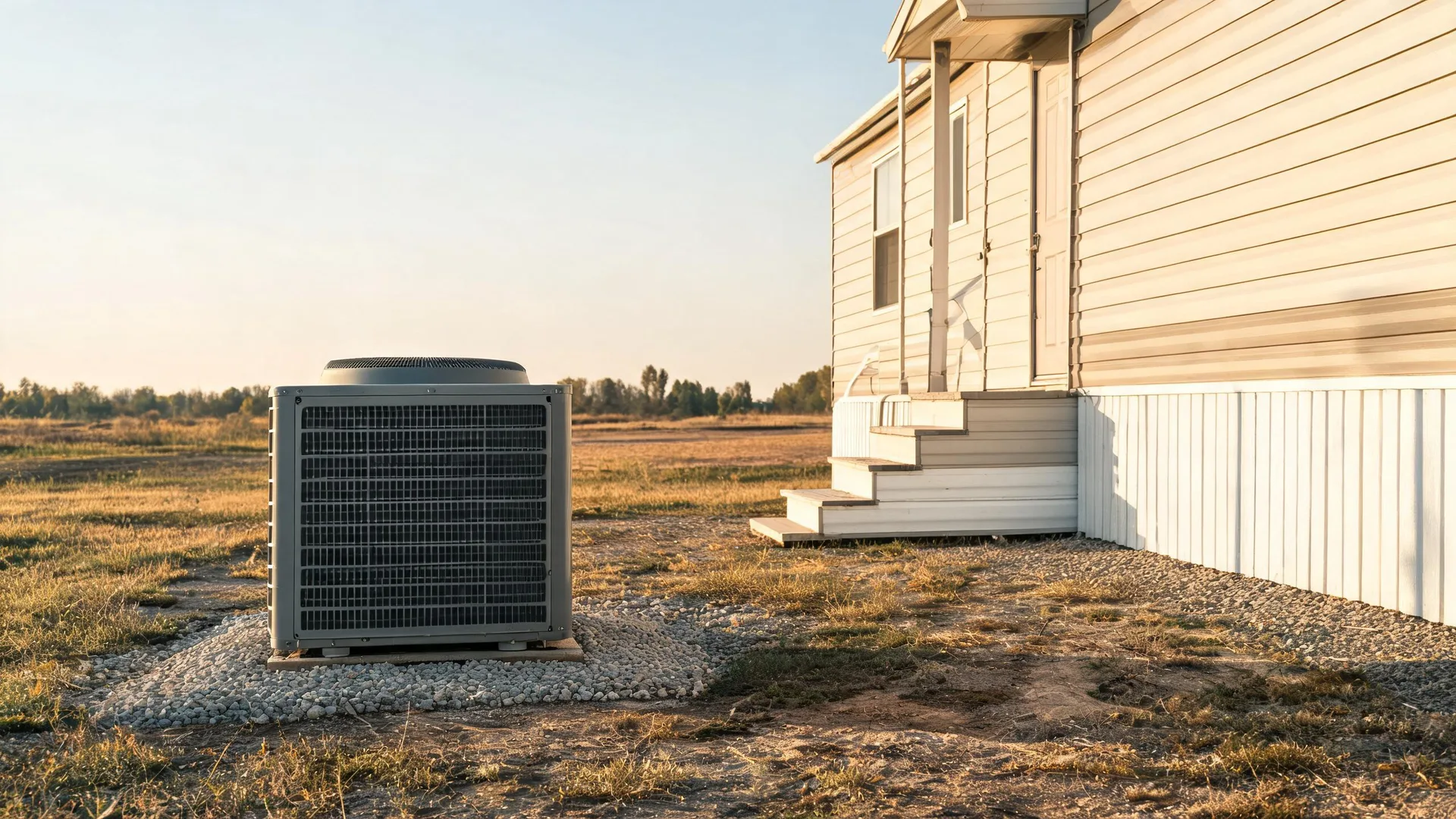
An overhead view of a residential air conditioning condenser unit mounted on a concrete pad next to a house with vinyl siding.

AC Repair in Manitowoc, WI

Tell us about the job

Takes about a minute. No obligation.

RepairCentral ACManitowoc County, WI
Step 1 of 2

What ZIP code is the job in?

The tech checks before they touch anything

A tech will run the system and watch it work before taking a single panel off. They check the return air, the supply air, and what the thermostat is calling for. That tells them whether to look at the refrigerant charge, the electrical side, or the airflow first instead of guessing.


The diagnosis tells you what you're actually deciding

Once the tech finds the failed capacitor, the low charge, or the clogged coil, you're not just hearing what broke. You're hearing whether it's a quick repair or a sign the compressor or coil is on its way out, which is what decides whether fixing it makes sense.

2 months
July through August, your air conditioner is on duty
77°F
the average summer afternoon it cools against
24 hail events
in ten years, and hail bends the fins on outdoor coils
52 wind events
in ten years, and wind drives debris into outdoor units
Isometric line illustration of a cutaway house showing interior rooms, ceiling ductwork, an indoor air handler unit, and an outdoor condenser connected by lines along the exterior wall.
Your air conditioner works hardest from July through August.

NOAA nClimDiv, 1991–2020 normals

AC runs about two months a year here, July through August.

June is the month to get a weak system looked at, before July's first hot week finds the part that was already failing.

Half the homes here are old enough that the AC has already outlived something else in the house

Half the homes here were built by 1964
Cooling runs July through August
Summer afternoons average 77°F

Two months of real heat a year is not much to ask of a compressor. Afternoons average 77 here across June, July and August, which is warm but not the kind of heat that pushes a system hard. July and August are the only months this unit works at all. The rest of the year it sits idle. That matters when something breaks, because a part that fails after a short, mild summer is usually failing from age or a bad component, not from being run into the ground. A capacitor or a motor that's had an easy life still wears out eventually, but it's more likely to be the one weak part than a system worked past what it can handle.

Fix what's actually wrong, once

A capacitor or a low charge doesn't care what the electric rate is, but a repair that's done right the first time means you're not paying 17.18 cents a kilowatt-hour to run a system that's still struggling. Get the cause fixed, not just the symptom.

Find a contractor
A man seen from behind in a backward cap, dark jacket and tan work pants carries a waxed canvas tote bag up steps toward a green front door, with a potted shrub beside the entry.
An outdoor residential air conditioning condenser unit mounted on a concrete pad, surrounded by gravel with a blue sky in the background.

What actually wears out, and why

The capacitor takes a small hit every time the compressor starts, and over years of that it weakens until it can't kick the compressor over anymore. The unit hums or clicks but doesn't start, and heat makes it worse since the capacitor sits right next to a hot compressor all season. The fan motor fails the same slow way, bearings drying out after enough hours of spinning. Refrigerant doesn't get used up, so a system running low has a leak in the lines or the coil, and it keeps getting lower until that leak is found and closed. Dirt causes a different kind of trouble. A coil caked with dust can't shed heat the way it should, so the system runs longer to do the same job and everything in it wears out faster for no reason.

What you can check before anyone comes out

Look at the outdoor unit and make sure nothing is pressed against it, no leaves or grass clippings packed into the fins. Check the filter and swap it if it's gray or clogged. Go to the thermostat and make sure it's set to cool and the setting is actually below room temperature, and check the batteries if it uses them. Look at the breaker panel for a tripped switch. These take a few minutes and rule out the simplest causes.

What to leave alone

Don't take the cover off the outdoor unit or touch anything inside it. Don't add refrigerant or try to find a leak yourself, the lines run under pressure and need gauges to read correctly. If the system trips a breaker more than once, stop resetting it and leave it off, that's usually a short or a failing part drawing too much current, and running it again can damage the compressor.

Aerial view of a residential air conditioning condenser unit mounted on a concrete pad next to a house with vinyl siding and a sliding glass door.

A new air conditioner would save little on running costs in Manitowoc County, so the repair decision comes down to the unit's condition.

  • A new one at the federal minimum, 13.4 SEER2$110 a year
  • An older air conditioner$120 a year

Estimates for a typical Manitowoc County home, compared with an older unit built to the previous federal minimum, from EIA household energy data, Wisconsin fuel prices and NOAA climate normals. Your home will differ.

Repair makes sense when a part like a capacitor or contactor has failed.

Replacement makes sense when the compressor has failed or the system uses R-22 refrigerant, which is no longer made.

A repair is worth doing when the part that failed is separate from everything else in the system. A capacitor, a fan motor, a run of wire chewed by something in the outdoor unit, these fail on their own and fixing them brings the system back to where it was. Replacement starts to make sense when the compressor itself is the problem. The compressor is sealed, it isn't rebuilt, and a failing one usually means the system is done. Age works against a repair in a different way. An old system can take a new capacitor just fine, but if the coil is also weeping refrigerant and the blower motor is on its last bearing, fixing one thing just means the next part fails a season later. A tech who's run the system and found the actual cause can tell you which situation you're in, and that's worth more than guessing from how old the unit looks.