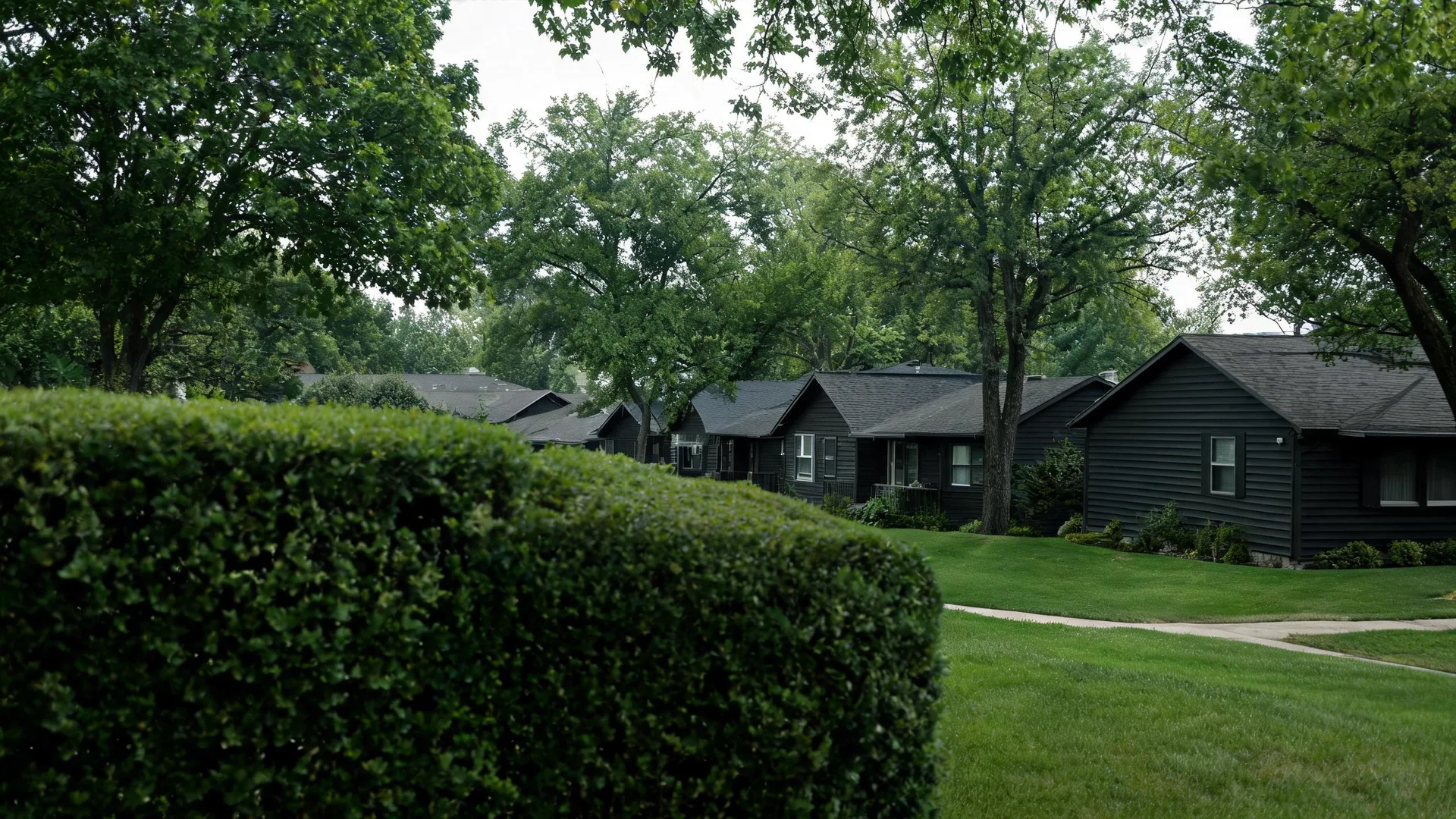






A row of dark-sided single-story houses among large deciduous trees, with a trimmed hedge in the foreground and a mown lawn crossed by a paved path.

AC Repair in Madison, WI

Tell us about the job

Takes about a minute. No obligation.

RepairCentral ACDane County, WI
Step 1 of 2

What ZIP code is the job in?

Dane County saw 307 severe weather events between 2015 and 2024. Damaging wind came through 128 times in that span, hail another 140, and 11 tornadoes touched down. An outdoor AC unit sits outside through all of it, with nothing shielding the coil or the fan blades from hail or flying debris. A unit can take a hit and keep running for a while before the damage shows up as a refrigerant leak or a fan that wobbles itself apart. If a storm has come through your yard, it is worth having the unit looked at, even if the air coming out still feels cold.

3 months
June through August, your air conditioner is on duty
81°F
the average summer afternoon it cools against
140 hail events
in ten years, and hail bends the fins on outdoor coils
128 wind events
in ten years, and wind drives debris into outdoor units
Isometric line illustration of a cutaway house showing interior rooms, ceiling ductwork connected to an indoor air handler, and an outdoor condenser unit linked by refrigerant lines.
Your air conditioner works hardest from June through August.

NOAA nClimDiv, 1991–2020 normals

Half the homes in Dane County were built in 1986 or later.

A system that came with a newer house still has working life in it, and that makes repair the right call.

Three months to do the work June through August, and most failures show up in the first weeks of heat

Cooling runs June through August
Climate zone 5A
Power here costs 19.09 cents per kilowatt-hour

If your air conditioner came with the house and the house went up in 1986 or later, that unit is a good candidate for repair rather than replacement. A compressor or capacitor failure in a system that age is usually a single part worth fixing, not a sign the whole unit is near the end. Ask whoever comes out to check the model and serial plate on the outdoor unit. That plate tells you the manufacture date, which is a better answer than guessing from the age of the house.

If a storm came through, get the unit checked before it fails on its own

If hail or wind has come through since you noticed the trouble, get the outdoor unit looked at now rather than later. A bent fan blade or a slow refrigerant leak from a hail strike can take weeks to turn into a full breakdown, and you're better off catching it on your terms than in the next heat wave.

Find a contractor
A man in a gray rolled-sleeve shirt and brown pants, seen from behind, carries a worn canvas tool bag up concrete steps toward a green front door of a shingle-clad house, with a potted shrub beside the entry.
A gray residential air conditioner condenser unit mounted on a concrete pad in an open grass field.

Every cycle wears something down a little more

A capacitor is usually the first thing to go. It stores the charge that kicks the compressor and fan motor into motion, and that charge wears it down a little every time it fires. Years of starts and stops leave it weak, and a weak capacitor means the outdoor unit hums but the fan doesn't spin, or the compressor struggles to kick on at all. The contactor goes the same way, pitting a little more with every cycle until it sticks or stops making contact. The fan motor bearings dry out over time and start grinding before they seize. None of that is about one bad day. It's the ordinary wear of a machine that switches on and off thousands of times over its life, every cycle a small shock to whatever part gets stressed first.

What you can check yourself

Look at the thermostat first. Make sure it's set to cool and set below room temperature, and change the batteries if it's been a while. Check the breaker box for a tripped breaker on the AC circuit. Go outside and look at the condenser. If the fan isn't spinning and you don't hear a hum, that's worth noting for whoever comes out. Check the air filter. A filter clogged with dust chokes off airflow and can cause the whole system to struggle or ice up.

What to leave alone

Don't open the outdoor unit's cabinet or touch anything inside it. The capacitor in there holds a charge even with the power off. Don't pour anything on a frozen coil to melt it faster, and don't keep running the system if ice has built up on the lines, since that can push liquid refrigerant back into the compressor and damage it. If the breaker trips more than once after you reset it, stop resetting it and call someone. A breaker that won't hold is telling you something is drawing too much current, and running it anyway risks the compressor.

Overhead view of an outdoor AC condenser unit on a concrete pad next to a house with a dark shingle roof.

A new air conditioner would save little on running costs in Dane County, so the repair decision comes down to the unit's condition.

  • A new one at the federal minimum, 13.4 SEER2$180 a year
  • An older air conditioner$190 a year

Estimates for a typical Dane County home, compared with an older unit built to the previous federal minimum, from EIA household energy data, Wisconsin fuel prices and NOAA climate normals. Your home will differ.

Repair makes sense when a part like a capacitor or contactor has failed.

Replacement makes sense when the compressor has failed or the system uses R-22 refrigerant, which is no longer made.

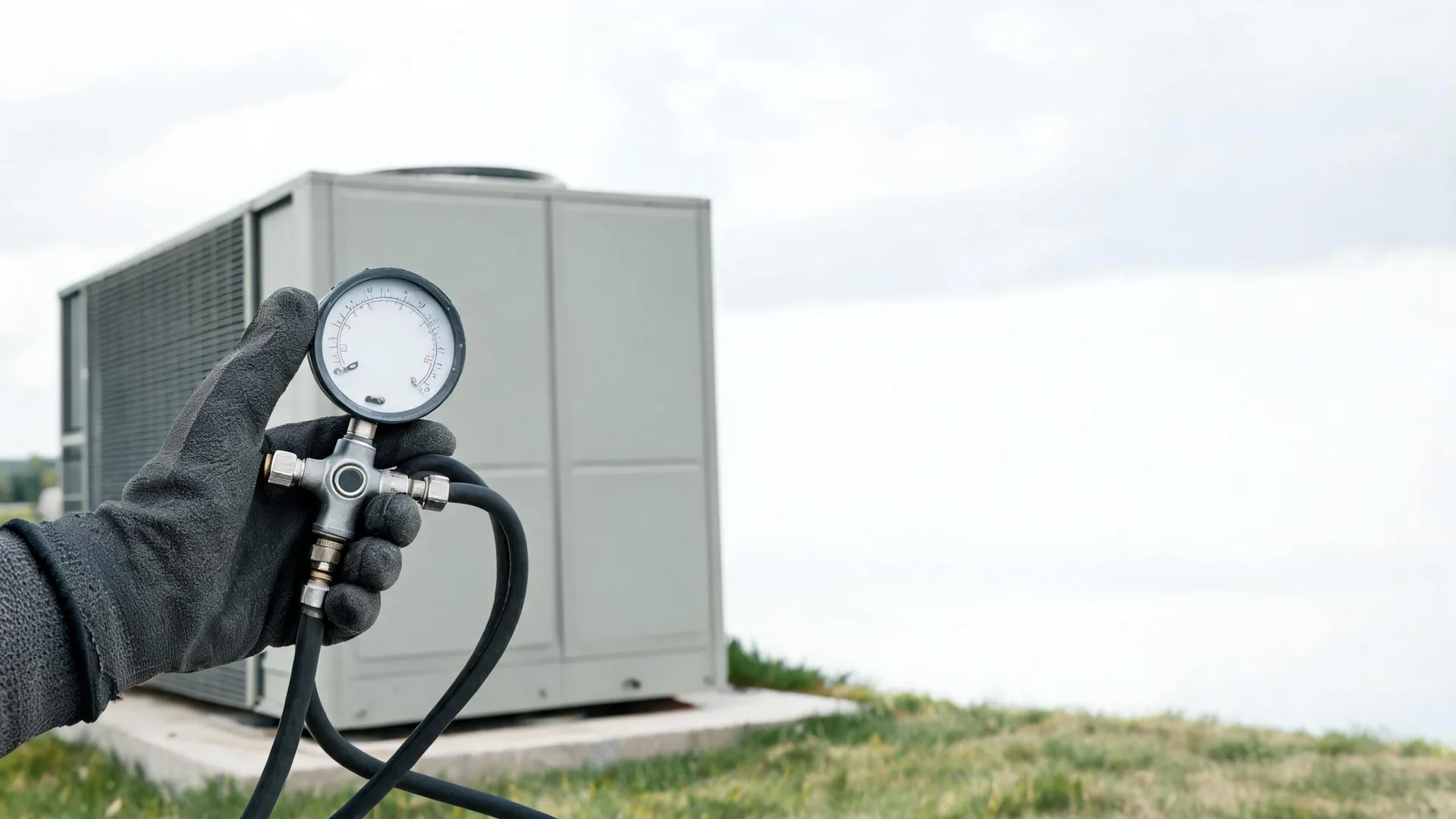
A diagnostic visit starts outside at the condenser, not inside at the thermostat. A tech checks the capacitor and contactor first, since those fail more than anything else in the unit, then moves to the refrigerant charge with gauges to see if it's low and where it might be leaking from. Electrical readings come next: amp draw on the compressor and fan motor, voltage at the contactor, resistance checks if a motor is suspect. Inside, they'll look at the evaporator coil for ice or dirt and check airflow across it, since a coil that's iced over or choked with dust can mimic a refrigerant problem without being one. The diagnosis isn't done until the tech can point to the specific part that failed and explain why it failed, not just that the system isn't cooling. That's what tells you whether you're looking at a quick fix or something bigger.