







Three illuminated two-story brick houses on a tree-lined residential street photographed at twilight, with warm window light and landscape uplighting visible against a deep blue evening sky.

AC Repair in Kenosha, WI

Tell us about the job

Takes about a minute. No obligation.

RepairCentral ACKenosha County, WI
Step 1 of 2

What ZIP code is the job in?

Summers here only run about three months, June through August, with afternoon highs averaging around 80. Your AC isn't working against the kind of heat that wears a system down fast. So when something goes wrong, it's rarely because the unit has been pushed too hard. More often it's a part that's aged out or a yearly service that got skipped. That's usually worth fixing rather than replacing.

3 months
June through August, your air conditioner is on duty
80°F
the average summer afternoon it cools against
17 hail events
in ten years, and hail bends the fins on outdoor coils
43 wind events
in ten years, and wind drives debris into outdoor units
Isometric cutaway illustration of a single-story house showing interior rooms, ductwork and an air handler in the attic space, and an outdoor condenser unit connected by lines at the exterior wall.
Your air conditioner works hardest from June through August.

NOAA nClimDiv, 1991–2020 normals

AC runs here from June through August.

May is the time to get a weak part checked, before the first hot stretch finds it.

Easy summers mean most AC problems here are a part worth fixing, not a system worth replacing

Cooling runs June through August
Summer afternoons average 80°F
43 damaging wind events from 2015 to 2024
A part that's failing still runs up the billWisconsin electricity runs 17.18 cents a kilowatt-hour, so a struggling unit costs you more every month it runs

Warm air out of the vents is the one most people catch first. It usually means the refrigerant charge is low, which almost always points to a leak somewhere in the line rather than refrigerant just running out on its own. A hissing or bubbling sound near the lines is worth mentioning when you call, since it can help point to the same thing. Short cycling, where the unit kicks on and off every few minutes instead of running a full cycle, puts real strain on the compressor and is worth catching early. Ice on the copper lines or the indoor coil means airflow is restricted somewhere, often at the filter, and running it that way can push the compressor past what it's built for. A unit that runs constantly without the air ever feeling as cold as it should is usually losing a fight with a failing part, not just working through a long stretch of heat.

It's usually worth repairing

It has an easier job here than in most places, so your air conditioner is often in decent shape. Repair is usually worth it.

Find a contractor
A man in a cap, dark long-sleeved shirt and brown work pants carries a canvas tool bag as he climbs porch steps toward a green front door.
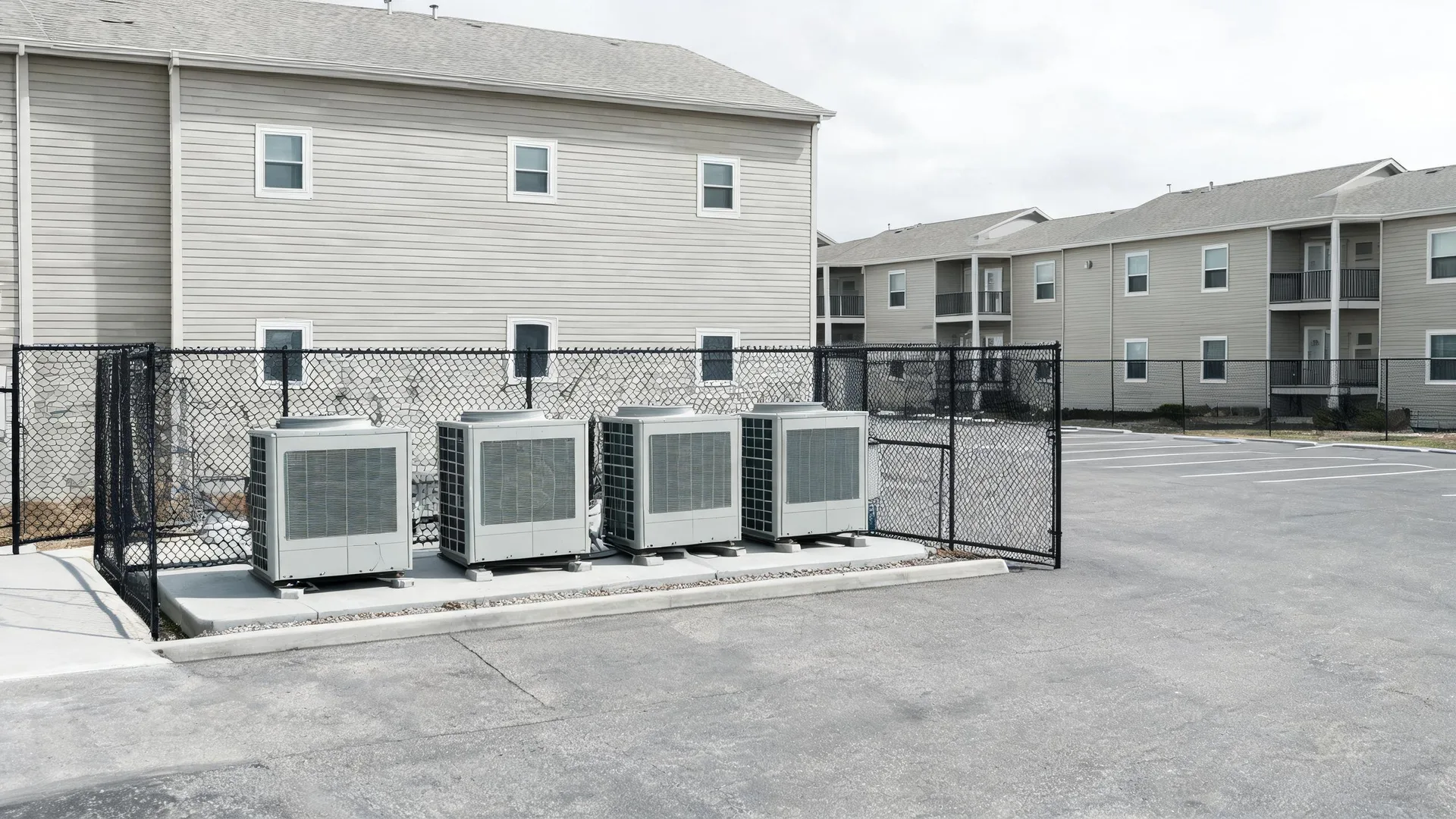
An outdoor air conditioning condenser unit mounted on a concrete pad surrounded by gravel, photographed against a partly cloudy blue sky.

A small problem now runs the compressor harder every time it cycles

A failing part rarely stays a one-part problem if the system keeps running past it. A low charge makes the compressor work to move heat it can't fully move, and it keeps doing that every cycle until someone adds refrigerant and finds the leak. A dirty coil or blocked filter chokes airflow, and the fix for low airflow across a cold coil is ice, not more cooling, so the system layers on a second problem while trying to solve the first. Short cycling wears the compressor's start components a little more each time it kicks on, and it kicks on more often the longer the real cause goes unfixed. None of this fails all at once. It fails a little more each time the unit runs, which is why a sound or a symptom that shows up once is worth calling in before the next hot stretch asks the system to do it again.

Check the filter first

A dirty filter is the most common cause of weak airflow, and it's the one thing you can look at yourself. Pull it out and hold it to the light. If you can't see through it, that's likely choking the system and worth swapping before anything else.

What a breaker trip tells you

If the unit won't start at all, check the breaker before assuming the worst. A breaker that trips once might be a fluke. One that trips again after you reset it means something is drawing too much power, and that's a job for a contractor, not another reset.

An overhead view of a residential air conditioning condenser unit mounted on a concrete pad next to a house with vinyl siding.

A new air conditioner would save little on running costs in Kenosha County, so the repair decision comes down to the unit's condition.

  • A new one at the federal minimum, 13.4 SEER2$180 a year
  • An older air conditioner$200 a year

Estimates for a typical Kenosha County home, compared with an older unit built to the previous federal minimum, from EIA household energy data, Wisconsin fuel prices and NOAA climate normals. Your home will differ.

Repair makes sense when a part like a capacitor or contactor has failed.

Replacement makes sense when the compressor has failed or the system uses R-22 refrigerant, which is no longer made.

A compressor is the expensive part to replace, and it's usually the deciding factor. If it's still sound and the problem is a capacitor, a contactor, or a fan motor, that's a straightforward swap and the system goes back to running the way it did before. Age by itself isn't the question. A unit that's had its yearly service and hasn't been run with a frozen coil or a low charge for months on end tends to hold onto its parts well. What matters more is whether this is the first repair it's needed or the third in a couple of years. A system that keeps coming back for different reasons is usually telling you the compressor is next, and at that point it's worth asking a contractor to weigh repair against replacement directly rather than fixing the same unit a third time.