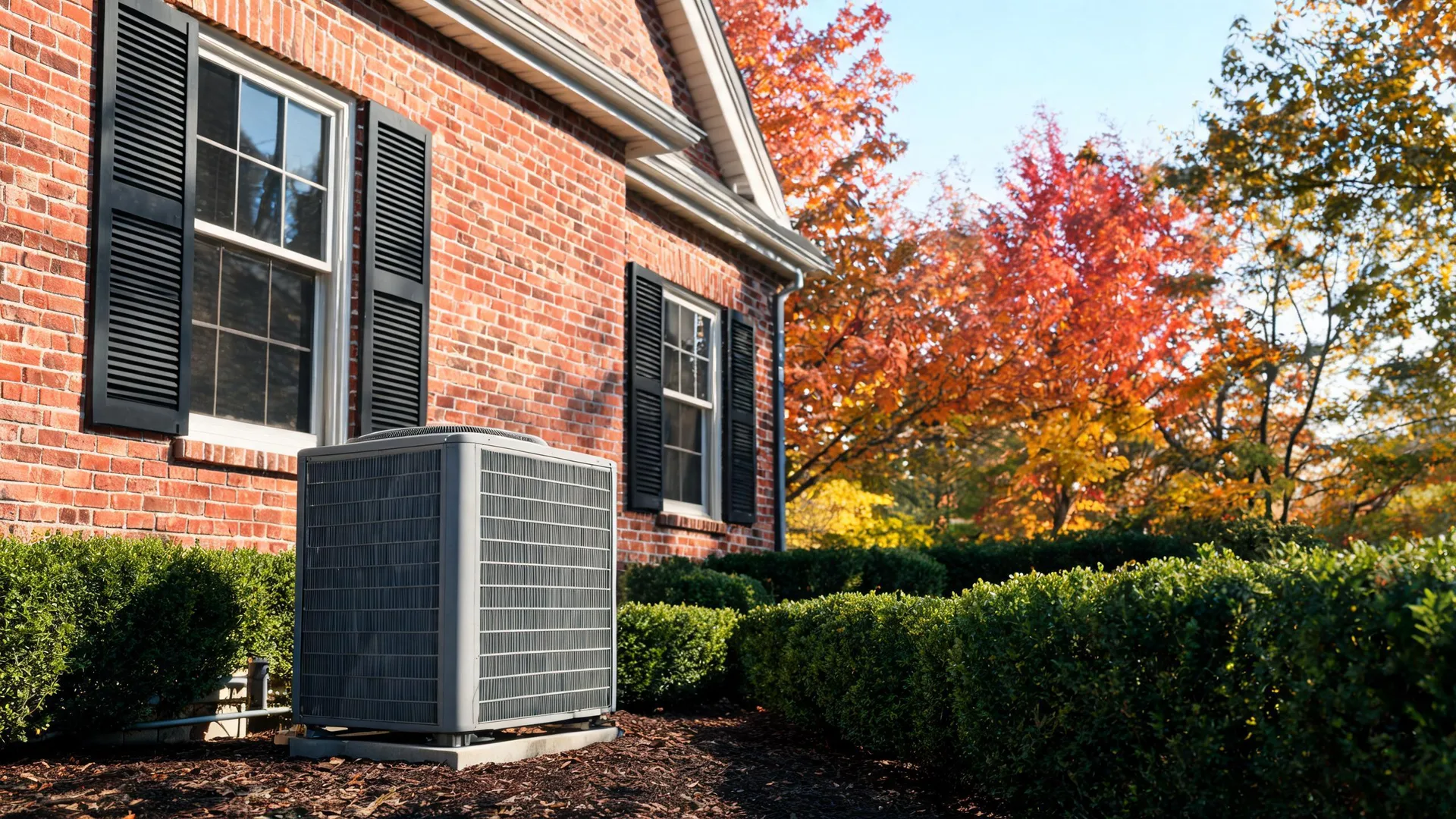
An overhead view of a residential air conditioning condenser unit mounted on a concrete pad next to a house with vinyl siding.

AC Repair in Janesville, WI

Tell us about the job

Takes about a minute. No obligation.

RepairCentral ACRock County, WI
Step 1 of 2

What ZIP code is the job in?

Three months of real work

Your AC in Janesville runs June through August, with afternoon highs averaging 81°F. That's a short season, but a demanding one. A system that sits idle most of the year still needs to start up reliably and run clean when it's finally asked to.


Ordinary wear, not a strange climate

Nothing about Rock County weather singles out your air conditioner for extra strain. A capacitor fails, a contactor sticks, a coil gets dirty, the same way it would anywhere else. Whatever's going on with your system, a licensed contractor has almost certainly seen it before and knows what to check first.

3 months
June through August, your air conditioner is on duty
81°F
the average summer afternoon it cools against
41 hail events
in ten years, and hail bends the fins on outdoor coils
78 wind events
in ten years, and wind drives debris into outdoor units
Isometric cutaway illustration of a single-story house showing interior rooms with furniture, attic ductwork connected to an indoor air handler, and an outdoor condenser unit on a pad linked by refrigerant lines.
Your air conditioner works hardest from June through August.

NOAA nClimDiv, 1991–2020 normals

An aging compressor is the one repair that doesn't end the conversation, it starts a different one.

If the compressor's going, ask what the rest of the system looks like before you spend money on it alone.

Power costs the same here as anywhere else in Wisconsin

Power costs 17.18 cents a kWh statewide
Cooling runs June through August
Summer afternoons average 81°F
Cooling starts in JuneMay is the month to get it looked at, before the first hot week finds the weak part.

Rock County has had 78 damaging wind events and 41 hail events over the past decade, plus 12 tornadoes. None of that is what usually knocks out an air conditioner. A unit sitting outside takes the wind and hail along with the house around it, and most of the time it keeps running. What actually fails is smaller than that. A capacitor that's weakened, a contactor with pitted contacts, a condenser coil caked with cottonwood seed and cut grass. If your AC quit on a calm, ordinary afternoon, that tells a contractor more than any storm would. Power loss is worth checking too. A system that won't restart after an outage sometimes just needs its breaker reset, not a repair.

Know what you're repairing before you pay for it

A repair on a system that old is worth doing once you know it's worth doing. Before paying for the fix, ask the contractor how much life is likely left in the rest of the unit.

Find a contractor
A gray metal air conditioning condenser unit mounted on a concrete pad in a flat grassy field under a partly cloudy sky.

It's not the heat that wears it out, it's the cycling

Most AC failures trace back to the system starting and stopping over and over, season after season. Every start pulls a surge through the capacitor, and that surge is what wears it down over time. A weak capacitor is the single most common reason a unit won't start or stalls partway through the cycle. The contactor takes the same kind of punishment, arcing a little every time it closes, until the contacts pit and stop making a clean connection. None of this comes from any one hard day. It comes from the ordinary work of turning on, running a while, and shutting off, over and over for as long as the system is in service.

Check the thermostat and the breaker first

Make sure the thermostat is set to cool and set below room temperature, and change the batteries if it uses them. Then check the breaker panel and any disconnect box near the outdoor unit. A tripped breaker or a flipped switch looks exactly like a dead system.

Look at the filter and the outdoor coil

A filter clogged with dust chokes airflow and can cause the whole system to run weak or ice up. Pull it out and hold it to the light. Outside, look at the condenser coil for grass clippings, leaves or seed fluff packed into the fins. Clearing debris away from the unit by hand is safe. Pulling panels off or touching anything electrical is not.

Aerial view of a residential air conditioning condenser unit mounted on a concrete pad next to a house with vinyl siding and a sliding glass door.

A new air conditioner would save little on running costs in Rock County, so the repair decision comes down to the unit's condition.

  • A new one at the federal minimum, 13.4 SEER2$200 a year
  • An older air conditioner$210 a year

Estimates for a typical Rock County home, compared with an older unit built to the previous federal minimum, from EIA household energy data, Wisconsin fuel prices and NOAA climate normals. Your home will differ.

Repair makes sense when a part like a capacitor or contactor has failed.

Replacement makes sense when the compressor has failed or the system uses R-22 refrigerant, which is no longer made.

A diagnostic visit starts before any panel comes off. The contractor asks what the system was doing right before it quit, whether it was blowing warm air, cycling short, or not turning on at all, because that narrows things down fast. Then comes the thermostat call, the breaker, the disconnect, the easy stuff ruled out first. With power confirmed, the gauges come out to check refrigerant pressure, and the capacitor gets tested under load, not just looked at. A multimeter on the contactor shows whether it's passing current cleanly or arcing across pitted contacts. The coil and the blower wheel get a visual check too, since airflow problems mimic refrigerant problems and the fix for each is completely different. By the end, the contractor should be able to point to the one part that failed and explain why, not just that the system is now running again.