Three months of real work
Your air conditioner only has to earn its keep from June through August here. Afternoons in those months average 79°F, which is not the kind of heat that pushes a system hard. The rest of the year it sits idle.
Takes about a minute. No obligation.
Your air conditioner only has to earn its keep from June through August here. Afternoons in those months average 79°F, which is not the kind of heat that pushes a system hard. The rest of the year it sits idle.
A system that runs three months a year and rarely faces extreme heat wears slower than one running flat out half the year. When something breaks here, it is usually age or a specific failed part, not a machine that has been pushed past what it can handle. That is a system worth fixing.

NOAA nClimDiv, 1991–2020 normals
A tech checks the refrigerant charge, the capacitor and the contactor before touching anything else.
Most no-cool calls come down to one failed part, found in the first few minutes on site.




Warm air coming out of the vents is the one most people catch first. Weak airflow is the one they usually miss, or blame on something else. If the system is running but the house isn't cooling, the problem is often a refrigerant leak, a failing capacitor, or a compressor that's struggling to keep up. A unit that short cycles, shutting off a few minutes after it starts, is also telling you something is wrong, often a dirty coil or a bad sensor. Ice on the refrigerant line points to restricted airflow or low refrigerant, and running it that way can damage the compressor. A new noise, a new smell, or water pooling near the indoor unit are all worth a call before they turn into something bigger.
Half the homes in St. Croix County were built in 1993 or later. If that includes yours, the system behind that failed part probably isn't old enough to write off. Getting it looked at beats replacing it on a guess.
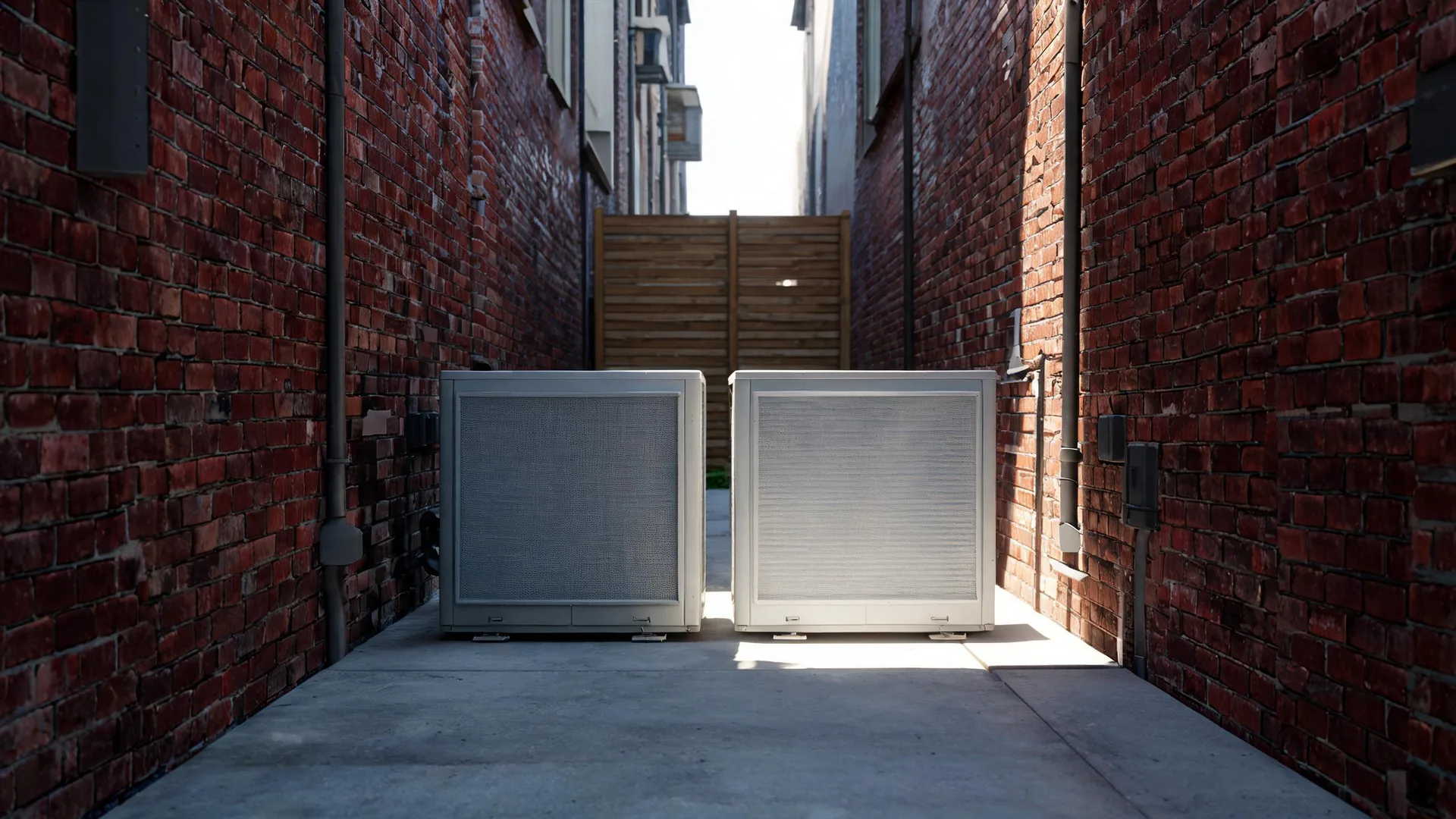
Find a contractorThe clip beside this runs from June into August, the only months this unit has to work. The rest of the year it sits off. When it does run, 79°F afternoons aren't asking much of it. So if a part failed this summer, get it fixed rather than written off. A system with a schedule this easy usually has plenty left to give once the broken part is replaced.
A failing capacitor or a low refrigerant charge makes the compressor work harder to do less. It draws the same power, or more, while moving less heat out of the house. Left alone, that strain is what turns a weak part into a seized compressor.
Once frost forms on the refrigerant line, running the system doesn't melt it, it builds on it. That ice blocks airflow across the coil, which starves the compressor of the refrigerant gas it needs to cool itself. A compressor is the expensive part to replace, and it's the one most likely to fail if the system keeps running iced up.
Estimates for a typical St. Croix County home, compared with an older unit built to the previous federal minimum, from EIA household energy data, Wisconsin fuel prices and NOAA climate normals. Your home will differ.
Repair makes sense when a part like a capacitor or contactor has failed.
Replacement makes sense when the compressor has failed or the system uses R-22 refrigerant, which is no longer made.
A failed part doesn't always mean the same repair. Some failures, like a bad capacitor or a stuck contactor, are a quick swap and the system runs the way it always has. Others point to something bigger, like a refrigerant leak that's been slowly draining the charge for a while, or a compressor that's been straining and is now on its way out. The part that failed usually tells you which kind of repair you're looking at. A tech can trace the failure back to its cause instead of just replacing what broke and hoping it holds. That's worth knowing before deciding anything, because the fix for a bad capacitor and the fix for a dying compressor aren't close to the same job.