




An outdoor air conditioning condenser unit positioned beside a blue-sided house at sunset.

AC Repair in Baraboo, WI

Tell us about the job

Takes about a minute. No obligation.

RepairCentral ACSauk County, WI
Step 1 of 2

What ZIP code is the job in?

Half the homes in Sauk County were built in 1983 or later. If yours is one of them, the air conditioner acting up right now is more likely a repair than a replacement. A bad capacitor, a low charge, a failed contactor, these are normal wear on a unit that still has years ahead of it. The age of the house does not tell you the age of the system, but if yours came with the house, it is worth asking the contractor straight out what shape it is really in before anyone talks about replacing it.

3 months
June through August, your air conditioner is on duty
80°F
the average summer afternoon it cools against
22 hail events
in ten years, and hail bends the fins on outdoor coils
61 wind events
in ten years, and wind drives debris into outdoor units
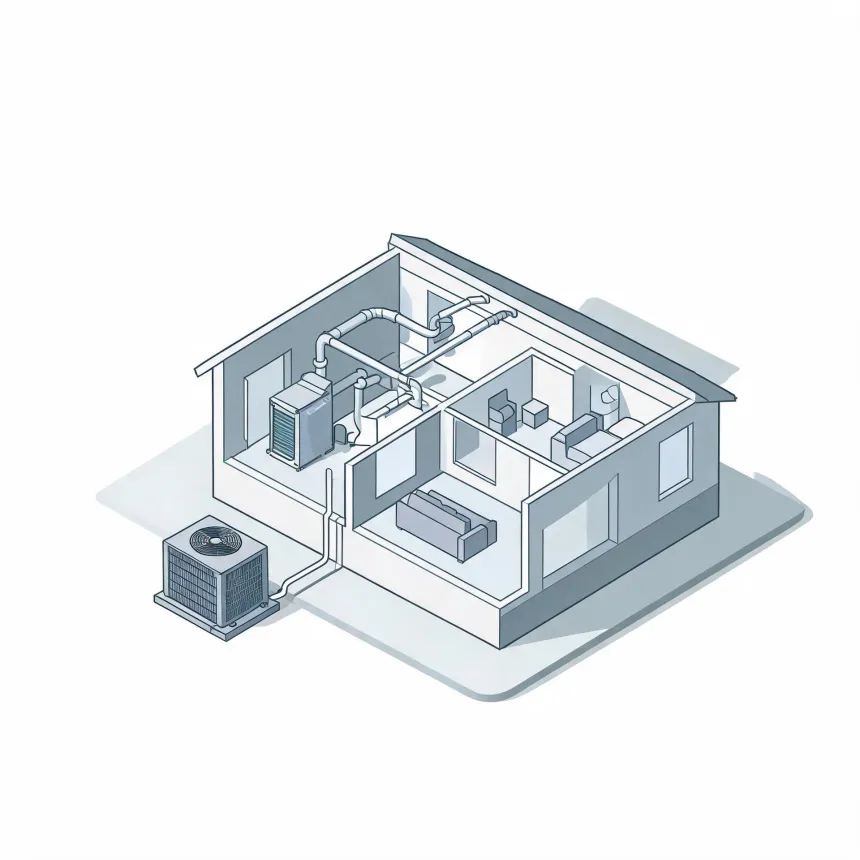
Isometric line illustration of a cutaway house showing interior rooms, a furnace or air handler with ductwork, and an outdoor condenser unit beside the building.
Your air conditioner works hardest from June through August.

NOAA nClimDiv, 1991–2020 normals

Summer here only asks for about three months of work, June through August, with afternoons around 80.

An AC that short a season is easier to keep running than to replace.

Three months of cooling a year, and June is when a weak part gives out

Cooling runs June through August
Summer afternoons average 80°F
61 damaging wind events from 2015 to 2024

Three months of summer is not enough to wear this out

If your AC is acting up right now, get a contractor out to look at it before deciding it needs to be replaced. Three months of work a year is not much strain, and that usually means more life left in the unit than you'd think.

Find a contractor
A gray cylindrical air conditioning condenser unit mounted on a concrete pad next to a light-colored vinyl-sided house exterior.

The parts that fail are the parts built to fail first

Most AC failures start with the capacitor. It stores the charge that kicks the compressor and fan motor into motion, and it weakens with every start cycle until one day it can't deliver that jolt anymore. A unit that hums but won't start, or a fan that spins slow and labored, is usually telling you the capacitor is going. The other common failure is the contactor, the switch that sends power to the compressor. Its contacts pit and burn from years of arcing shut, until they stick or stop closing the circuit at all. Low refrigerant charge is different. That's not wear, that's a leak somewhere in the coil or line set, and it shows up as a system that runs long and cools weakly instead of shutting off on schedule. None of these mean the unit is done. They're the parts built to wear out first so the compressor doesn't have to.

Check the thermostat before anything else

Make sure it's set to cool and set below room temperature, not just on. If the screen looks dim or blank, check the batteries. A thermostat that's lost power or lost its setting is a quick fix, not a service call.

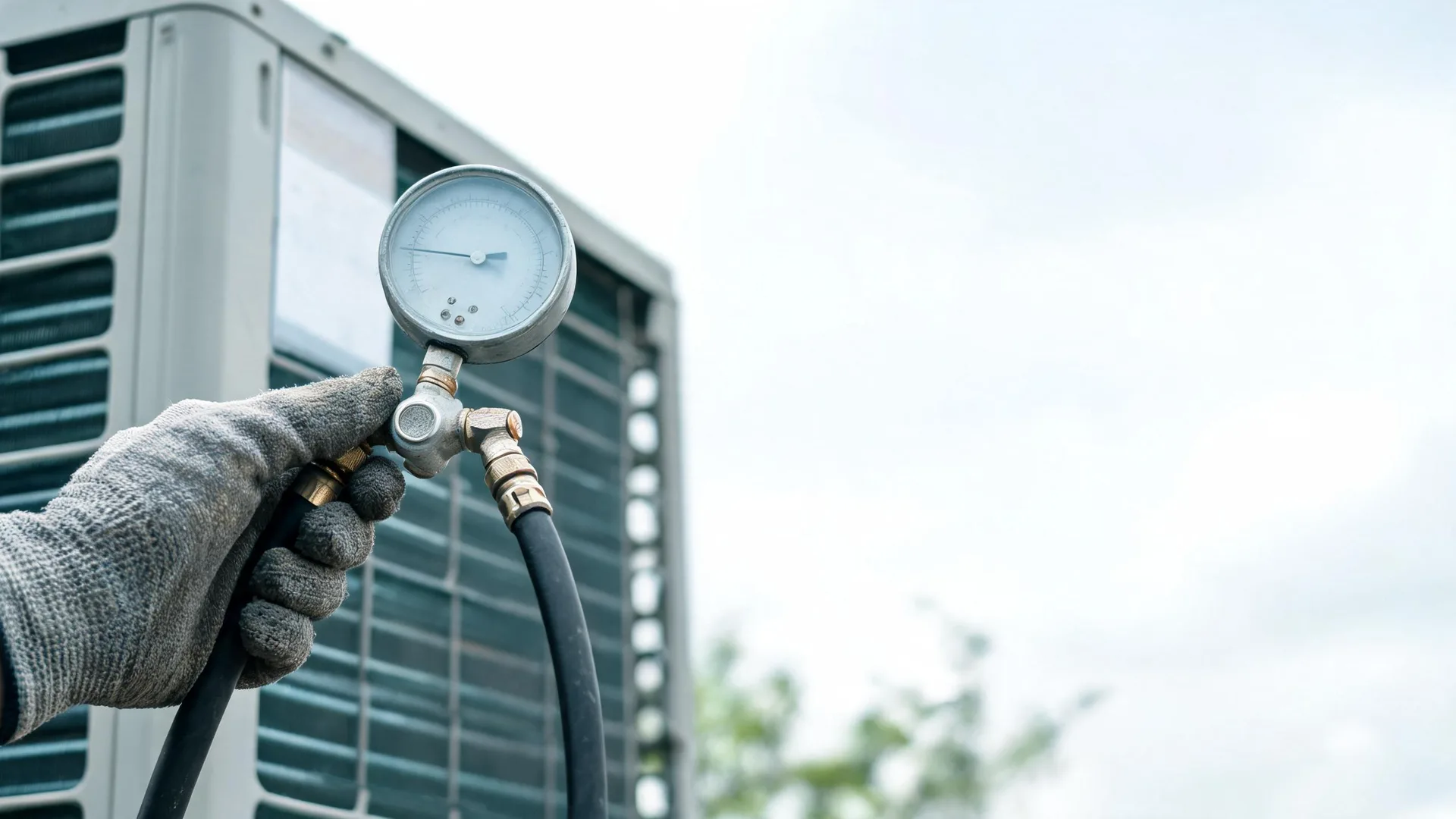
Look at the outdoor unit and the filter

Walk outside and check that the condenser isn't buried in leaves or grass clippings. The fins on that unit need air moving through them to dump heat. Then check the filter. A filter clogged with dust chokes the airflow across the indoor coil, and that alone can make a system run long and cool poorly without anything actually being broken.

Overhead view of a gray residential air conditioning condenser unit mounted on a concrete pad beside a house with asphalt shingle roofing.

A new air conditioner would save little on running costs in Sauk County, so the repair decision comes down to the unit's condition.

  • A new one at the federal minimum, 13.4 SEER2$170 a year
  • An older air conditioner$180 a year

Estimates for a typical Sauk County home, compared with an older unit built to the previous federal minimum, from EIA household energy data, Wisconsin fuel prices and NOAA climate normals. Your home will differ.

Repair makes sense when a part like a capacitor or contactor has failed.

Replacement makes sense when the compressor has failed or the system uses R-22 refrigerant, which is no longer made.

The question with any repair is what else is likely to go wrong soon after. A capacitor or contactor failing on its own, in a unit that otherwise starts, runs and cools the way it should, is just a worn part doing what worn parts do. Replace it and the system is back to normal. It's a different conversation when the compressor itself is failing, since that's the one part that isn't practical to swap on its own, or when the coil has a slow leak that's already been patched once before. A contractor who tells you straight that the rest of the system still checks out is giving you real information, not a sales pitch. The repair only looks small when you know nothing big is waiting behind it.