A quiet suburban street at twilight featuring two-story brick homes with illuminated windows and large trees lining the sidewalk.

AC Maintenance in West Bend, WI

Tell us about the job

Takes about a minute. No obligation.

Tune-up, service, or cleaningCentral ACWashington County, WI
Step 1 of 2

What ZIP code is the job in?

The refrigerant gauges come out

A thorough tune-up includes checking the refrigerant charge with gauges and measuring the temperature split between the air going into the system and the air coming out. A quick visit skips this and just checks that the unit powers on and blows cold air, which misses a system that is low on charge or has a weak compressor.


What that means for your system

A unit that's low on refrigerant will still cool your house today. But the compressor runs harder than it should every time it cycles on, and that wear adds up over seasons. Catching a low charge now is the difference between topping it off and replacing a compressor later.

3 months
June through August, your air conditioner is on duty
79°F
the average summer afternoon it cools against
53 hail events
in ten years, and hail bends the fins on outdoor coils
54 wind events
in ten years, and wind drives debris into outdoor units
Isometric line illustration of a cutaway house showing interior rooms with furniture, ductwork leading to an indoor air handler, and an outdoor condenser unit connected by a line set.
Your air conditioner works hardest from June through August.

NOAA nClimDiv, 1991–2020 normals

Your AC in West Bend only has to work three months a year, June through August.

A system that only runs part of the year can still wear out early if nobody checks it, because the problems that show up are age and neglect, not overwork.

Your AC starts working in June. Have it looked at in May.

Cooling runs June through August
Climate zone 5A
Power costs 17.18 cents a kWh statewide

Three months of real work a year is light duty for a condenser. The parts still age on a clock, not just a calendar. A contactor can pit from a single rough season. A capacitor loses its charge sitting idle through the months it isn't running, same as a battery does. None of that announces itself. The unit still starts, still blows cold air, right up until the day the compressor can't get going at all. A yearly check is what catches a weak part while it's still just a weak part.

Keep up the yearly check

Easy duty still wears parts. A yearly check keeps it going a long time.

Find a contractor
An outdoor air conditioning condenser unit mounted on a concrete pad beside a house, with electrical conduit running to a wall-mounted disconnect box.

Newer homes, systems still worth protecting

Half the homes in Washington County were built in 1986 or later. If yours is one of them, the system could still be the original, or close to it, and well inside its working life. A yearly check is what keeps it there. The parts that fail early are usually the ones nobody looked at, not the ones that are simply getting old.

The filter is doing more than cleaning air

A dirty filter blocks airflow across the evaporator coil. Starve the coil of air and it can get cold enough to frost over, and once it ices up it stops absorbing heat from the house at all. The system keeps running but stops cooling, and the compressor is still working the whole time.

The drain line is the part nobody checks until it fails

The coil pulls moisture out of the air as it cools it, and that water has to go somewhere. It drains out through a small line that can clog with algae and dirt over time. When it backs up, the water has nowhere to go but into the pan under the coil, and from there into the ceiling or wall below it.

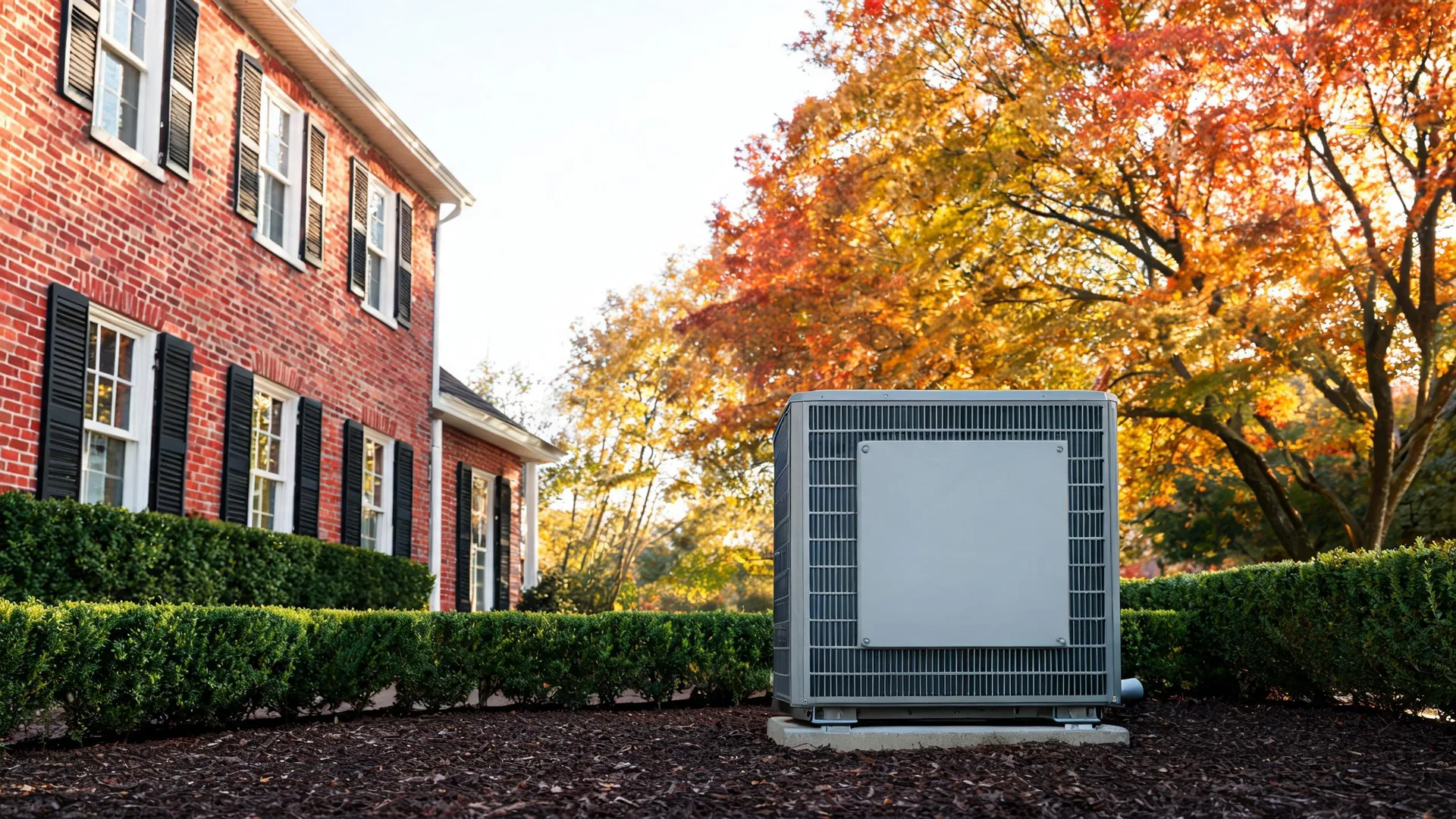
An outdoor air conditioning condenser unit positioned on a concrete pad next to a blue-sided house, surrounded by green shrubs and flowering hydrangeas at sunset.

Book your AC tune-up in May, before homes here start needing cooling in June.

  1. Jan
  2. Feb
  3. Mar
  4. Apr
  5. May
  6. Jun
  7. Jul
  8. Aug
  9. Sep
  10. Oct
  11. Nov
  12. Dec

A tune-up checks the refrigerant charge, cleans the coils, tests the capacitor and tightens the electrical connections.

A real tune-up means the panels come off, not just a glance at the thermostat. The condenser coil gets cleaned if it's dirty, because dirt on the coil makes the whole system reject heat worse, the same way a radiator caked in grime can't cool an engine. The blower wheel gets checked too. A wheel caked with dust moves less air even at full speed, and the system has no way of knowing, so it just runs longer to make up for it. The contactor gets inspected for pitting, since that's the switch that sends power to the compressor every single cycle, and a pitted one eventually fails to make contact at all. Electrical connections get tightened, because a loose connection runs hot, and heat is what shortens the life of anything it touches. None of this shows up from outside the cabinet. It only gets found by someone who opens it up and looks.