An outdoor central air conditioning unit mounted on a concrete pad beside a blue-sided house at sunset.

AC Maintenance in Oshkosh, WI

Tell us about the job

Takes about a minute. No obligation.

Tune-up, service, or cleaningCentral ACWinnebago County, WI
Step 1 of 2

What ZIP code is the job in?

Dirt is the quiet killer

A dirty coil cannot shed heat the way it should, so the compressor runs longer and hotter to do the same job. A clogged filter starves the system of airflow and the evaporator coil can ice over. Neither failure is sudden. Both build for months before the system finally quits on a hot afternoon.


A weak part rarely fails alone

A tech who checks the refrigerant charge, the capacitor and the condensate drain catches a weak part before it takes something else down with it. Skip that check and the first sign of trouble is often a tripped breaker or water pooling near the furnace. A capacitor left to fail can take the compressor with it.

3 months
June through August, your air conditioner is on duty
80°F
the average summer afternoon it cools against
16 hail events
in ten years, and hail bends the fins on outdoor coils
54 wind events
in ten years, and wind drives debris into outdoor units
Isometric grayscale illustration of a cutaway house with the roof lifted, showing interior rooms, ductwork, an indoor air handler, and an outdoor condenser unit beside the building.
Your air conditioner works hardest from June through August.

NOAA nClimDiv, 1991–2020 normals

Oshkosh asks a central AC to work three months a year, June through August, with afternoon highs around 80.

A system running a light summer load like that usually just needs a yearly check to stay sound, not a repair for trouble already underway.

One check before summer covers it

Half the homes here were built by 1975
Cooling runs June through August
Summer afternoons average 80°F
Easy duty, still worth checkingThree months of summer work a year, June through August. That's a light enough load that most trouble here starts with a skipped check, not a hard season.

Cooling in Winnebago County starts in June and runs straight through August, three months total. May is the month to get the system checked, before it has to work at all. A tech can test the capacitor and check the refrigerant charge while the system is sitting idle, not while it's already trying to keep a house cool. Wait until June and any problem found is one that started on the first hot day.

Keep up the yearly check

Easy duty still wears parts. A yearly check keeps it going a long time.

Find a contractor
A man in a cap, gray T-shirt and tan work pants carries a worn leather tool bag up wooden porch steps toward a green front door.
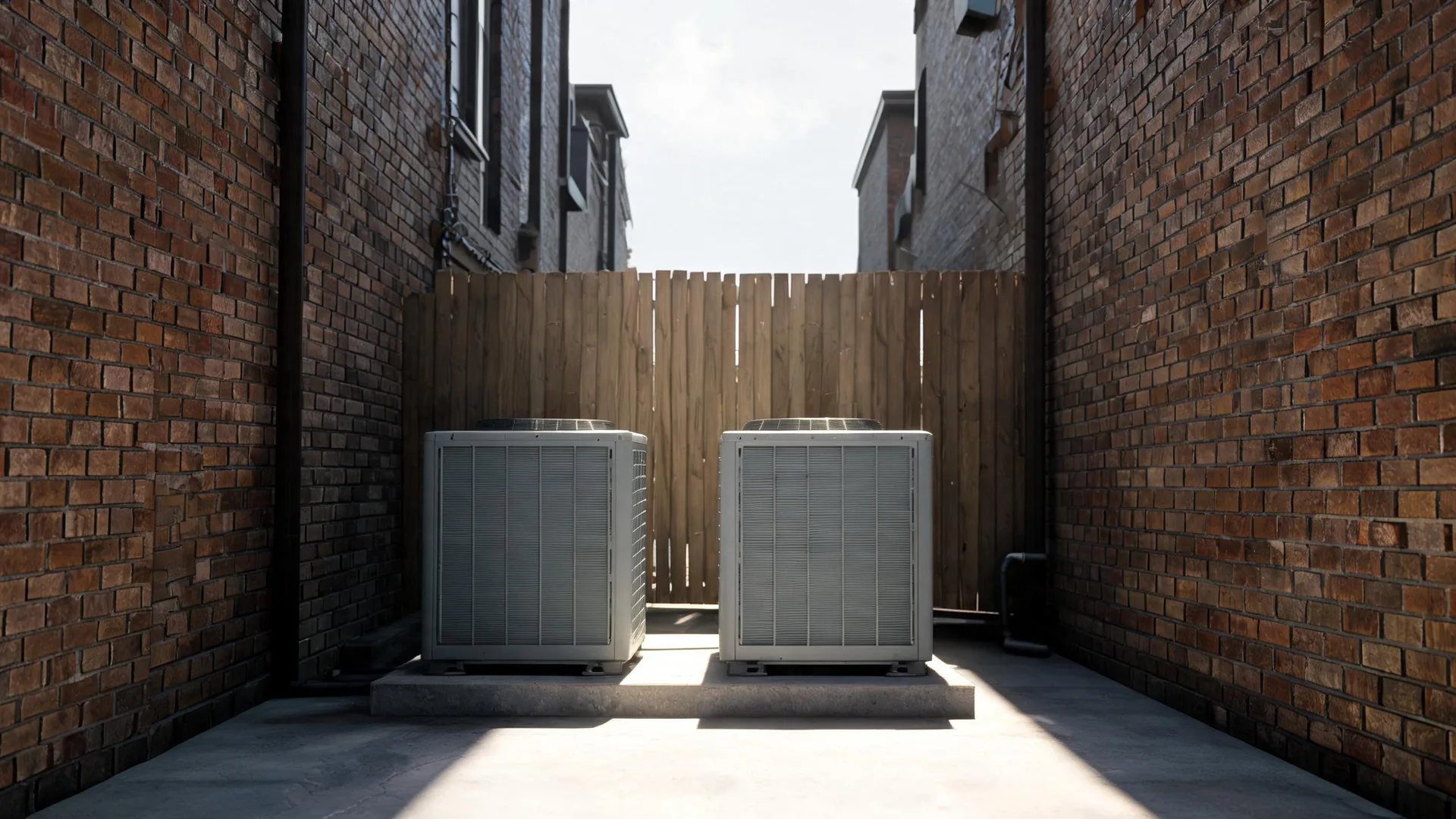
A gray residential air conditioner condenser unit mounted on a concrete pad in an open grass field.

What a real check covers

A quick visit checks that the system turns on and blows cold air. That tells you almost nothing. A thorough one pulls the panel off and looks at what's underneath. The tech should check refrigerant pressure against the manufacturer's numbers, not just glance at a gauge. They should clean the condenser coil, not just look at it through the grille. They should test the capacitor under load, since a capacitor can read fine sitting still and still fail the first hot week. They should check the condensate drain for a clog, because a blocked drain backs up and spills water right where the furnace sits. They should check amp draw on the compressor and the fan motor, which catches a motor on its way out before it quits. If the visit takes less time than it takes to explain all that, something got skipped.

The system will tell you before it quits

A system about to fail rarely does it without warning. It runs longer than it used to before the house feels cool. It cycles on and off more than it should. The air coming out of the vents is cool but not cold. Any of these on its own is worth a look, and ignoring them just means paying for a repair instead of a check.

A noise is a part naming itself

A rattle, a squeal, a hard clunk when the compressor kicks on, each one points at something specific. A squeal is usually a motor bearing losing its grease. A clunk at startup can be a worn mount letting the compressor shift when it starts. Catching the noise early means replacing one part instead of whatever it damages on the way out.

An outdoor air conditioning condenser unit installed beside the exterior wall of a blue vinyl-sided house at sunset.

Book your AC tune-up in May, before homes here start needing cooling in June.

  1. Jan
  2. Feb
  3. Mar
  4. Apr
  5. May
  6. Jun
  7. Jul
  8. Aug
  9. Sep
  10. Oct
  11. Nov
  12. Dec

A tune-up checks the refrigerant charge, cleans the coils, tests the capacitor and tightens the electrical connections.

A tune-up worth paying for starts with the tech shutting the system down and pulling the disconnect before anything else happens. Then the coil gets washed, not wiped, since dirt packed between the fins doesn't come off with a rag. The blower wheel gets checked too, because dust cakes onto those blades the same way it does on the coil, and a dirty wheel moves less air no matter how clean the filter is. The tech should check that the refrigerant lines are properly insulated, since bare copper sweats and that moisture drips right onto whatever is underneath it. Electrical connections get tightened, since a loose wire at the contactor builds heat and that heat is what burns the contact up. The outdoor unit should also get checked for level ground, because a condenser that has settled unevenly puts strain on the refrigerant lines every time it runs.