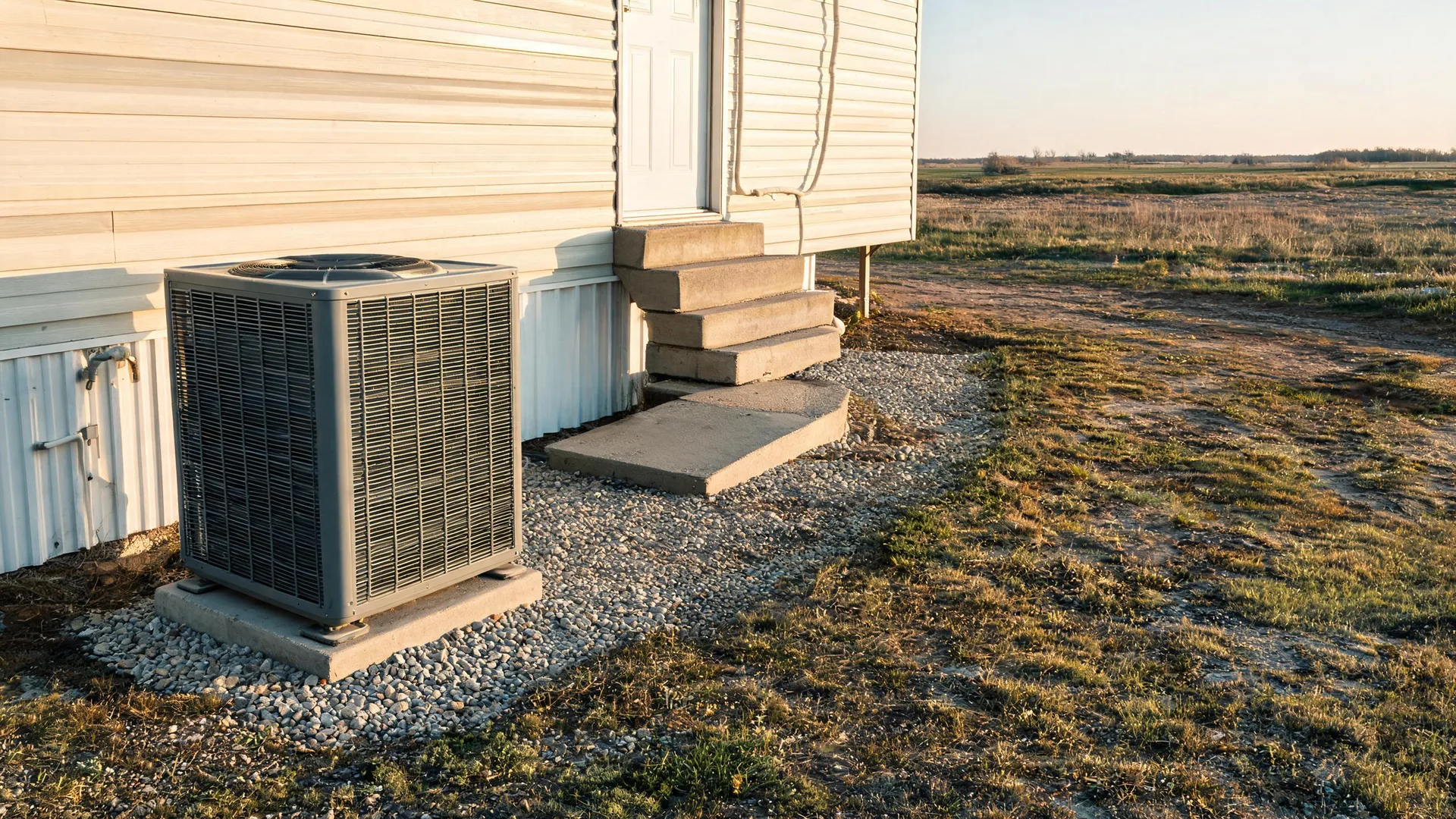
Most of Janesville heats with gas
Utility gas heats 70.2% of homes in Rock County. A gas furnace paired with a separate AC unit is the setup most installers here see first, and most homes already have the gas line and vents to match.
Takes about a minute. No obligation.
Utility gas heats 70.2% of homes in Rock County. A gas furnace paired with a separate AC unit is the setup most installers here see first, and most homes already have the gas line and vents to match.
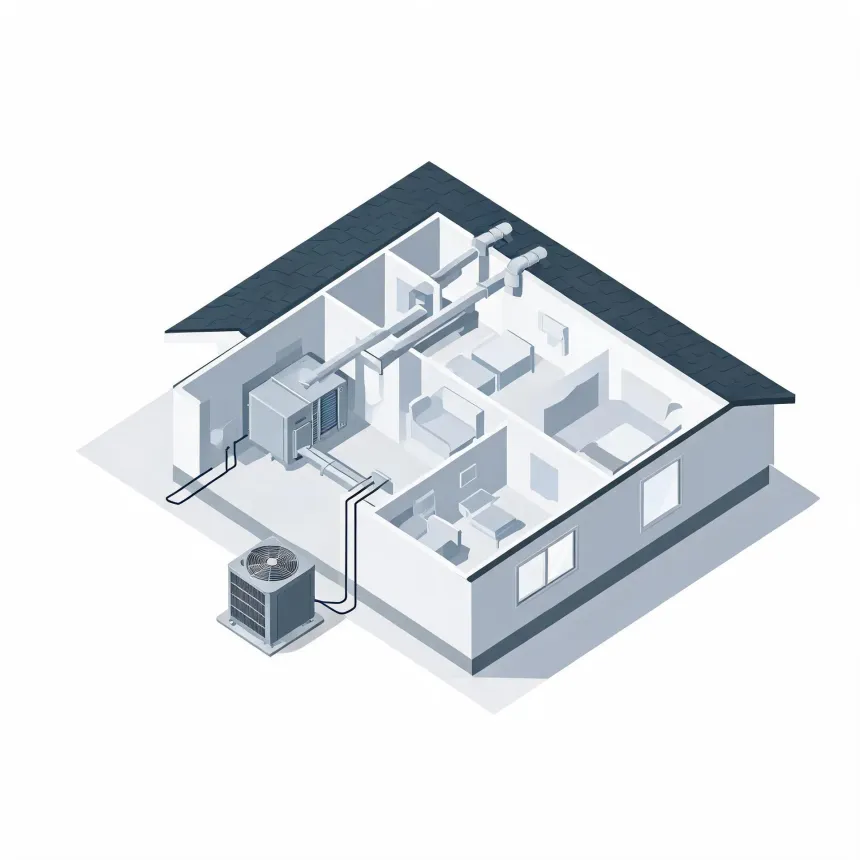
If your home already runs a gas furnace, adding or replacing central AC usually means matching a new condenser and coil to that same ductwork, not rebuilding the system around it.
NOAA nClimDiv, 1991–2020 normals
The efficiency rating on the label tells you how much cooling the unit delivers for the power it uses, not how strong it is.
A higher rated unit run against a lower rated one of the same size will cool your home just as well, it will just do it on less electricity.



A standard size, properly matched condenser and coil is the right call for most homes here. There's nothing about Janesville's climate or housing stock that pushes toward a bigger unit or a higher efficiency tier than you'd put in anywhere else in the region. What does matter is the rate you're paying to run it. Wisconsin homes paid 17.18 cents per kilowatthour in 2024, and that cost applies the same whether the system is sized right or oversized and short cycling. Getting the size and the match to your ductwork right the first time is what keeps that rate from working against you.
June through August is when the system is going to be asked to work. May is the month before that starts, and it's the open month to get a new condenser and coil matched to your ductwork without rushing the job or waiting on a system that's already failed.
Find a contractorAn installer sizing your new system should ask about the ductwork before they ask about the unit. In a house built around 1970 or earlier, that ductwork was sized for the furnace and condenser that came with the house, not for whatever's biggest or most efficient on the lot today. The right move is matching the new condenser and coil to what's already running through your walls, not upgrading around it.
An installer disconnects the old outdoor unit, recovers the refrigerant from the lines, and hauls the condenser and coil away. None of that old equipment stays on the property, and the refrigerant has to be captured rather than released.
If the copper lines running between the old condenser and the coil are in good shape, an installer can often connect the new equipment to them directly. If they're undersized for the new coil or damaged, they get swapped, but the path through your walls and attic stays the same either way.
Estimates for a typical Rock County home, from EIA household energy data, Wisconsin fuel prices and NOAA climate normals. Your home will differ.
The work usually starts outside, disconnecting and hauling off the old condenser before anyone touches the indoor coil. Once that's clear, the coil gets swapped in the air handler or furnace cabinet, and the line set gets checked for the new refrigerant. An installer will pull a vacuum on the lines to clear out moisture and air. Trapped moisture turns to acid in the system, and trapped air throws off the pressures the compressor needs to run right. After that comes the charge, weighed in to match what the new equipment calls for, not eyeballed. The last part is startup, running the system, checking the temperature split across the coil, and listening for anything that sounds wrong before the crew leaves. A clean install ends with the thermostat set and the old equipment gone, not with a unit running while someone figures out why it won't cool.