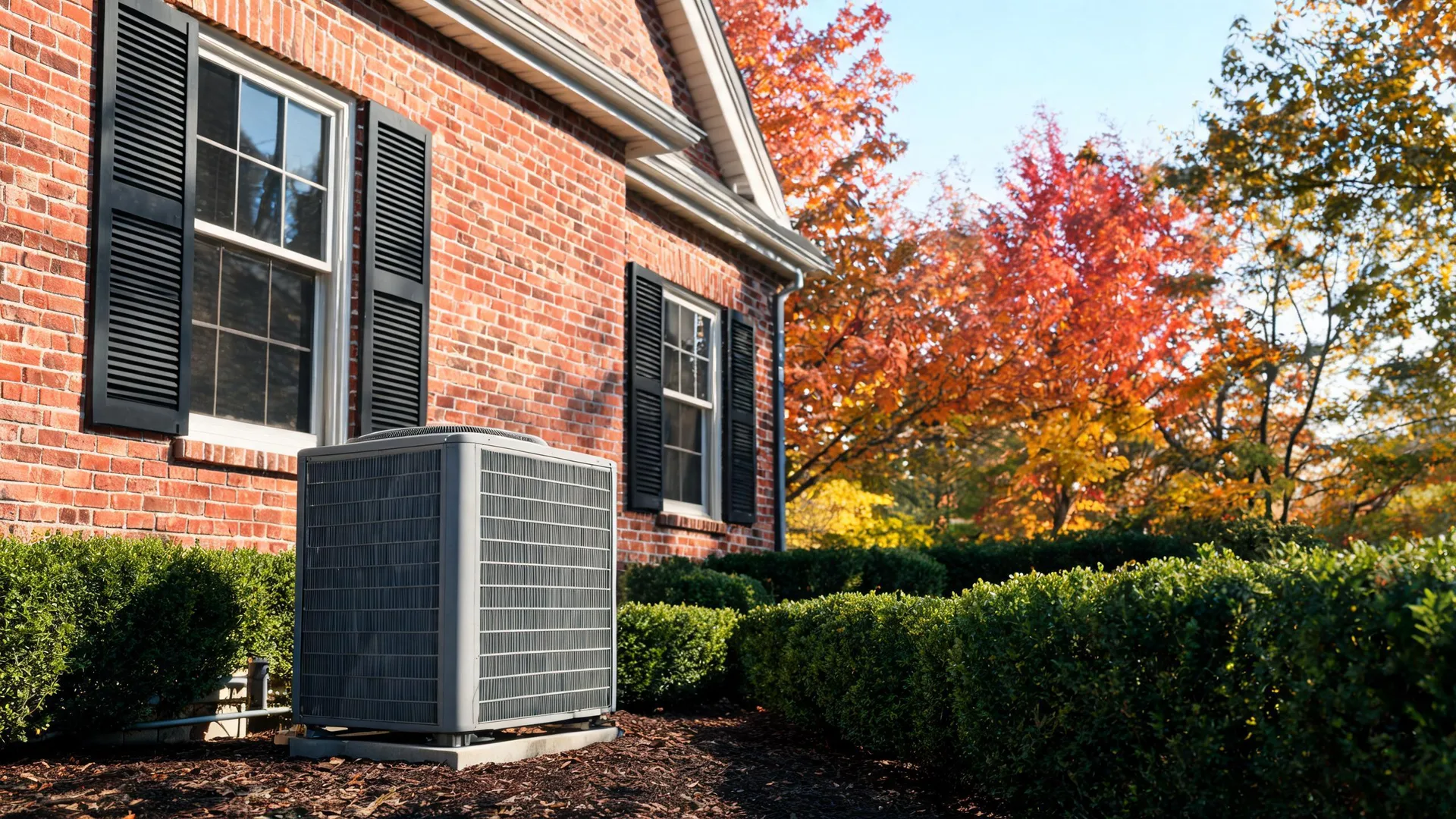
Gas furnaces are the norm here
Gas heats 72.3% of homes in Brown County. Most of those furnaces already have the ductwork an AC install needs, since the furnace blower is what moves the cold air too.
Takes about a minute. No obligation.
Gas heats 72.3% of homes in Brown County. Most of those furnaces already have the ductwork an AC install needs, since the furnace blower is what moves the cold air too.
If a gas furnace came with your house, central air usually means adding a coil and condenser to work with it, not building a new duct system from scratch. That keeps the job closer to a swap than a full install.

NOAA nClimDiv, 1991–2020 normals
Brown County logged 78 damaging wind events and 29 hail events over the past decade.
None of that calls for an oversized or special-spec system, just a condenser set up to run on a standard pad or bracket.



Cooling here runs July through August, so June is the month to get a new system in. Install it then and it's already running when the first hot days hit, with time to get the coil and condenser adjusted while the load is still light. Wait until July and you're calling around at the same time as everyone else in Brown County, and a straightforward swap can turn into a longer wait for an appointment. A system put in during June also gets a trial stretch before it has to carry the full two months of heat.
Two months of cooling a year, with afternoons averaging 78 degrees, is not much work for a condenser to do. A system sized right for this load can last on a standard, reliable unit instead of the top-tier efficiency model built for places that run AC all summer and into fall.
Find a contractor
Two months of real work a year is a short duty cycle for any condenser. It runs its hours in July and August, then sits the rest of the year. A system built for that kind of schedule doesn't need to be the top-tier model. What matters more over the years is the install itself. A correct refrigerant charge and good airflow across the coil do more for how long it lasts than the efficiency tier of the unit.
SEER2 tells you how much cooling a condenser delivers for the power it uses, averaged over a typical season of on and off cycles. A higher number means less power to deliver the same cooling. It says nothing about the size of the system or how well it will cool a given house. A high-rated condenser matched to the wrong coil or a duct system with poor airflow still runs poorly.
A condenser earns back more of a higher rating the more days it runs flat out in real heat. A system that only sees a couple months of hard work a year has fewer of those days to earn it back. The difference between a mid-tier and top-tier condenser then shows up less in what it costs to run and more in what it costs to buy.
Estimates for a typical Brown County home, from EIA household energy data, Wisconsin fuel prices and NOAA climate normals. Your home will differ.
Sizing a system is about matching the condenser's output to how fast the house gains heat, not picking the biggest unit available. A contractor works this out room by room, adding up window area, insulation, and how the place is laid out, then checks that number against the ductwork already moving air through the house. Too big and the system short cycles, cooling the air fast but shutting off before it pulls humidity out, so the house feels clammy even at the right temperature. Too small and it runs constantly without ever catching up on the hottest afternoons. The coil and the ductwork have to be sized to match the condenser too, since a strong unit pushing air through an undersized duct or across an undersized coil loses a lot of what it's rated to do. Getting the size right the first time is what makes the rest of the install, the charge, the airflow, worth doing well.