





Why AC units freeze up in sticky Wisconsin summers

RepairCentral ACWisconsin
Step 1 of 2

What ZIP code is the job in?

Why does my AC keep freezing up in this humidity?

You turn off the AC, let it thaw, and an hour later it's frozen again. Wisconsin summers run thick with humidity, and that moisture is part of what's choking your system. You want to know if this is just how it works here or if something's actually wrong with your unit before you decide what to do about it.

Low airflow or low refrigerant lets the coil get too cold and freeze

Your AC's coil needs steady airflow moving across it to stay above freezing. When that airflow drops, from a dirty filter, blocked vents, or a failing blower, the coil gets colder than it should and the moisture in the air freezes right onto it. A refrigerant leak does the same thing from the inside. Humidity doesn't cause this by itself, but it makes the ice build up faster and heavier once the coil starts freezing, because there's more moisture in the air to turn into ice. Once ice covers the coil, airflow drops even further and the system struggles harder, which is why a frozen unit tends to get worse fast rather than fixing itself when you just switch it back on.

  1. Warm, humid air moves across the indoor coil nonstop

  2. Refrigerant inside the coil runs low or flow gets restricted

  3. Coil surface temperature drops below freezing point

  4. Moisture in the air lands on the coil and ices over

Low Refrigerant or Restricted Airflow

Low Refrigerant

  • A slow leak at a fitting or coil seam drops the charge over weeks or months, not all at once.
  • Less refrigerant means the coil runs colder than it should, and that cold spreads across the whole coil face.
  • You will likely hear hissing near the lines or notice the problem returns within days of a thaw and reset.
  • A contractor has to find the leak, seal it, and recharge the system to the right pressure for it to stop recurring.
  • Running the system low on charge for weeks can put extra strain on the compressor itself.

Restricted Airflow

  • A clogged filter or blocked return vent cuts how much warm air reaches the coil to keep it above freezing.
  • Closed registers or furniture pushed against a vent can starve one part of the system even if the rest runs fine.
  • This kind usually shows up fast, sometimes within a single humid afternoon of heavy use.
  • Clearing the filter, the vents, and the ductwork path is often enough on its own to stop the freezing.
  • A dirty blower wheel can cut airflow the same way a clogged filter does, even with a clean filter installed.
A smiling man with dark curly hair in a dark green henley shirt sits on a light sofa in a living room with large windows, a lamp, shelving, a stone fireplace, and a bowl of popcorn in the foreground.
A smiling man in a dark long-sleeved henley shirt sits on a beige sofa in a living room, with a bowl of popcorn and a remote on the table in the foreground and shelves, a lamp, and a doorway behind him.
A smiling man with graying hair and stubble in a blue henley shirt sits on a gray sofa with cushions in a living room, with a bowl of popcorn on a wooden table in the foreground.
A smiling man in a dark green long-sleeve shirt reclines on a sofa in a dimly lit living room, with a bowl of popcorn on a side table in the foreground and a bookshelf, lamp, and houseplant behind him.

A local pro for your air conditioner repair

Get the air conditioner repair search off your mind today.

There's no charge for the request.

Why humidity makes it worse here

Wisconsin air in July and August carries a lot of water vapor, and every bit of it passes over your indoor coil when the blower runs. A coil that's already running cold from low refrigerant or weak airflow has more moisture to freeze than it would in a dry climate. That's why the same low charge that might just hurt efficiency in a dry state turns into a solid block of ice on your coil here. The humidity doesn't cause the underlying problem, but it decides how fast ice builds once something else is wrong.


Check your airflow first

A dirty filter is the easiest thing to rule out, and it's worth doing before assuming the problem is refrigerant. Less air moving across the coil means the coil runs colder, and a colder coil freezes faster in humid air. Look at the filter and swap it if it's gray or clogged. Check that return vents and supply registers around the house aren't blocked by furniture or rugs. If airflow is clear and the unit still ices up, the cause is more likely a refrigerant leak or a failing part, and that needs a contractor to find.

A woman in a dark gray sweater reclines on a light sofa with eyes closed and a slight smile, under a textured gray blanket with an open book resting on her lap, with a lit table lamp and plant in the background.
A smiling bearded man in a navy crewneck sweater sits at a dinner table with a glass of red wine, plates and glasses in the foreground, in a dimly lit room with a lamp and framed picture behind him.
An outdoor air conditioner condenser unit on a concrete pad beside a house with beige horizontal siding and a stone-veneer base, with refrigerant lines running to a gray wall-mounted electrical box, surrounded by dark mulch, a flowering shrub and an evergreen on the left.

Running the way it should

Air moves through the cabinet, over the coil, and back into the house. The coil stays cold enough to pull moisture from the air but never cold enough to ice over. You feel steady cold air at the vents and the unit outside runs its cycle and shuts off.

An outdoor air conditioning condenser unit on a concrete pad beside a house with light vinyl siding, an electrical disconnect box and conduit on the wall, bare shrubs and mulch to the right, and a concrete walkway in the foreground.

Starting to ice over

Once frost forms on the coil, it blocks airflow, and less airflow means the coil gets even colder. That ice builds fast on a muggy day. You may notice weak airflow at the vents or water pooling near the furnace before you ever see the ice itself.

An outdoor air conditioner condenser unit on a concrete pad beside a house with light horizontal lap siding, with an electrical disconnect box and conduit on the wall behind it.
Before you get your air conditioner repair
An outdoor air conditioning condenser unit on a concrete pad beside a house with white horizontal lap siding, with an electrical disconnect box and insulated refrigerant line on the wall and a shrub over mulch to the right.
After you get your air conditioner repair
A two-story cream-colored house with horizontal siding and a gray hipped roof, flanked by large green trees and shrubs, with a concrete walkway crossing a lawn to a wet street in the foreground.

A dew point averaged across Wisconsin summers sits at 60°F, per NOAA climate data for June through August. That is the number that tells you how much water your coil has to deal with every time the blower kicks on. Air at that dew point is heavy enough that the coil pulls moisture from it fast, and a coil already running cold from a low charge or weak airflow gets a steady coat of condensation building on its surface before it ever has a chance to drip off into the drain pan. You will notice it as frost creeping along the copper lines outside, or a unit that blows weaker air as the ice spreads.

NASA POWER T2MDEW county cells weighted by homes

A frozen coil is not something that fixes itself once the humidity sets in for the summer. Thawing it buys you an hour, maybe an afternoon, and then the ice is back because the cause, whether it's a slow refrigerant leak, a dirty filter choking airflow, or a coil that was never sized right for your house, is still there. The fix is a contractor finding that cause and correcting it, not another round of turning the unit off and waiting. Once you send the form, you're done hunting for who to call and done guessing whether the next contractor you find knows what they're doing. A contractor who works on Wisconsin systems gets matched to you and reaches out, and from there it's their job to find out why your coil keeps icing and stop it from happening again. You get your cold air back and your evenings back.

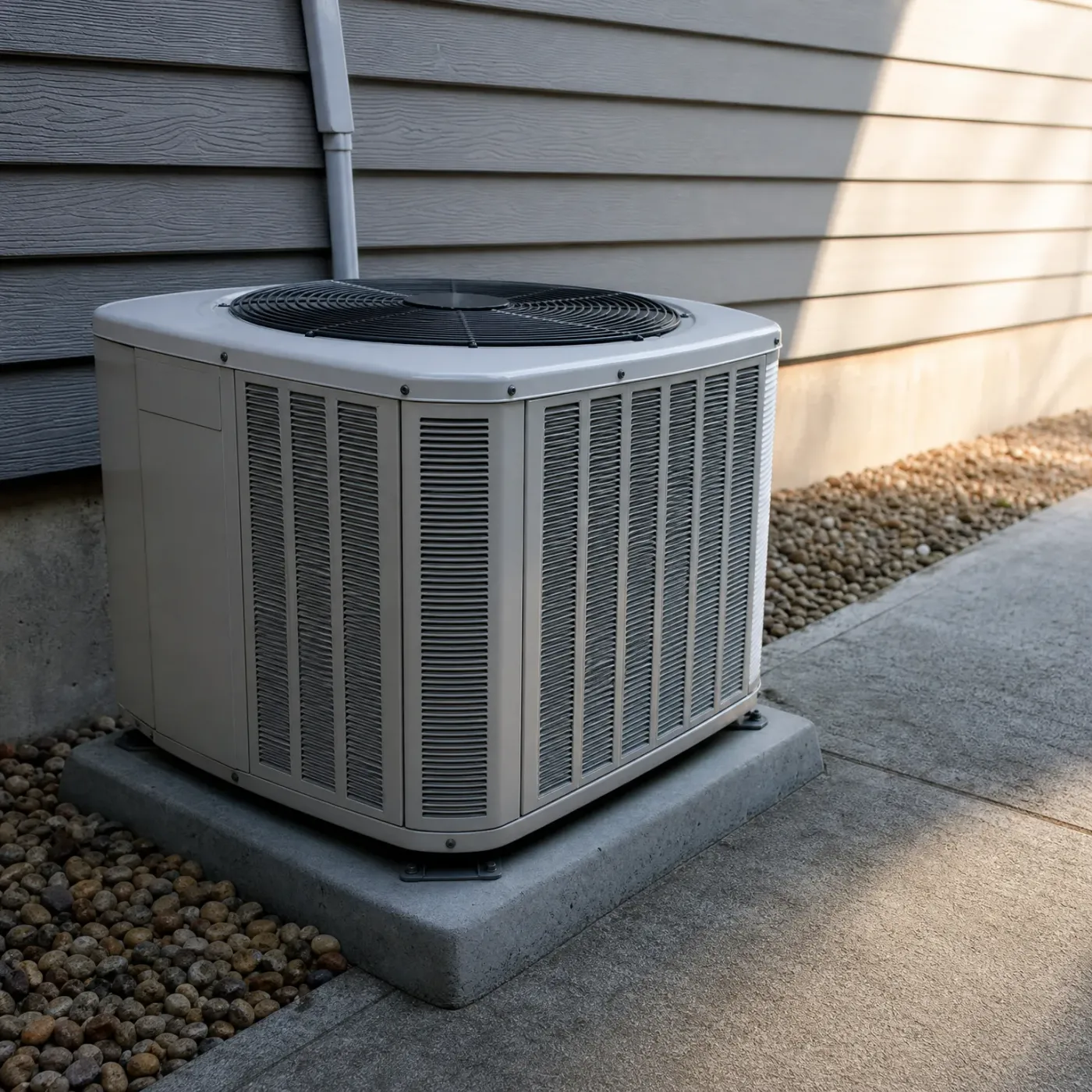
A beige outdoor air conditioner condenser unit with a top fan grille sits on a concrete pad beside a house with horizontal lap siding, bordered by gravel and a concrete walkway.

Get the right pro for your air conditioner

Connect with a pro

Once you send the form, finding a pro is off your list.

You only hire the pro if you want to.