




A lit residential street at dusk featuring large two-story brick houses with glowing windows, mature trees, and a street lamp.

Mini Split Installation in Wausau, WI

Tell us about the job

Takes about a minute. No obligation.

New system or replacementMini-splitMarathon County, WI
Step 1 of 2

What ZIP code is the job in?

Marathon County saw 174 severe weather events between 2015 and 2024. That includes 82 damaging wind events, 49 hail events, and 10 tornadoes. An outdoor condenser sits outside through all of it, exposed to whatever hail or wind comes through. Statewide, 18% of households went at least a day without power in 2024. A mini-split won't run without power, and neither will the furnace blower or the water heater's controls if your system depends on them. Where the outdoor unit goes, and what backup plan you have for an outage, both matter more here than in places that see quieter weather.

9 months
September through May, your system heats
2 months
July through August, it cools
9°F
the average winter night it heats against
78°F
the average summer afternoon it cools against
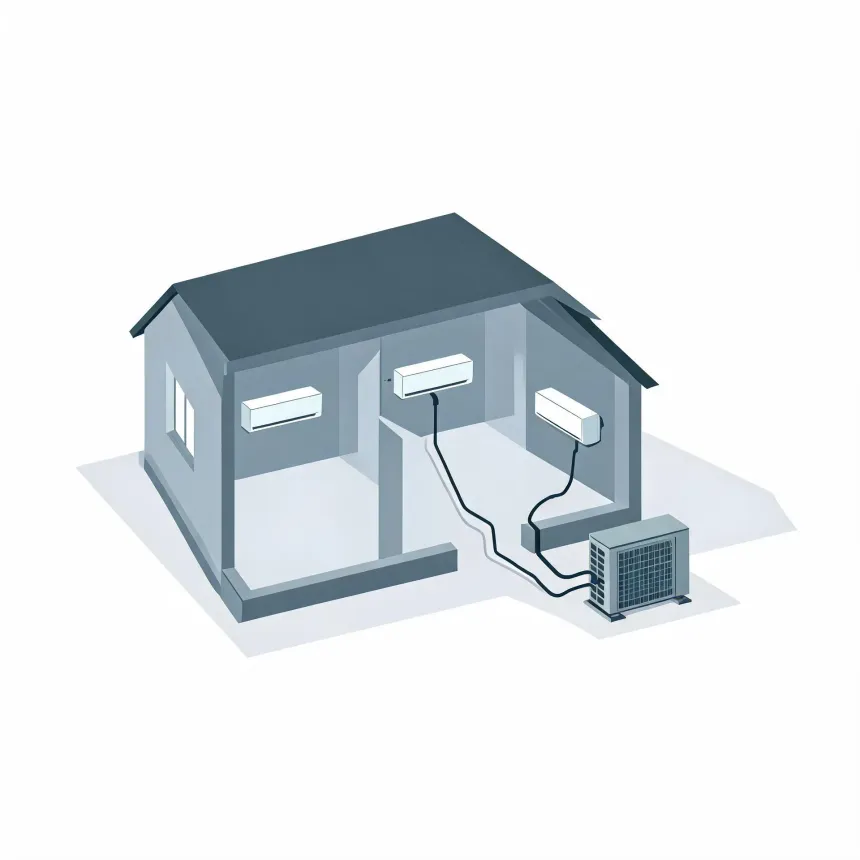
Isometric illustration of a cutaway single-story house with three wall-mounted indoor air conditioning units connected by lines to an outdoor condenser unit on the ground outside.
Your system heats September through May and cools July through August.

NOAA nClimDiv, 1991–2020 normals

Electricity in Marathon County runs about 16.66 cents per kilowatt-hour, more than most US counties pay.

A high-efficiency mini-split still costs more upfront, and it will take longer here to earn that cost back in savings.

Cooling runs two months a year here. Get it installed before July and you're not the one stuck waiting when the next heat wave hits.

Cooling runs July through August
Climate zone 6A
Power here costs 16.66 cents per kilowatt-hour

Marathon County falls under zone 6A in the 2021 energy code, a cold, long-winter zone. Any mini-split going in here has to clear the federal minimum for a split-system heat pump: at least 14.3 Btu of cooling for every watt-hour it draws over the summer, and at least 7.5 Btu of heating for every watt-hour over the winter. That standard applies to units built from January 2023 on, and it doesn't carve out a lower bar for ductless systems. A federal tax credit is available for qualifying heat pump installations. The standard sets the floor. What a contractor recommends for a zone 6A winter may well sit above it.

Plan for the outage before the install, not during it

Decide now where the outdoor unit goes and what keeps heat and hot water running when the power drops. That's a conversation to have with the contractor at install, not something to work out later in the dark.

Find a contractor
A white outdoor air conditioner condenser unit mounted on metal wall brackets against gray horizontal siding, with a blue sky and white clouds behind it.

Two months of real work a year

Cooling runs from July through August here, and the afternoon high over those months averages 78°F. That's a mild load for a mini-split to carry. The dew point averages 58° those same months too, lower than most of the country sees, so the system isn't fighting heavy air on top of heat. Two months of light work a year is not much wear. When a unit like this gives trouble after a stretch like that, age or a skipped filter change is the usual reason, not the summer itself. That's worth knowing when you're deciding whether a repair is worth doing down the line.

Sizing comes from a room by room heat loss and heat gain calculation

A contractor measures each room, checks the windows, the insulation, and the exposure, and works out how much heat that room loses in winter and gains in summer. That number drives the equipment choice, not the square footage alone and not what the last system happened to be. A mini-split sized this way matches the load it actually has to carry.
A unit sized wrong never runs the way it should

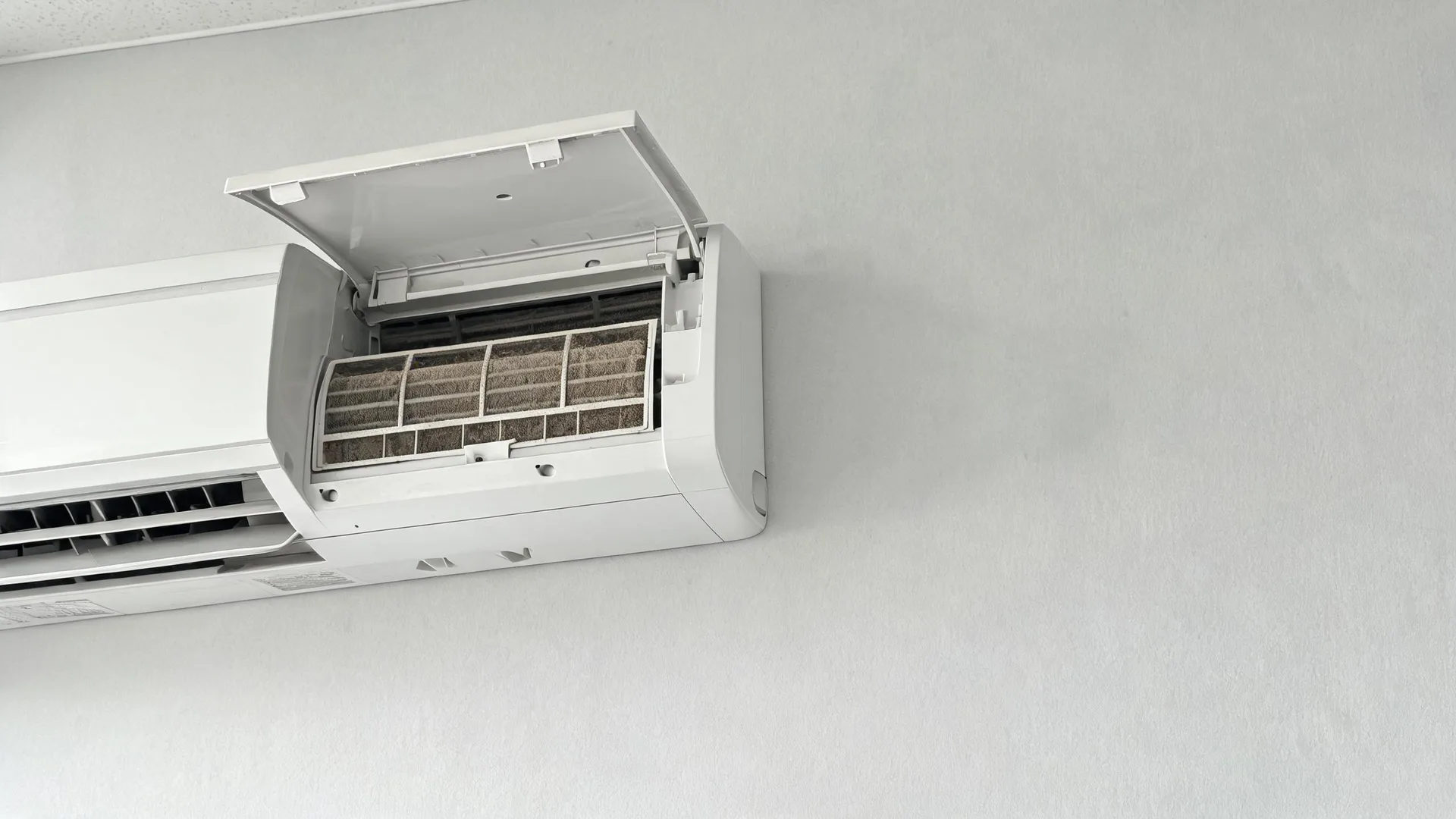
Too large and the compressor short cycles, switching on and off before it can pull moisture out of the air or settle into a steady heat in winter. Too small and it runs flat out without ever catching up on the coldest or hottest days. Either way the indoor coil, the compressor, and the thermostat wear harder than they would running at the load they were built for.

A handful of things move the price on a mini-split job more than anything else. How many indoor heads the system needs to run is one. A single-zone system is a simpler job than a multi-zone system feeding four rooms off one outdoor unit, because each added head means another line set, another mounting job, and another spot where refrigerant lines have to run clean. Distance matters too. The farther the indoor heads sit from the outdoor condenser, the more line set and wiring the job takes, and the more wall or floor the installer has to open up and close back. Where the outdoor unit can go plays into it as well, since a spot that needs a mounting pad or bracket work takes longer than a straight ground-level placement. And the electrical panel matters: a panel with room for a new dedicated circuit is a shorter job than one that needs upgrading first to carry the load.

Gas heats 56.4% of homes in Marathon County, more than any other fuel. Most of what a contractor sees here is a gas furnace paired with central air, or no air conditioning at all. A mini-split doesn't replace that setup, it adds to it. The furnace keeps handling the coldest months, and the mini-split takes over cooling and can carry some of the shoulder-season heating on its own. That's a different job than in a place where electric heat is the norm and a heat pump is swapping in for a straight replacement. Worth saying plainly to the contractor what your furnace currently does, so the mini-split gets sized for the gap it's actually filling.