Gas heats most of Oshkosh
Utility gas heats 71.8% of homes in Winnebago County. A furnace or boiler is what most houses here already have doing the work.
Takes about a minute. No obligation.
Utility gas heats 71.8% of homes in Winnebago County. A furnace or boiler is what most houses here already have doing the work.
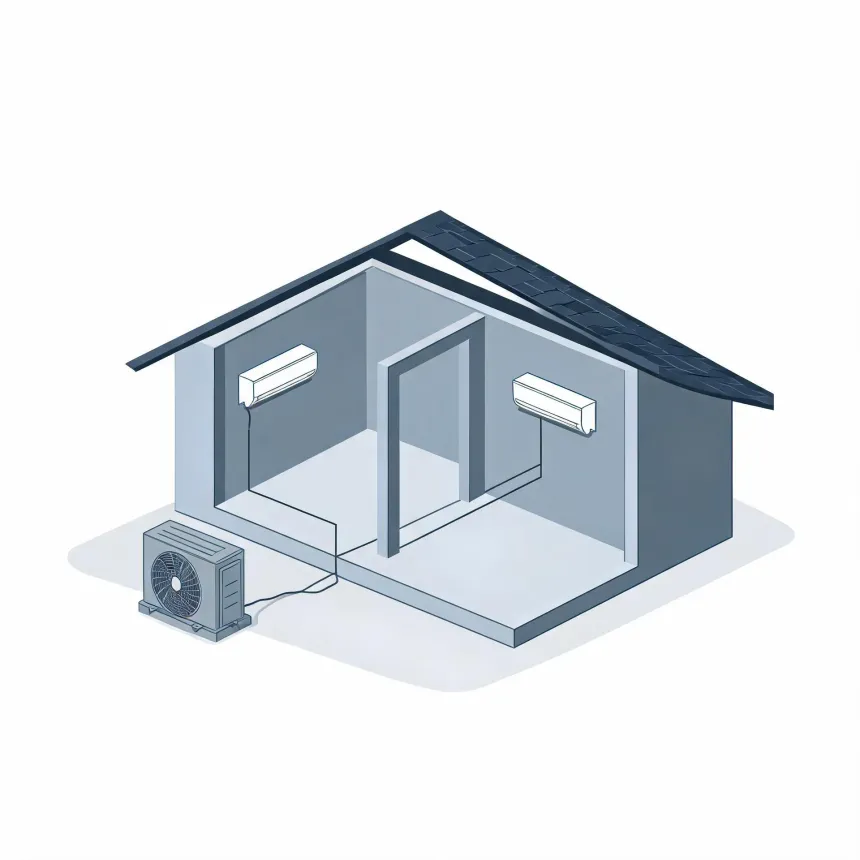
A mini split works well for a room an existing system doesn't reach well, or for cooling a house that has no ductwork for it. Most homes here keep the furnace for winter and let the mini split handle the rest.
NOAA nClimDiv, 1991–2020 normals
A mini split's size and efficiency rating don't need to chase anything unusual in Oshkosh.
A standard unit sized to the room is the right call here, and a licensed contractor can size it off the room, not the county.




Winnebago County sits in climate zone 5A, a cool zone where heating carries most of the load. Any mini split installed here still has to meet the federal minimum for a split-system heat pump. That means 14.3 SEER2 for cooling and 7.5 HSPF2 for heating. The rule applies the same across the zone, and it covers ductless systems too, since the standard doesn't treat them as a separate class. A unit built to that minimum is already suited to a cold winter and a short run of warm months. Installing a new system here can also qualify for the federal tax credit available on heat pumps.
Half the homes in Winnebago County date to 1975 or earlier, half are newer, and neither end needs a special size or rating. A mini split sized to the room and built to the federal minimum covers what this county asks of it. Get the sizing right and the rest takes care of itself.
Find a contractorJune through August, with afternoon highs averaging around 80. That's the whole job for a mini split here, not a stretch goal. A compressor that only has to work three months a year sees far fewer cycles over its life than the same unit would in a hotter state. Less run time means less wear on the compressor and the coil, so when something does go wrong down the line it's more likely a part worth fixing than a system worth replacing.
If the mini split is adding cooling to a house that still relies on a furnace, there's nothing old to remove. The new unit just gets its own line set and its own spot on the wall, separate from what's already heating the place.
When the work is swapping out a mini split that's already there, the old indoor head and outdoor unit come down, and the refrigerant has to be recovered from the line set before anything is disconnected. That's a step a licensed contractor handles, not something left for the old equipment to vent on its own.
The install itself is what sets the price, more than the equipment does. Running a line set through an exterior wall is straightforward when there's a clear path. It's more work when it has to clear framing or go up through a second story. The outdoor unit needs a solid, level pad and enough clearance around it to breathe. Electrical matters too. A mini split needs its own dedicated circuit, and if the panel doesn't have room for one, that's a separate job before the unit goes in at all. Multiple indoor heads off one outdoor unit cost more than a single zone, since each head needs its own line set and its own control. None of that shows up on a spec sheet, but it's most of what a contractor is pricing when they walk the site.
Install day starts with the outdoor unit and the line set, not the indoor head on the wall. The installer mounts the outdoor pad first, then runs the line set through the wall at the spot already marked out. That hole gets sealed from the outside once the lines are through, so weather can't get in around it. Inside, the indoor head goes up on a bracket, and the line set connects to it behind the wall plate. Once everything's connected, the system gets evacuated to pull moisture and air out of the lines before refrigerant goes in. Then it's a matter of charging the line set, powering it up, and checking that the head is cooling and heating the way it should before anyone calls it done.