




A white wall-mounted split-system air conditioner on a blue-grey wall, with a full moon visible through a curtained window at night.

Mini Split Installation in Green Bay, WI

Tell us about the job

Takes about a minute. No obligation.

New system or replacementMini-splitBrown County, WI
Step 1 of 2

What ZIP code is the job in?

Gas heats 72.3% of homes in Brown County, more than any other fuel. A mini split does not replace that setup, it works alongside it. The common install here pairs a mini split with the existing gas furnace, so the furnace keeps carrying the coldest months and the mini split handles the rooms the ductwork never reached well, or the months in between. That split matters when you're pricing a system, since the mini split only needs to cover the load you're actually asking of it, not the whole house.

9 months
September through May, your system heats
2 months
July through August, it cools
14°F
the average winter night it heats against
78°F
the average summer afternoon it cools against
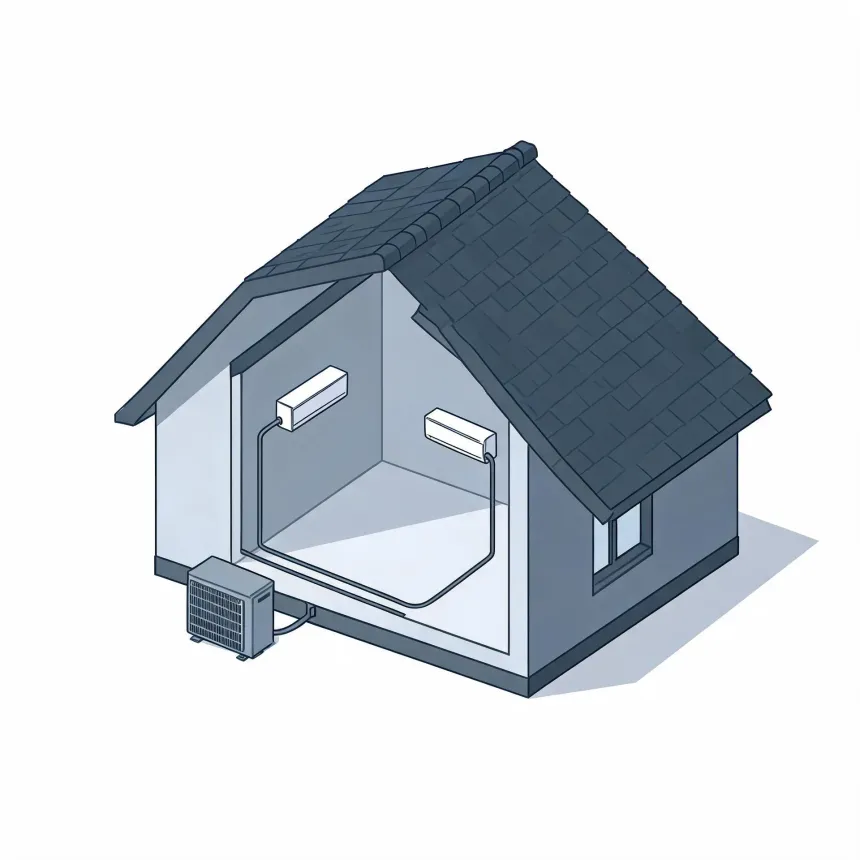
Isometric cutaway illustration of a small house with a shingled gable roof, showing two wall-mounted indoor air conditioning units connected by refrigerant lines to an outdoor condenser unit on the ground outside.
Your system heats September through May and cools July through August.

NOAA nClimDiv, 1991–2020 normals

Brown County sees weather that knocks out power, from wind to winter storms.

A mini split tied to the gas furnace means heat does not depend on one system alone.

Two months of cooling is short, which is why June is the month to get it installed

Cooling runs July through August
Summer afternoons average 78°F
78 damaging wind events from 2015 to 2024
A standard system does the jobWisconsin homes paid 17.18 cents per kilowatthour in 2024, nothing here calls for oversizing

Cooling runs about two months here, July and August, with afternoon highs averaging 78 degrees. A mini split doing that job here isn't working against much. The coil isn't fighting a long stretch of heat like it would further south, and it isn't running nonstop trying to keep up. That lighter load means a mid-range system holds up fine. You don't need to pay for the highest-efficiency unit on the lot to get years out of it. Put that money toward a good install instead, since that's what decides how well the system performs as much as what's written on its spec sheet.

Any system installed here meets the same baseline, and qualifies for the same credit

Brown County falls under zone 6A, and any mini split installed here has to meet the federal minimum of 14.3 SEER2 and 7.5 HSPF2. That's the floor for every split-system heat pump made since January 2023, ductless units included. A system meeting that minimum also qualifies for the federal tax credit on heat pump installations.

Find a contractor
A white mini-split air conditioner outdoor condenser unit mounted on metal brackets against a beige stucco exterior wall, with a blue sky and scattered clouds in the background.

The install, not the unit, is what moves the price

What drives the price of a mini split install is mostly hidden once the covers go back on. The line set run matters a lot. A straight shot through one wall costs less than snaking lines up through a chase or across a roofline to reach a head on the far side of the house. Every extra head adds its own cost too, since each one needs its own line set, its own power to the board, its own mounting and leveling. A single zone system is a simpler job than a multi-zone system feeding several rooms off one outdoor unit. The electrical side counts as well. Some panels have the capacity sitting there ready, others need a new circuit run, and that work shows up on the quote no matter where the panel sits in the house. Where the outdoor unit lands changes things too. A spot right off the wall near the panel is a short, clean job. A spot that needs a pad poured or a bracket built out costs more before the system ever gets charged with refrigerant. None of that shows up on a spec sheet. It shows up in how much wall gets opened and how far the lines have to run.

The rating is measured over a season, not a day

SEER2 and HSPF2 come from testing across a range of conditions, then averaging the result. A unit carries one rating no matter where it's installed, but what that rating gets you depends on how hard the system actually has to work. The number on the label is fixed. What it buys you is not.
A higher number is not wasted, it just pays back slower

Spend more on efficiency and the unit still does the same job, just using less power to do it. Where the load is light, there are fewer hours of runtime for that extra efficiency to work against, so it takes longer to matter. Where a system runs hard for months at a stretch, the same upgrade earns its keep faster.

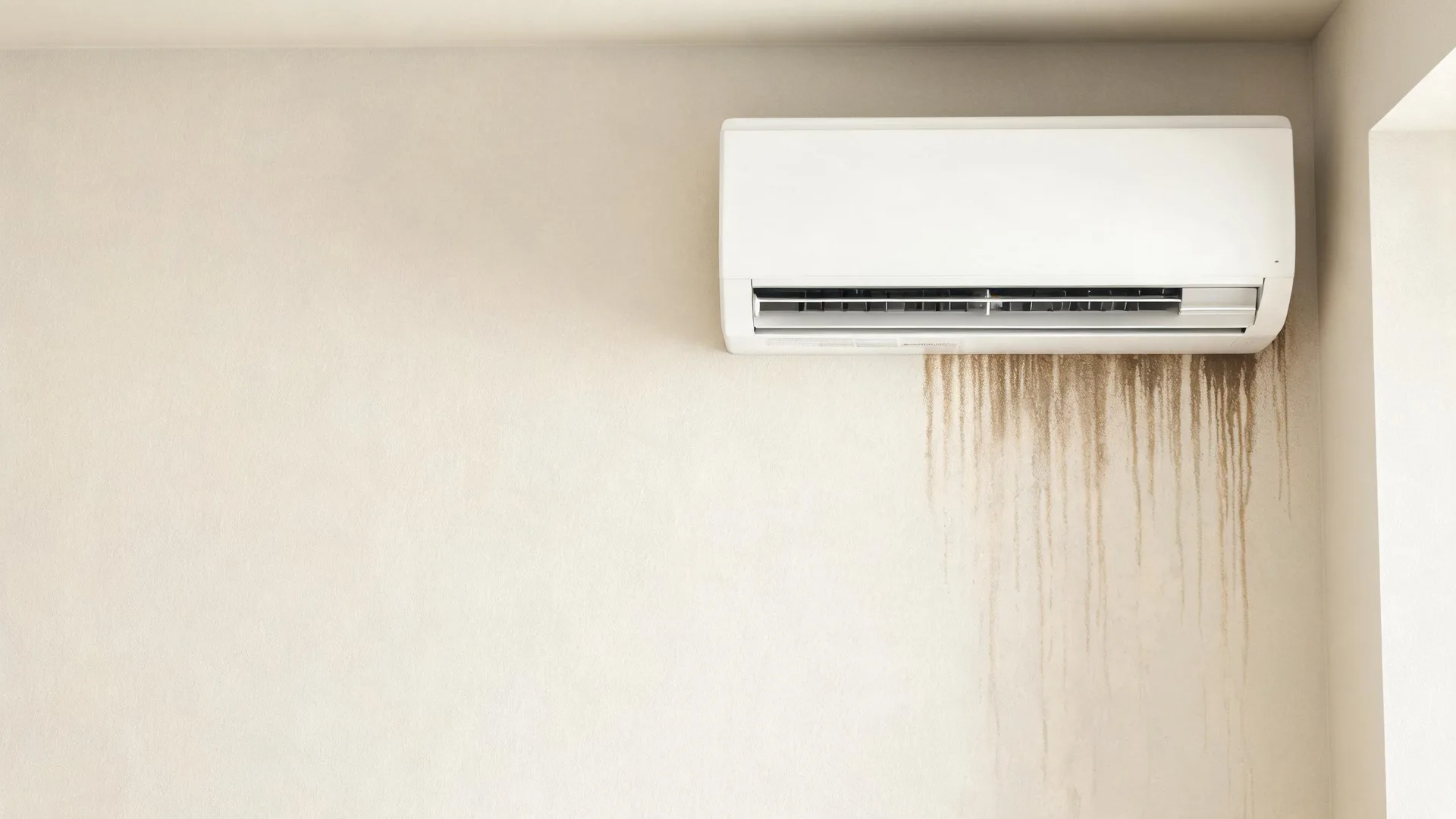
When you're comparing quotes, ask how many zones each one covers and what size head goes where. A mini split sized for the whole house is not the same job as one sized for a couple of rooms, and the quote should say which rooms it's actually heating and cooling. Ask what happens to the line set and where it runs outside, since that affects how clean the install looks and how exposed the lines are to weather. Ask about the condensate drain too, where it empties and whether that spot freezes. And ask who services it later. A mini split needs its filters cleaned and its outdoor unit kept clear of snow and debris, so find out if that's on you or part of the deal.

Install day starts outside. The outdoor unit gets mounted on a bracket or pad, set level and far enough from the wall to pull air through the coil. Inside, each head goes up on the wall or ceiling where it was measured for, then a small hole gets drilled through to the outside for the line set, the refrigerant lines, the power wire and the condensate drain, all bundled together and run through that one penetration. Once the lines are connected at both ends, the system gets evacuated with a vacuum pump to pull out moisture and air, because any left behind ruins how the refrigerant cycles. Only after it holds that vacuum does the refrigerant get released into the lines. The last step is powering it on and checking that every head is actually heating or cooling, and that the drain line is clearing condensate the way it should.