How long a heat pump lasts in Oshkosh, WI

Get matched

A heat pump here in Oshkosh has to pull its weight both ways: sticky summers, then a Winnebago County winter that doesn't let up. That kind of swing wears on a system faster than mild weather would, and most homes in this area lean on gas for backup heat anyway, which changes what a heat pump is actually being asked to do. If you're trying to figure out whether yours still has good years left in it, or whether it's worth putting money into a new one, the answer depends on how your specific setup has held up, not a number that applies to every house on the block. Working that out usually means calling a few contractors, explaining your system and your situation more than once, and sorting through quotes that don't quite match up. This page skips that part. Tell it what's going on and you'll be matched with a contractor who knows this area and can look at what you actually have.

A heat pump in Oshkosh typically runs 12 to 15 years. What shortens that number here is how hard the unit works in a Winnebago County winter. Once temperatures drop into the teens and below, a heat pump has to run long hours just to keep up, and many homes pair it with gas backup for the coldest stretches so the heat pump itself isn't carrying the whole load alone. That backup helps, but the compressor still cycles constantly from late fall through early spring, then turns around and handles the sticky summer months too. Few systems anywhere work both ends of the year the way one does here. If yours came with the house, check the age on the nameplate inside the outdoor unit. A heat pump past 12 years that is struggling to keep rooms comfortable, running constantly, or costing more to operate each season is likely nearing the end of what it can do, even if it hasn't failed outright.

What does a Winnebago County winter ask of your heat pump?

  • Winter nights average 13°F

    Winter nights average 13°F, and that's below where a heat pump works easiest, so it leans harder on backup heat to keep the house warm.

  • Heat runs October through May

    Eight months of heat means the system is rarely resting. More run hours a year means parts wear down sooner than in a milder climate.

  • Cooling runs June through August

    Three months of cooling is the easy stretch for a heat pump. The real wear happens in the other nine months, mostly from the cold.

NOAA nClimDiv 1991-2020

How a heat pump handles winter here

  • Below about 25 to 30°F, the heat pump can't pull enough heat from outside air alone, so backup heat kicks in to cover the gap.
  • In most homes here that backup is a gas furnace, and the system switches over automatically without you touching the thermostat.
  • The reversing valve is what lets the same unit heat in January and cool in July, and it's one of the few parts that works hard in both seasons.
  • The outdoor coil frosts over in cold, damp weather, so the unit runs a defrost cycle that briefly blows cool air before switching back to heat.
  • The compressor is the part most likely to fail first, since it runs for both the heating and cooling load all year instead of half of it.
  • A heat pump that short-cycles, switching on and off every few minutes, is usually losing refrigerant or struggling with a dirty outdoor coil.

A heat pump moves heat instead of making it, pulling warmth out of outside air even when that air feels cold. That works fine down to a point. Once it drops below about 25 to 30°F, there isn't enough heat left in the air to pull, and the system needs help. In most houses around Oshkosh, that help is a gas furnace wired into the same system, and the switch happens on its own. You won't see it happen unless you're watching the thermostat closely.

The reversing valve is what makes the whole thing possible. It changes the direction refrigerant flows through the unit, which is the only difference between heating your house in January and cooling it in July. It's one of the few parts on the unit that's doing real work in both seasons, so wear on it adds up twice as fast as it would on a part that only worked summers.

Cold, damp air causes its own problem: the outdoor coil frosts up. When that happens, the unit runs a defrost cycle, which means it briefly blows cool air indoors while it clears the coil before going back to heating. That's normal.

The compressor carries the heaviest load of any part, since it runs for both your heat and your air conditioning instead of just one. If the unit starts cycling on and off every few minutes, that's usually a refrigerant leak or a coil that needs cleaning, not the compressor itself failing.


An outdoor air conditioner condenser unit on a concrete pad beside a house with horizontal lap siding, with refrigerant lines and a gray electrical disconnect box on the wall, surrounded by bare dirt.
Before you get your heat pump installation
A gray outdoor condenser unit on a concrete pad beside a house with horizontal lap siding, with an electrical disconnect box and insulated refrigerant lines on the wall, gravel in the foreground and a planting bed at left.
After you get your heat pump installation

Get matched with a heat pump pro in Winnebago County

Skip the round of in-home estimates for a new heat pump.

Asking costs nothing, and the choice to hire stays yours.

What the defrost cycle tells you

Every heat pump here goes into defrost on a cold morning, reversing itself briefly to melt frost off the outdoor coil before switching back to heating. You'll see steam coming off the unit and hear it cycle. That's normal. What isn't normal is a unit that stays in defrost too long or cycles into it every few minutes. Ice building up on the coil faster than the defrost cycle clears it means the system is working harder than it should, and that extra strain adds up over a Winnebago County winter faster than most owners expect, wearing on the compressor well before year 12.

The compressor outlasts the rest

A heat pump has one part that's expensive to replace and everything else is comparatively minor: the compressor. Capacitors, contactors and fan motors wear out and get swapped without much thought. The compressor is sealed and built to run for the system's whole life, and most failures that end a heat pump's service are compressor failures, not some smaller part giving out. Years of hard cycling through winters like this one are what wear a compressor down, which is why a unit asked to run constant backup heat for eight months tends to reach that failure sooner than one in a milder climate.

A woman wrapped in a chunky knit blanket sits in an armchair with an open book on her lap, beside a lit table lamp and a window with frost and snow outside.
An older woman with short blond hair in a cream turtleneck sweater stands smiling and looking off-camera in a kitchen, with a loaf of bread, a lit candle, a window showing darkness outside, and wood cabinets behind her.

Watch how your heat pump behaves on the coldest nights. If it takes longer to reach the temperature on the thermostat, or the gas furnace seems to be carrying more of the load than it used to, that is the heat pump side losing ground. A backup heat bill that climbs winter over winter, with the thermostat set the same as always, usually means the compressor is working harder to move the same amount of heat. Defrost cycles are normal in Winnebago County winters, but if they run longer or the outdoor unit stays frosted after a cycle, that is extra strain on a system already well into its life. None of this happens overnight. It shows up gradually, over a few winters, as the unit past the 12 to 15 year mark asks more of itself to do what it once did easily. Catching it before January matters. A heat pump that fails in the middle of the coldest stretch leaves the furnace to carry a load it was never sized to handle alone.

Signs Your System Is Aging

  • A heat pump nearing 12 to 15 years old in Oshkosh often shows longer run times before it hits the target temperature on cold nights.
  • Backup heat kicking on more often than it used to can mean the heat pump side is losing its ability to pull heat from outside air.
  • A gas backup bill that climbs each winter even though the thermostat setting hasn't changed often points to a heat pump working harder for less output.
  • Short cycling or frequent defrost cycles that run longer than usual put extra wear on a system already past the middle of its expected life.
  • An outdoor unit that struggles to clear frost between cycles in a Winnebago County winter is one more sign the compressor is losing ground.
  • Waiting until the heat pump fails in January leaves you without backup capacity exactly when the furnace is carrying the most load.
An older man with gray hair and a beard, wearing a dark jacket dusted with snow, stands smiling in a dimly lit hallway with lamps and a living room visible behind him.
A gray-haired, bearded man in a dark snow-dusted coat stands smiling in a dimly lit entry hall with a staircase, a lit table lamp, a framed picture, and a living room visible through a doorway.
An older man with white hair and a beard, wearing a dark snow-dusted coat and scarf, stands in a warmly lit interior hallway with a framed landscape picture, a table lamp and a potted plant behind him, and a snowy view through a window at left.
A gray-haired, bearded man in a dark coat dusted with snow stands smiling in a dimly lit room with a lamp, mirror, framed art, and a sofa in the background.

Power here costs 17.75 cents per kilowatt-hour

At 17.75 cents per kilowatt-hour, every hour your heat pump leans on electric backup instead of gas adds up fast. A unit that's slipping, running longer to hit temperature or kicking on backup heat more than it used to, costs you more right now, not just down the road.

EIA-861 2025

A gray outdoor air conditioner condenser unit on a concrete pad beside a house with horizontal lap siding and a stone veneer base, with a conduit running to a wall-mounted disconnect box and shrubs and evergreen trees to the left.

Running the way it should

This is a heat pump keeping pace with the house, lines and conduit running clean to the disconnect, pad clear, nothing straining. At this age it pulls heat from the outside air without working overtime, and backup only kicks in when the temperature actually calls for it.

An outdoor air conditioner condenser unit with rust spots on its top grille sits on a concrete pad beside a house with light horizontal siding, with conduit lines and an electrical box on the wall and a mulch bed to the right.

Showing its age

Rust on the fan grille and dirt packed around the base are years of Winnebago County weather catching up with the unit. A heat pump in this shape is often the one running longer on cold mornings and leaning on backup heat more than it used to.

Why does my heat pump switch to defrost mode so often in winter?

Why does my heat pump switch to defrost mode so often in winter?

Frequent defrost cycles usually mean the coil is holding frost longer than it should

A heat pump defrosts because frost builds up on the outdoor coil and blocks it from pulling heat out of the air. That's normal once or twice an hour on a cold, damp morning. If it's cycling more often than that, or running longer each time, the coil isn't shedding frost the way it should. That can mean the reversing valve is slow to switch, the defrost sensor is reading wrong, or the unit is losing refrigerant. With a Winnebago County winter pushing the system hard for eight months, a coil that can't clear itself quickly means more hours spent on backup heat instead of the heat pump doing the work it's supposed to.

  1. Outdoor air passes over the coil, where refrigerant absorbs its heat.

  2. The compressor squeezes that refrigerant, raising it to a usable temperature.

  3. Indoor air moves across the hot coil and picks up the heat.

  4. Frost builds on the outdoor coil as heat is pulled from cold air.

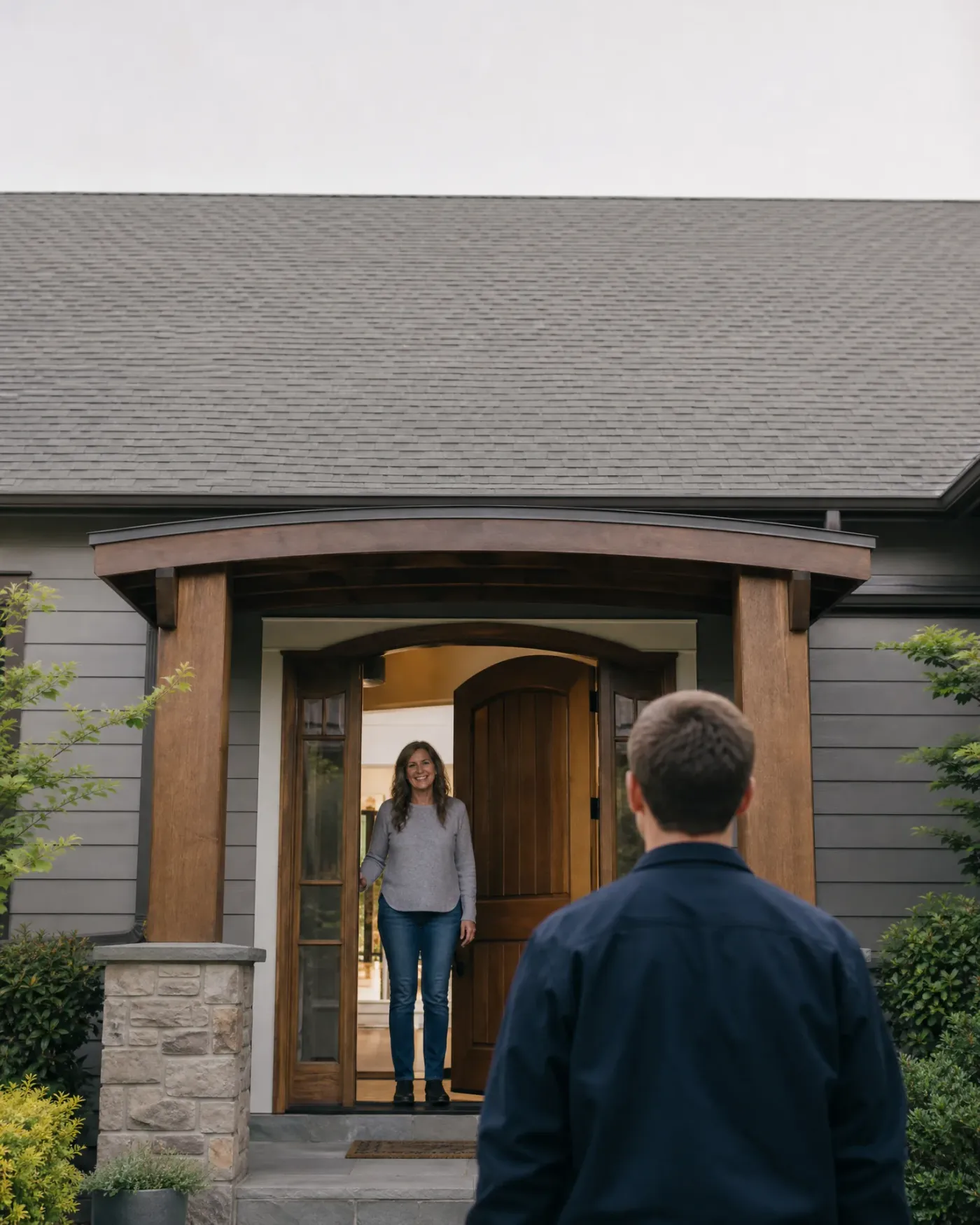
A woman stands in the open front doorway of a gray house with wood porch posts and a shingled roof, facing a man in a dark jacket seen from behind in the foreground.

Twelve to fifteen years, with the winters here setting the pace

A heat pump in Oshkosh lasts 12 to 15 years when it's kept up with. Winnebago County winters push the back half of that range sooner than mild climates do, and the signs show up before the unit quits outright: longer run times, backup heat kicking on more, a system that just doesn't keep pace on a cold morning the way it used to. Whether yours is at year 6 or year 14, now you know what to watch for and why it happens.

If what you're reading matches what your system is doing, you don't have to sort through contractors on your own to figure out what's next. Instead of calling around and repeating the same details to every number you dial, you can get matched with a contractor who knows this equipment and this climate, and let them reach out to you with what they find.

A wooden table holding a stone vase with a bare branch, two stacked books and a small dark bowl, beside a window with green foliage outside and a sofa in the dim background.
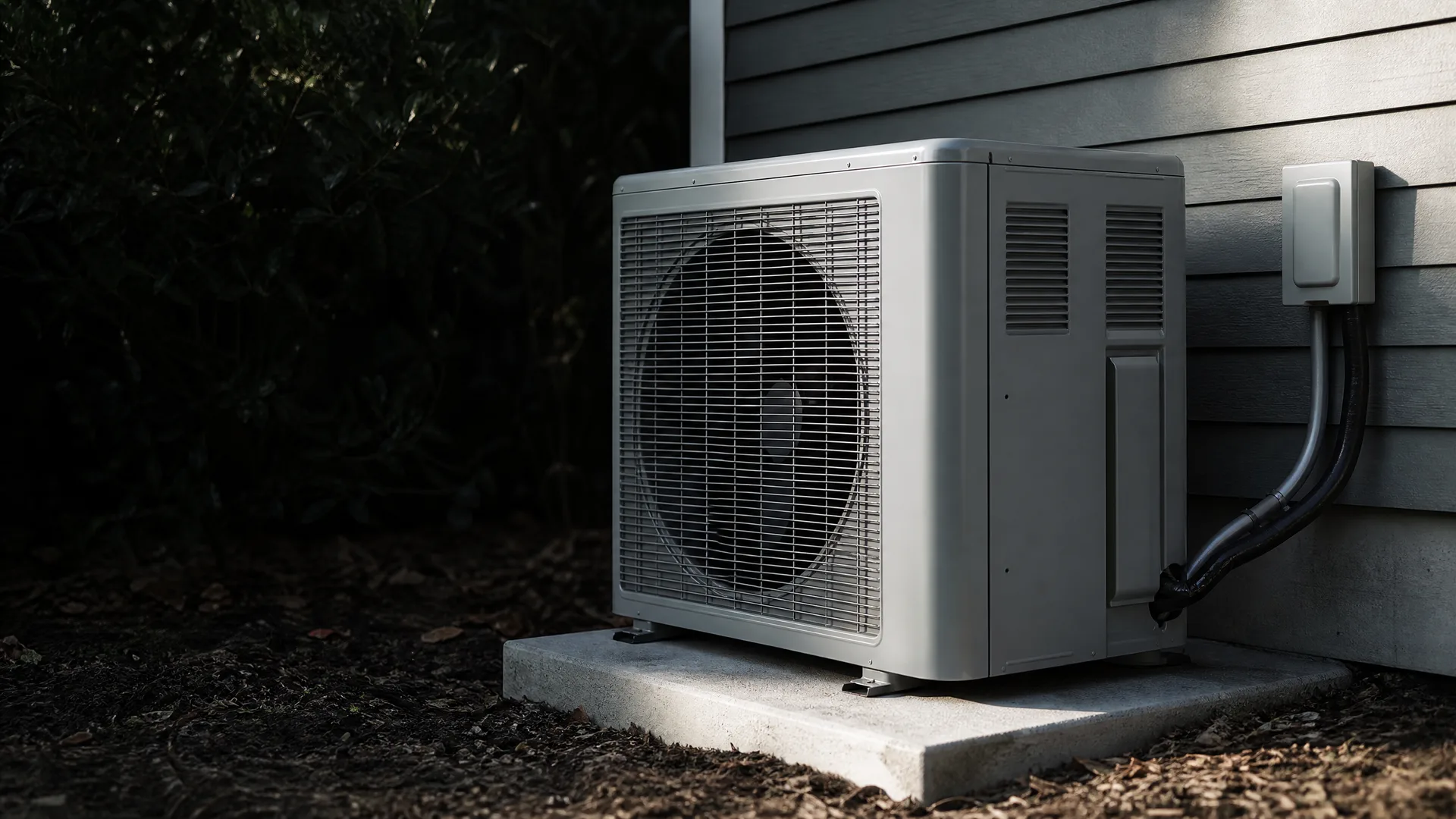
An outdoor air conditioning or heat pump condenser unit on a concrete pad beside a gray horizontal-sided house, with a disconnect box and conduit on the wall and dark shrubbery to the left.

Find a heat pump installation pro in Winnebago County

New system or replacementHeat PumpWinnebago County, WI
Step 1 of 2

What ZIP code is the job in?