




A row of dark-clad single-story houses with gabled roofs behind trimmed hedges, lawn and leafy trees under an overcast sky.

Heat Pump Repair in West Bend, WI

Tell us about the job

Takes about a minute. No obligation.

RepairHeat PumpWashington County, WI
Step 1 of 2

What ZIP code is the job in?

Before you call anyone, check the thermostat is set to heat and the temperature is actually above room temperature. Go outside and look at the outdoor unit. If it's covered in ice or snow, that can stop it from working right, though some frost during a defrost cycle is normal. Check that nothing is blocking the airflow around the outdoor unit, like leaves, mulch, or anything stacked too close to it. Inside, pull the air filter and hold it up to a light. If you can't see light through it, it needs changing, and a clogged filter can make the whole system struggle. Walk around and check that no vents are closed or blocked by furniture or rugs. If the breaker for the unit has tripped, you can reset it once, but if it trips again, leave it off and call someone.

8 months
October through May, your system heats
3 months
June through August, it cools
14°F
the average winter night it heats against
79°F
the average summer afternoon it cools against
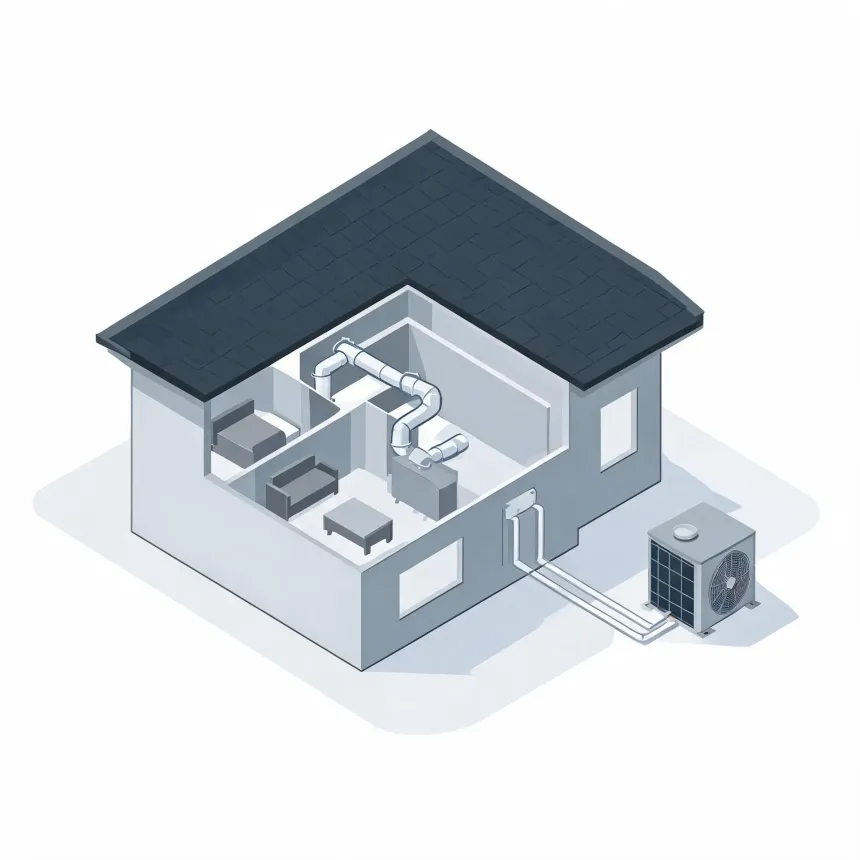
Isometric illustration of a cutaway single-story house showing interior ductwork, an indoor air handler and simple furniture, connected by lines to an outdoor condenser unit beside the building.
Your system heats October through May and cools June through August.

NOAA nClimDiv, 1991–2020 normals

Heat pumps in West Bend run heat from October through May, eight months straight.

A part that was already borderline often fails once October mornings put the first real load on it.

Half the homes in Washington County were built in 1986 or later. A heat pump that came with one of those is probably still within its working life.

Half the homes here were built by 1986
54 damaging wind events from 2015 to 2024
53 hail events from 2015 to 2024

Washington County sees its share of wind and hail, and West Bend has had a couple of tornadoes pass through over the past decade. None of that is unusual for this area, and it's not especially hard on a heat pump either. The outdoor unit is built to sit outside through wind, hail and snow year after year. So if yours has stopped working, weather is probably not why. The more likely cause is a part that wore out or a connection that failed, the same kind of failure that shows up in heat pumps anywhere. That's worth knowing, because it means the fix is usually straightforward once someone finds the actual cause.

A heat pump running wrong costs you every month it stays that way

Electricity in Wisconsin runs 17.18 cents per kilowatthour, well above the national average, and your heat pump runs on it most of the winter. A unit that's short cycling, icing up, or leaning on backup heat strips still pulls power the whole time it does it. That cost shows up on every bill until the actual problem gets found and fixed.

Find a contractor
A man in a cap, dark long-sleeved shirt and brown work pants carries a canvas tool bag as he climbs porch steps toward a green front door.
A gray outdoor HVAC unit mounted on a concrete pad beside a house with gray lap siding and a stone foundation.

Built in 1986 or later, your heat pump still has years in it

If your heat pump came with the house and the house is newer, age probably isn't what's wrong with it. A part failed, or a connection did. That's a repair, not a reason to replace the whole system.

A failing part rarely fails all at once

A weak run capacitor still starts the compressor, just with more strain each time. A refrigerant leak still leaves enough charge to run, for a while. The system keeps going because it can, not because it's fine, and every cycle after that asks more of parts that are already struggling.
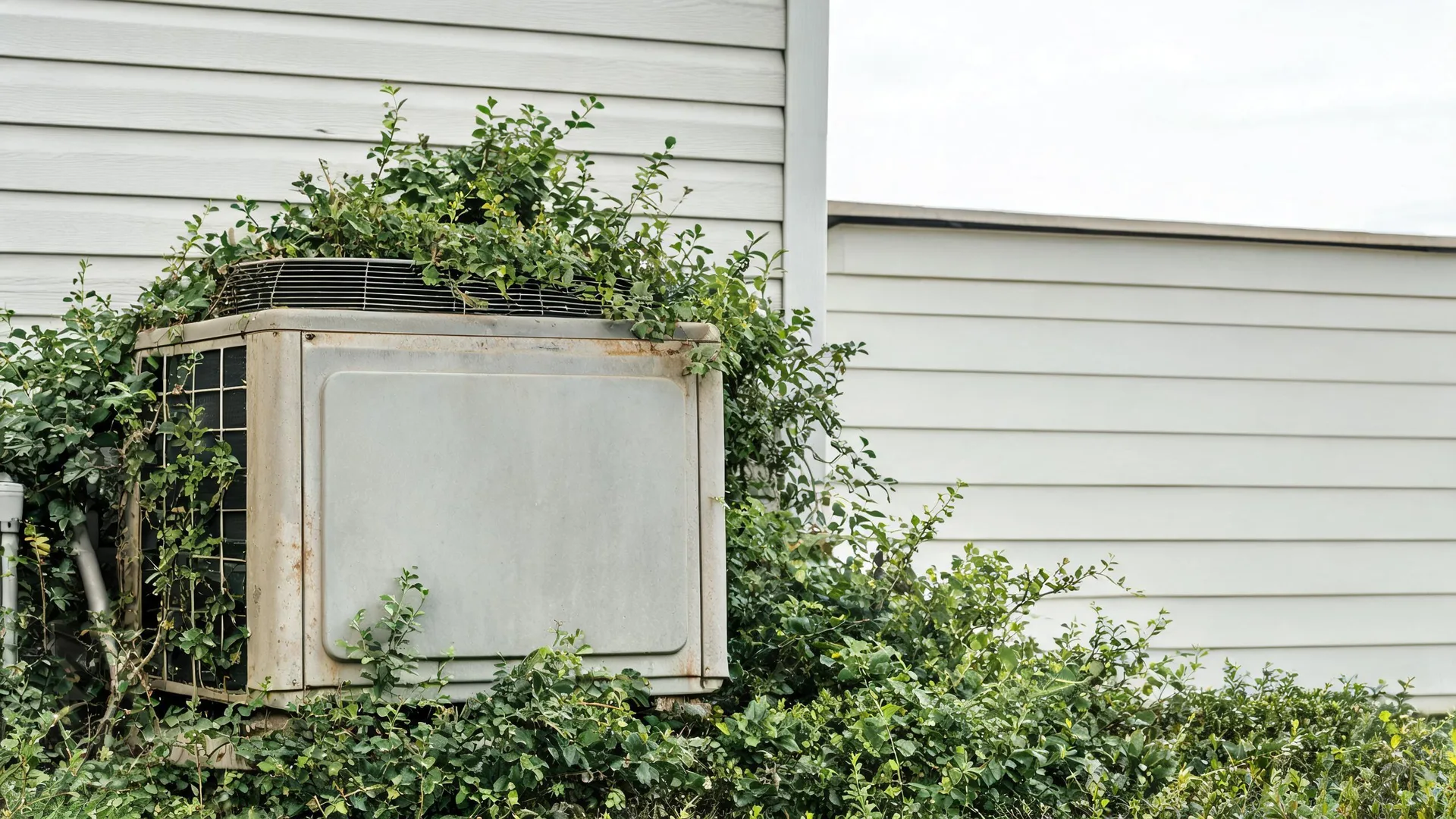
Waiting can turn a repair into a replacement

A compressor straining against a bad capacitor or low charge runs hotter than it should, cycle after cycle. Compressors are built to take a lot, but not that, not for long. Call it in when you first notice something's off, not after the unit stops.

A diagnostic starts outside at the unit itself. The tech checks refrigerant pressure, looks at the compressor and reversing valve, and listens to how the fans sound when they run. Inside, they check the air handler, the coil, and the electrical connections feeding the whole system. Most of the time they're running the heat pump through a full cycle, heat mode and defrost mode both, watching where it struggles. A failing capacitor shows up as a compressor that hesitates or hums before it starts. A low charge shows up as a coil that frosts over when it shouldn't. Once the tech finds the actual cause, they can tell you what's failing and what it takes to fix it, instead of guessing from the symptoms alone.

A heat pump rarely needs a straight answer of repair or replace. It needs a look at what's actually failing and what that part means to the system around it. A reversing valve or a compressor is expensive and central to how the whole unit works, so trouble there carries more weight than a capacitor or a contactor, which are simple, inexpensive parts that fail on their own fairly often and don't say anything about the rest of the system. Age matters less than what's broken. A unit near the end of its working life can still be worth repairing if the failure is minor, and a newer one can be a harder call if what's failing is the compressor itself. Ask the tech what part failed and what that part's failure says about the unit as a whole, not just whether it can be fixed.